Egrobots Unveils Egypt-Built Autonomous Harvesting Robot
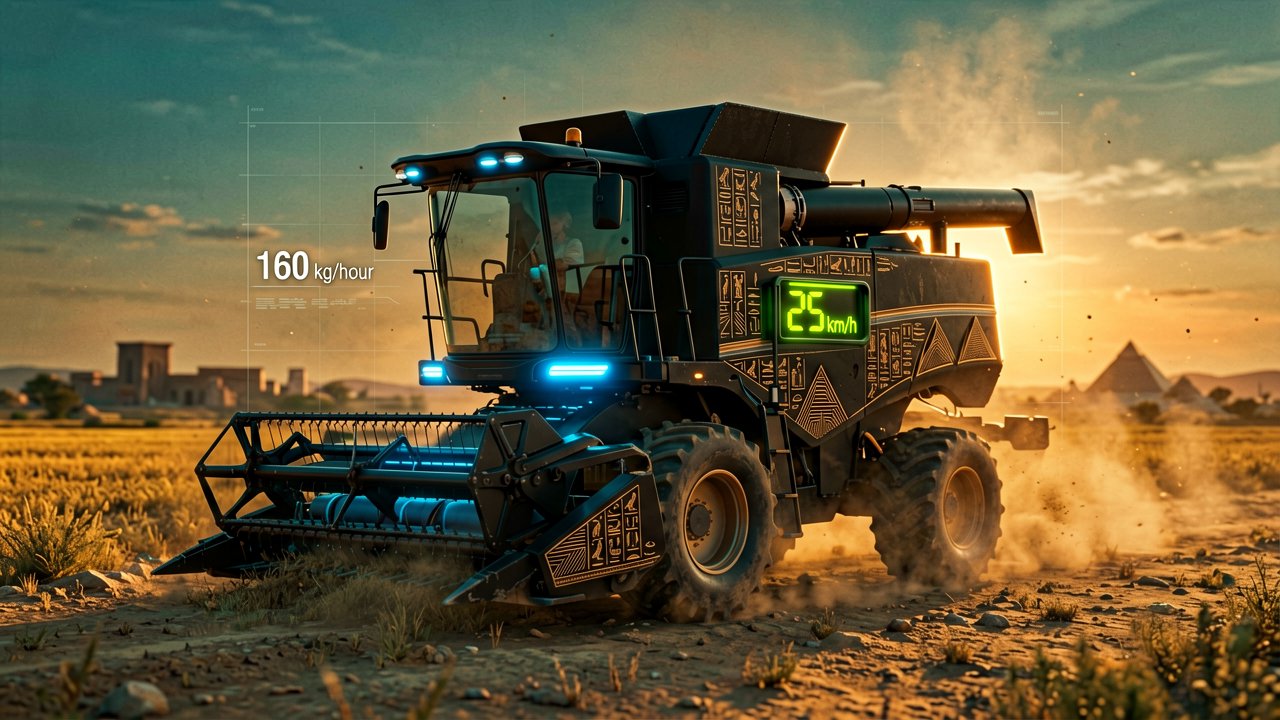
The agricultural robotics sector just gained a new regional player. Egrobots, a Cairo-based deep technology company, has unveiled an autonomous harvesting robot developed entirely by Egyptian engineers. This marks the first time an Arab-world startup has built a full-scale agricultural automation system from the ground up rather than adapting imported hardware.
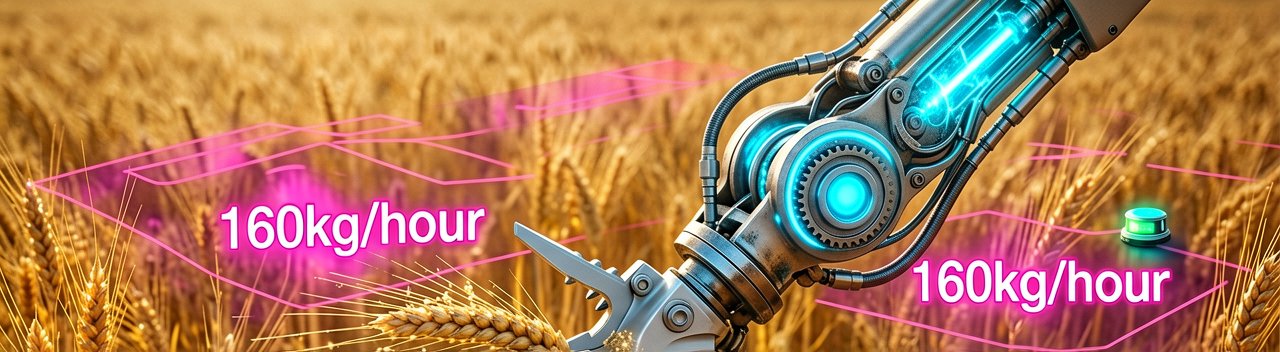
The robot combines computer vision, artificial intelligence, and autonomous navigation to identify ripe crops, optimize farm paths, and execute harvesting with minimal human intervention. It can be equipped with up to four robotic arms operating simultaneously, achieving a productivity rate of approximately 160 kilograms per hour while running continuously around the clock.
According to Dabafinance, the system addresses three persistent pressures facing farms across the Middle East: seasonal labor shortages, rising operational costs, and the need to reduce waste during critical harvest windows. A machine that does not require rest, does not need seasonal recruitment, and maintains consistent output through harvest periods eliminates a category of risk that conventional labor models cannot solve.
Egrobots was founded in Egypt in 2023 by Akhlad Alabhar and Amr Saleh. The company specializes in physical AI and autonomous systems for agriculture, industry, and public services. Its founding team brings over 50 years of collective experience in robotics and industrial systems, which matters when you're building hardware that needs to function reliably in unpredictable field conditions.
The company's credentials extend beyond the founding team. Egrobots is a graduate of the Google for Startups program and a member of the NVIDIA Inception program. These placements signal a company operating within global deep technology networks while building domestically. The firm was also recognized in the UAE Ministry of Economy's Future100 List in 2025, acknowledging organizations shaping the future through physical AI and advanced technology.
Independent reporting from Wamda confirms the technical specifications and notes that the project represents a shift from AI application users to deep technology creators. The distinction matters enormously for Egypt's startup ecosystem. Proof that Egyptian engineers can design, build, and deploy deep technology at this level of complexity changes the conversation about what is possible domestically.
Physical reality check: agricultural automation is not like deploying software. A robot that identifies ripe crops must handle variable lighting, uneven terrain, and crop damage without destroying the produce. The four-arm configuration and continuous operational capacity address the seasonal labor shortage directly, but adoption will depend on price, reliability, maintenance, and whether farmers can use the machines without complex training.
Egrobots has already demonstrated it can move from concept to operational deployment in demanding environments. The company previously developed a traffic robot in partnership with Egypt's Ministry of Interior. That track record matters because public sector deployments require different reliability standards than prototype demonstrations. The harvesting robot, therefore, represents the most visible output of that trajectory.
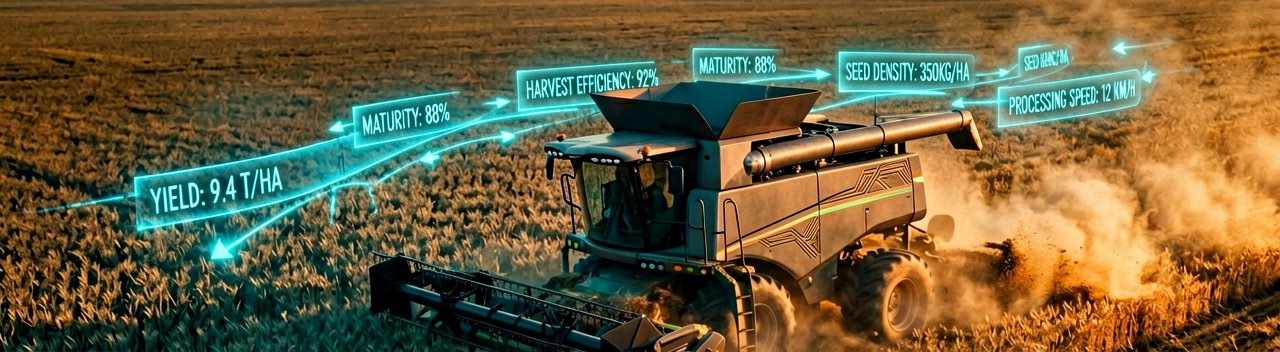
The robot's technical architecture reflects the specific demands of agricultural automation. Computer vision identifies ripe crops with sufficient reliability to reduce waste and improve yield quality. Autonomous navigation handles path optimization within farm environments, which are less structured and more variable than factory floors. Together, these systems create a flexible and scalable design that can adapt across different farm environments and crop types.
For Egypt's agricultural sector, which employs roughly a quarter of the country's workforce, the timing aligns with structural pressures that have been building for years. Seasonal labor shortages, rising operational costs, and the difficulty of scaling farm productivity without proportionally scaling headcount have all intensified. Those pressures are not unique to Egypt, but they are driving a global shift toward autonomous agricultural systems that has already transformed farming economics in the United States, Japan, and parts of Europe.
What makes the Egrobots announcement significant is not just that an autonomous harvesting robot now exists in Egypt. It is that Egyptian engineers built it from the ground up. The Arab world's technology ecosystem has developed in two broad phases. The first was adoption, where regional companies and governments began using software, applications, and platforms built elsewhere. The second phase, which is only beginning, involves building the underlying technology itself.
The second phase is more demanding. Deep technology, including physical AI, autonomous systems, robotics, and advanced manufacturing, requires a different order of capability than application development. Specifically, it requires hardware expertise, systems integration, and the kind of accumulated technical knowledge that takes years to build (a problem that has plagued hardware startups for years, frankly).
For Egypt's technology investment community, the robot validates deep technology as a viable investment category domestically. Physical AI and autonomous systems require longer development timelines and higher capital intensity than software. Investors who have stayed away from hardware-intensive bets may reassess that position as proof of concept accumulates.
For regional governments pursuing agricultural modernization and food security objectives, a locally built autonomous harvesting system offers something imported technology does not. It enables local customization, local maintenance, and local knowledge transfer. The Egyptian government's broader digital transformation agenda and Vision 2030's automation goals create a policy environment that is actively receptive to this kind of development.
For the wider Arab technology ecosystem, the announcement adds to a small but growing body of evidence that the region is capable of producing deep technology, not just deploying it. Each example makes the next one more credible and more fundable.
Egrobots is currently developing advanced humanoid robotics and manufacturing sector solutions, aligning its roadmap with Egypt's Vision 2030 goals to support automation and digital transformation across the region. The company has demonstrated the robot works. The next question is whether it scales commercially.
Agricultural technology products face a specific adoption challenge: farmers and agricultural operators are risk-averse buyers who require proven reliability before committing to new systems. Pilot programs within Egyptian farms will determine whether the technology moves from demonstration to commercial use across farms, factories, and public services.
Robotics also requires local support, spare parts, and financing, which can be difficult for early-stage hardware companies. Whether users actually pay for it remains the real question.
The robot can harvest 160 kg per hour. That's impressive on paper. Whether it survives a week in a real Egyptian field without breaking down is what will determine if this is a breakthrough or just another prototype gathering dust.
Artūras Malašauskas is an AI Systems Integrator with 20+ years of production-grade web engineering experience. He has designed, shipped, and scaled enterprise Python/PHP systems for logistics, SaaS, and public-sector clients. For the past year, he has focused exclusively on AI integrations: deploying open-source LLMs, building generative media pipelines (image, audio, video), and engineering multi-agent workflows for real production environments. His standard: reproducibility, security, cost-efficient inference—no vaporware. He documents and evaluates emerging AI tooling, separating verified capabilities from marketing noise. Technical editor at: muza-ai.eu, ai-verslas.lt, ai-naujinos.lt Connect on LinkedIn
Comments