COSIMO Launches Geometric Video Physics Engine for AI
COSIMO.AI announced the launch of its physics engine on May 13, 2026, introducing what it calls "Geometric Video" — a new video primitive designed specifically for artificial intelligence systems rather than human consumption.
The company's press release frames the problem directly: traditional video formats were optimized for human eyes, not machine perception. This fundamental mismatch has forced the Physical AI industry to rely on brute-force scaling — bigger models, more data, more GPUs — while robotaxi launch dates slip and humanoid demos get delayed.
COSIMO's approach strips away visual noise and encodes the naked geometry of shapes and motion directly into the video stream. The output is deterministic and mathematically pure, capturing objects and their movement in a form that AI can process without the overhead of decoding human-centric visual artifacts.
The technical specifications are aggressive. According to the official Business Wire announcement, COSIMO tested Geometric Video on the UCF-101 benchmark using five seeds, forty epochs, and NVIDIA L4 hardware. Against a Legacy Video baseline, the results show:
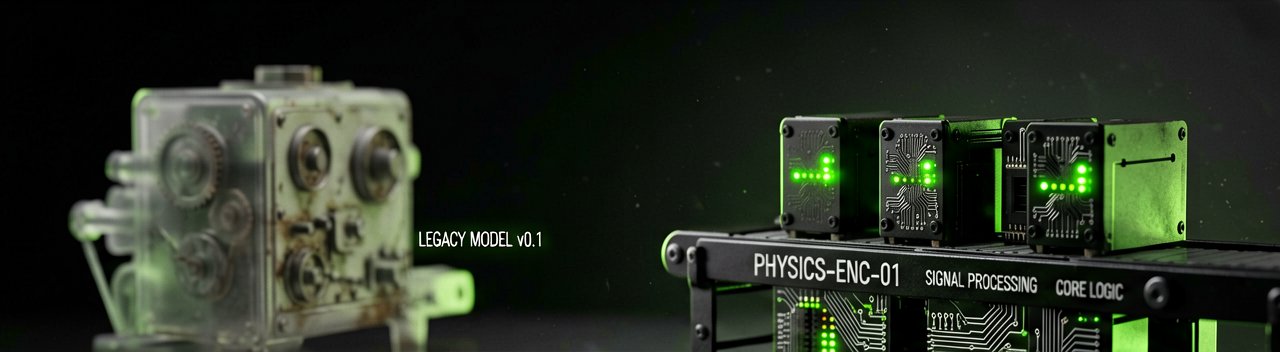
- +12.4 percentage points more accurate than legacy video
- 78.5% fewer model parameters
- 27× less GPU memory at inference
- 1.17 milliseconds per frame on a five-year-old MacBook Pro, under one watt
- 3× tighter accuracy clustering across all five training runs
Every performance result traces to a public test run that has been cryptographically verified. The validation pipeline is available at cosimo.ai/validation, which is unusual for a company launch (most competitors bury their benchmarks behind paywalls or NDAs).
The economic implications are direct and substantial. A Tier-1 Physical AI footprint using this technology saves $8 to $10 billion annually across compute, storage, bandwidth, and power. Per edge device, the savings hit $2,700. The biggest advantage may be time: tighter accuracy clustering accelerates time-to-market schedules by an estimated 6 to 12 months. For a robotaxi or humanoid program, that's a categorical advantage in a race where months matter.
The open-source savings calculator is at cosimo.ai/savings, and the technical whitepaper is at cosimo.ai/whitepaper. These resources allow developers to model their own infrastructure costs against the claimed improvements.
What makes this technically interesting is the compression ratio. The COSIMO website details that Geometric Video achieves 3.12× compression on disk — two-thirds less storage and bandwidth at hyperscaler scale. Training requires 2.4× less GPU memory, and inference collapses to 77.6 MiB from 2.18 GB. That's the difference between running on automotive edge silicon versus datacenter GPUs.
The latency numbers are also worth noting. At 15.86 ms with batch-invariant processing, the system sustains 63.07 clips per second without batching middleware. In practical terms, that means real-time decisions without the infrastructure overhead that typically plagues video AI deployments.
Industry context matters here. Video AI has been moving from experimental research to practical requirement since late 2025, driven by declining compute costs and capable edge devices. Autonomous vehicles need temporal cues for safe decisions. Manufacturing depends on spotting deviations over time. Healthcare increasingly tracks motion signals like gait and tremor. The compression is not just an infrastructure decision — it's a modeling decision that changes what the model can learn.
The Physical AI sector has been reduced to anecdotes. Launch dates slip. Demos get delayed. Headlines lament that AI is not ready. The industry's answer has always been the same: more scaling. COSIMO's claim is that the working assumption — that AI's efficiency is fixed — is wrong.
Whether the benchmarks hold under independent verification remains to be seen. The company has made its validation pipeline public, which is a good sign. But until third-party labs run the same tests on the same hardware, these numbers remain company claims rather than industry standards.
The real test will be whether developers actually adopt Geometric Video over existing formats. That depends on integration friction, documentation quality, and whether the claimed efficiency gains materialize in production environments (where edge cases always break the happy path).
For now, the technology represents a bold attempt to solve video AI's fundamental inefficiency problem. Whether users actually pay for it — or whether the industry simply continues scaling up — remains the real question.
The savings calculator is open-source, which is rare. Either they're confident or they're hoping someone else finds the bugs first.
Artūras Malašauskas is an AI Systems Integrator with 20+ years of production-grade web engineering experience. He has designed, shipped, and scaled enterprise Python/PHP systems for logistics, SaaS, and public-sector clients. For the past year, he has focused exclusively on AI integrations: deploying open-source LLMs, building generative media pipelines (image, audio, video), and engineering multi-agent workflows for real production environments. His standard: reproducibility, security, cost-efficient inference—no vaporware. He documents and evaluates emerging AI tooling, separating verified capabilities from marketing noise. Technical editor at: muza-ai.eu, ai-verslas.lt, ai-naujinos.lt Connect on LinkedIn
Comments