Utah Invests $33 Million in AI Health Computing Infrastructure

The University of Utah is deploying a new AI-assisted computing infrastructure backed by more than $33 million in state funding. The investment, approved during the 2026 Legislature, splits into two major components: $18.6 million for the Utah Health AI Vault (UHAIV) and $15 million for a new data center and broader AI ecosystem.
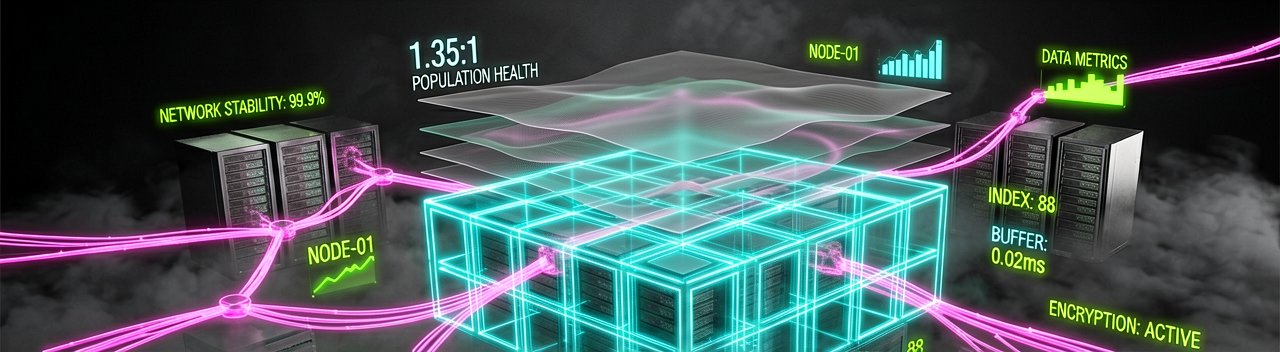
According to the HPCwire press release, the UHAIV will modernize the Utah Population Database (UPDB) to enable advanced AI analytics within a secure environment. The UPDB has been managed by the Huntsman Cancer Institute for over two decades and has powered landmark discoveries in cancer genetics.
Infrastructure is the engine behind AI-enabled innovation (a problem that has plagued researchers for years, frankly). The current UPDB data architecture is not compatible with modern data science and AI innovations. The UHAIV project addresses this gap by updating the database to work with contemporary AI tools while maintaining privacy and security standards.
University President Taylor Randall called the investment a powerful example of what becomes possible when a state chooses to invest boldly in health and future outcomes. The initiative will be jointly managed by Bradley Cairns, CEO of Huntsman Cancer Institute, and James Hotaling, chief innovation officer at University of Utah Health.
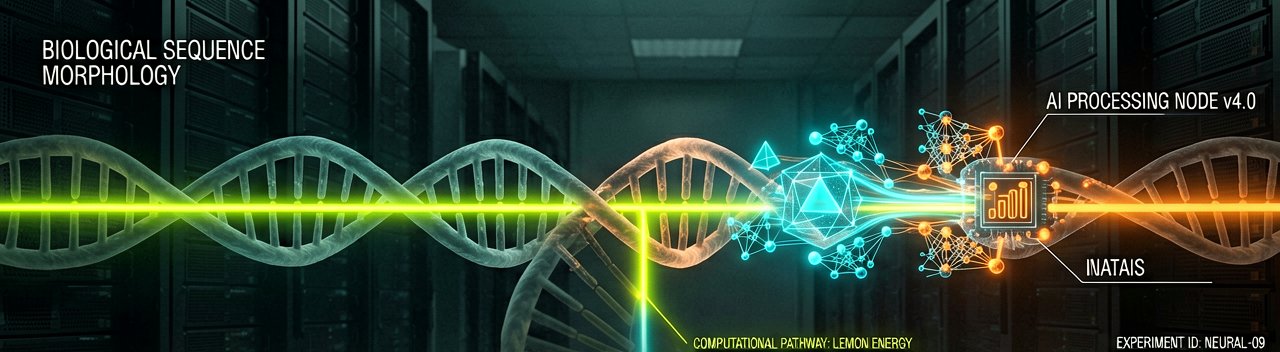
For more than 20 years, the UPDB has enabled discoveries including inherited risk genes for breast and ovarian cancer (BRCA1 and BRCA2), melanoma (CDKN2A/p16), and colon cancer (APC). These findings reshaped cancer risk assessment, screening guidelines, and prevention worldwide. The new infrastructure aims to replicate that success across additional disease areas.
The $15 million data center investment will support a statewide AI supercomputer accessible to all Utah universities. Manish Parashar, the university's chief AI officer, noted that once these resources are online, researchers and entrepreneurs will move from concept to application at scale much faster. The supercomputer will be overseen by the Center for High Performance Computing at the Scientific Computing Institute.
Private funding also plays a role. Peter Huntsman, chairman and CEO of Huntsman Cancer Foundation, worked with legislative leaders to advocate for the initiative. The Huntsman Family Foundation contributed an additional $10 million to help launch the supercomputer project.
From a technical standpoint, the physical reality of this infrastructure matters. Researchers will no longer wait days for compute jobs to queue. They'll click through a modernized interface, submit their models, and get results in hours instead of weeks. That friction reduction compounds across hundreds of research projects annually.
According to the University of Utah Health press release, the investments are expected to catalyze economic growth by enabling new public-private partnerships and supporting biotechnology innovation. The infrastructure will create high-skill, high-wage jobs across Utah's life sciences and technology sectors.
Privacy and ethical oversight remain central to the project. Huntsman Cancer Institute will play a key stewardship role, ensuring AI power is applied thoughtfully and responsibly. The UHAIV platform will maintain the highest standards of data security while enabling advanced analytics.
University of Utah Health CEO Bob Carter emphasized that these investments are not just about technology—they are about patients seeking better care. The infrastructure will accelerate breakthroughs in prevention, early detection, personalized treatments, and survivorship across numerous diseases.
Whether this infrastructure delivers measurable health outcomes remains the real question. State funding for research infrastructure is one thing; translating compute power into actual patient benefits is another. The next few years will show if Utah's investment moves the needle or just adds another expensive server room to the campus.
For now, the hardware is being built. The software will follow. Whether researchers actually use it effectively—and whether patients see tangible improvements—depends on execution, not just investment.
Artūras Malašauskas is an AI Systems Integrator with 20+ years of production-grade web engineering experience. He has designed, shipped, and scaled enterprise Python/PHP systems for logistics, SaaS, and public-sector clients. For the past year, he has focused exclusively on AI integrations: deploying open-source LLMs, building generative media pipelines (image, audio, video), and engineering multi-agent workflows for real production environments. His standard: reproducibility, security, cost-efficient inference—no vaporware. He documents and evaluates emerging AI tooling, separating verified capabilities from marketing noise. Technical editor at: muza-ai.eu, ai-verslas.lt, ai-naujinos.lt Connect on LinkedIn
Comments