Dataland AI Museum Partners With L'Oréal Luxe for Olfactory Art Experience
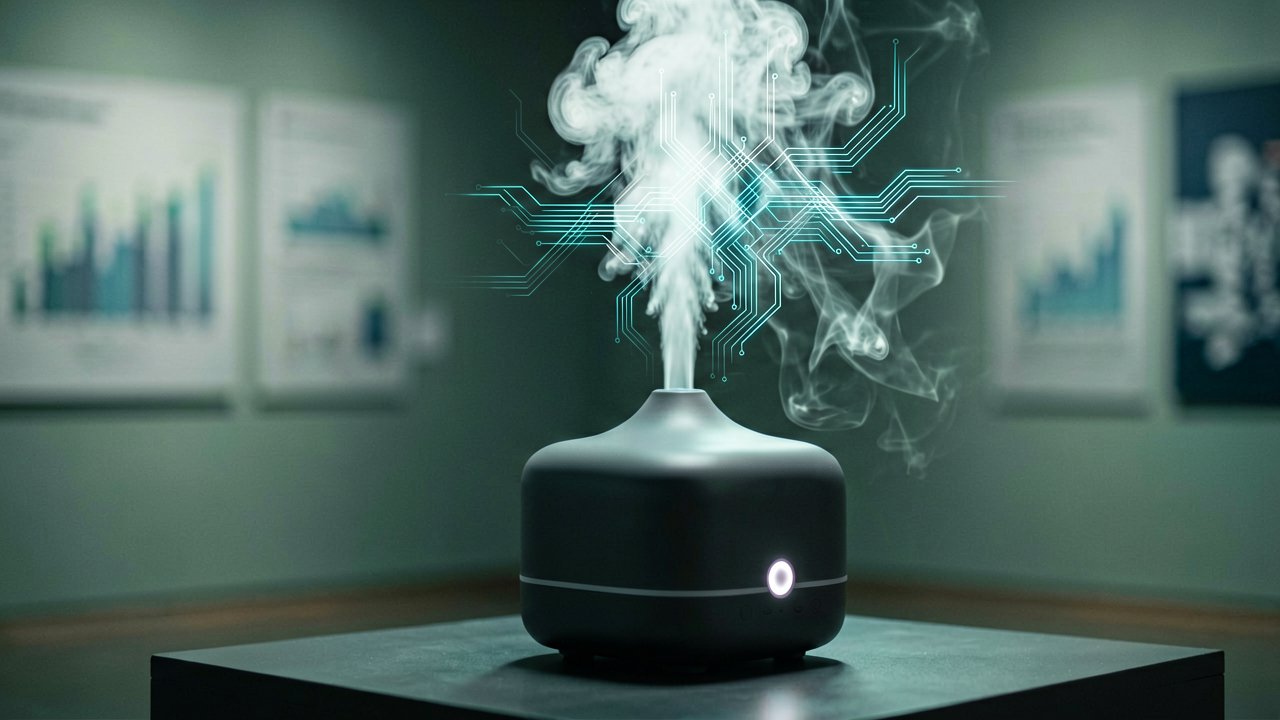
The world's first museum of AI arts, Dataland, has announced a partnership with L'Oréal Luxe to create an olfactory art experience for its inaugural exhibition. The collaboration introduces 12 unique "olfactive imprints" that visitors will encounter as "living scents" throughout the five-gallery space.
Co-founded by Refik Anadol and Efsun Erkilic, the museum is scheduled to open June 20 in downtown Los Angeles at The Grand LA, a mixed-use development designed by Frank Gehry. The inaugural exhibition, Machine Dreams: Rainforest, will run through January 31, 2027.
According to the official Dataland website, the exhibition is powered by the Large Nature Model (LNM), an open-source AI system trained on data gathered from 16 rainforest environments across the globe. This represents the first AI model based solely on nature data.
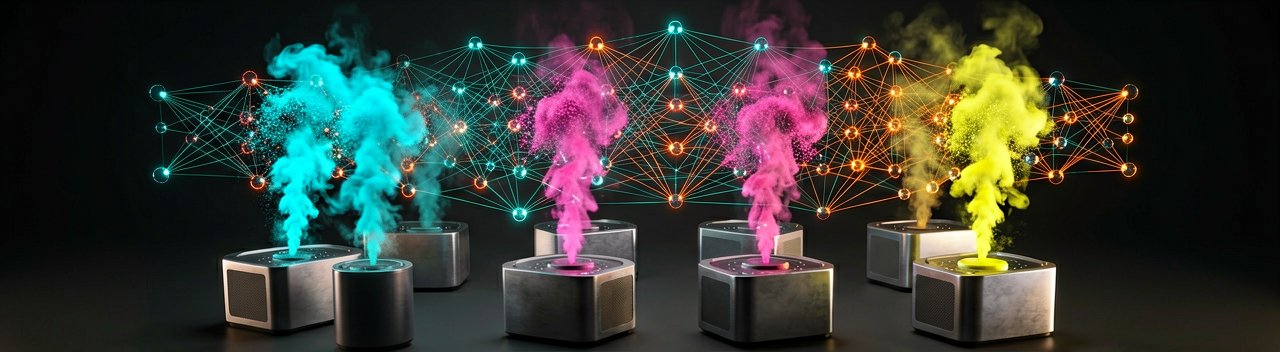
The scent technology operates through smart-diffuser devices that respond to both the artworks and visitor presence. Among the diffused profiles are "Scent of Rain," which delivers a hyper-realistic atmosphere of humid earth after rainfall, and "Scent of Data," which attempts to replicate the algorithmic pulsation of code. (The idea of smelling code is either brilliant or deeply unsettling, depending on your tolerance for abstraction.)
Anadol described the collaboration in a press release: "By combining artworks with a unique fragrance model, we are no longer just visualising data, we are breathing life into it." The artist's studio has been practicing with data since 2008, establishing the Los Angeles-based Refik Anadol Studio in 2014.
Cyril Chapuy, president of L'Oréal Luxe, stated: "I am incredibly proud that L'Oréal Luxe is collaborating with him on Dataland, placing olfaction at the very centre of the museum and pushing the boundaries of unexpected fragrance creation."
Beyond scent, the museum incorporates a 250-speaker audio ecosystem driven by L-ISA immersive sound from L-Acoustics. The physical experience involves walking through galleries where data becomes pigment and art continuously evolves in real time, shaped by human interaction and machine intelligence.
According to Blooloop's coverage, the exhibition serves as "a narrative of a deepening relationship between machine intelligence and the natural world." Anadol's time in rainforest environments directly inspired the development of the Large Nature Model.
The museum is designed in collaboration with architecture firm Gensler and sustainable development consultancy Arup. Anadol has positioned Dataland as an institution focused on co-creation and human-machine collaboration, addressing challenges like accessibility, ethical data collection, and sustainability through renewable energy computing.
Previous Anadol Studio projects have been exhibited at venues including New York's Museum of Modern Art, the Sphere in Las Vegas, and London's Serpentine Galleries. The studio has presented works in more than 750 cities across six continents.
The olfactory component represents a notable expansion beyond Anadol's established work with visual and audio data. His 2016 residency at Google's Artists + Machine Intelligence program helped establish the technical foundation for these multi-sensory installations.
Whether visitors actually perceive the scent of algorithms remains to be seen. The real test will be whether this sensory layer adds meaningful depth or simply becomes another gimmick in an increasingly crowded experiential art market.
Artūras Malašauskas is an AI Systems Integrator with 20+ years of production-grade web engineering experience. He has designed, shipped, and scaled enterprise Python/PHP systems for logistics, SaaS, and public-sector clients. For the past year, he has focused exclusively on AI integrations: deploying open-source LLMs, building generative media pipelines (image, audio, video), and engineering multi-agent workflows for real production environments. His standard: reproducibility, security, cost-efficient inference—no vaporware. He documents and evaluates emerging AI tooling, separating verified capabilities from marketing noise. Technical editor at: muza-ai.eu, ai-verslas.lt, ai-naujinos.lt Connect on LinkedIn
Comments