Unitree Robotics Unveils GD01 Manned Mecha for Civilian Use
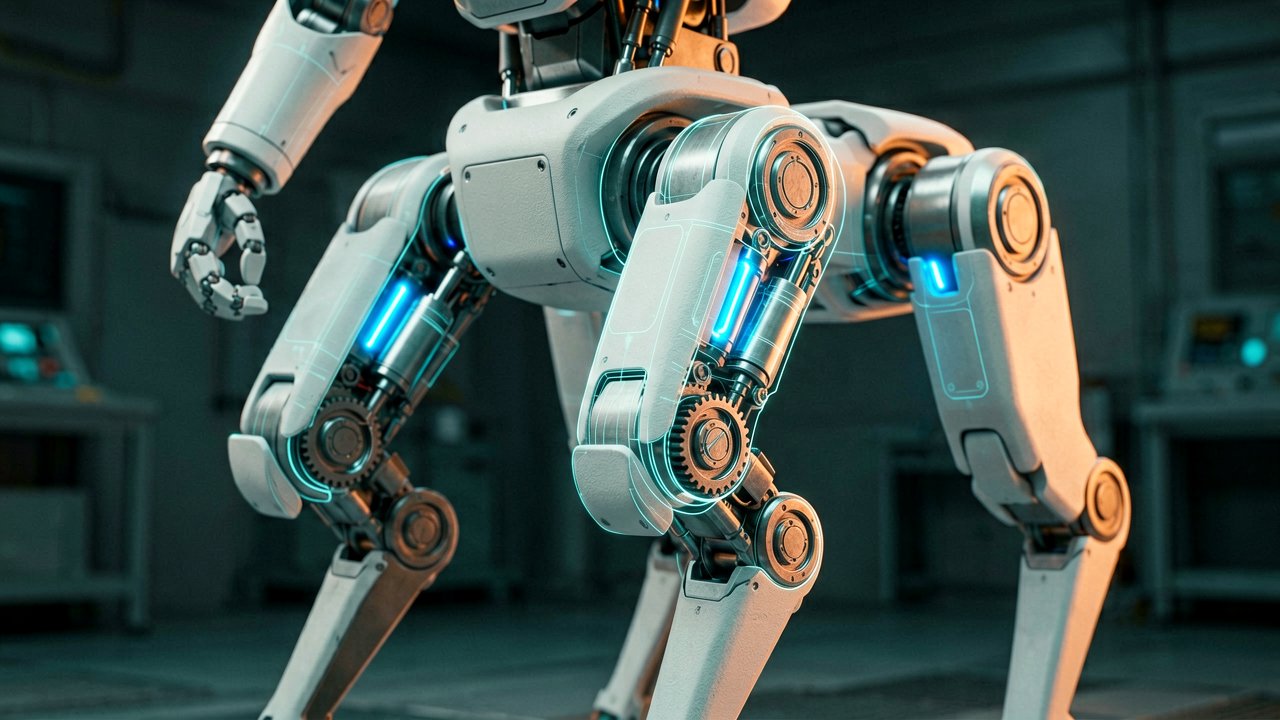
A Chinese robotics company has introduced what it claims is the first mass-producible manned mecha robot designed for civilian applications. Unitree Robotics unveiled the GD01 on Tuesday, a machine that allows a human operator to climb inside and control it directly.
The Hangzhou-based firm positioned the GD01 as commercially available rather than a prototype. This marks a significant departure from earlier mecha-style machines like Japan's Archax, which remained limited, high-cost builds rather than market-ready products.
Physical specifications place the GD01 at approximately 500 kilograms (1,102 pounds) with a rider on board. The machine stands roughly 1.6 times taller than an average adult, or about 2.7 meters according to some reports. It moves on two legs across urban surfaces and shifts to a four-legged stance for hills, steps, and uneven ground.
A LiDAR system paired with depth cameras keeps the machine balanced during movement and between modes. The GD01 can also navigate without a human pilot on board (which means it's not entirely dependent on someone sitting inside it, though that's the main selling point).
The founder and CEO of the company personally exhibited the robot at the launch. He took the controls from within a compartment built into the machine's upper frame and piloted it across various types of terrain. The company published the demonstration video at normal playback speed, not edited for effect.
During the demonstration, the machine drove its arm through a concrete block wall before shifting to four legs to carry the operator to a second location. The physical reality of this involves a human sitting inside a metal frame, feeling every impact and vibration as the robot's actuators engage.
Price positioning places the GD01 at at least $650,000 (3.9 million yuan) according to GreekReporter's coverage. The South China Morning Post reported a slightly lower figure of $573,674, suggesting either currency fluctuation or different configuration tiers.
A company spokesperson stated the machine was built solely for civilian purposes. Buyers were asked to use it responsibly and avoid any alterations that could pose safety risks. This disclaimer alone suggests the engineering team anticipated creative misuse.

Unitree Robotics built its reputation with four-legged robot dogs before expanding into humanoid robotics. The company shipped more than 5,500 units of its G1 model last year, establishing manufacturing scale before attempting the GD01.
The GD01 represents a new category of large, human-operated robots. Online comparisons have already drawn parallels to both the "Alien" film franchise and the "Transformers" series. Heavy investment in embodied artificial intelligence is allowing Chinese robotics firms to bring more complex systems to market faster.
Independent reporting from SCMP corroborates the core specifications and commercial availability claims. The coverage confirms the dual-mode locomotion and civilian positioning.
Additional coverage from Al Jazeera documented the CEO's demonstration footage and the wall-smashing capability.
Whether this technology translates to practical civilian use remains uncertain. The price point alone limits adoption to wealthy individuals, research institutions, or specialized industrial applications. Most consumers will watch videos of it rather than own one.
The real question isn't whether the GD01 works technically. It's whether anyone outside of tech enthusiasts and deep-pocketed collectors will actually pay six figures for a robot that walks like a human and crawls like a dog. Time will tell if this becomes a niche product or a genuine category.
For now, the GD01 exists as proof of concept wrapped in a very expensive metal shell. Whether that shell finds a home in civilian applications or remains a showroom piece is the actual story here.
The engineering is impressive. The business case is less clear.
Artūras Malašauskas is an AI Systems Integrator with 20+ years of production-grade web engineering experience. He has designed, shipped, and scaled enterprise Python/PHP systems for logistics, SaaS, and public-sector clients. For the past year, he has focused exclusively on AI integrations: deploying open-source LLMs, building generative media pipelines (image, audio, video), and engineering multi-agent workflows for real production environments. His standard: reproducibility, security, cost-efficient inference—no vaporware. He documents and evaluates emerging AI tooling, separating verified capabilities from marketing noise. Technical editor at: muza-ai.eu, ai-verslas.lt, ai-naujinos.lt Connect on LinkedIn
Comments