Unitree Robotics Unveils GD01 Piloted Transforming Mecha
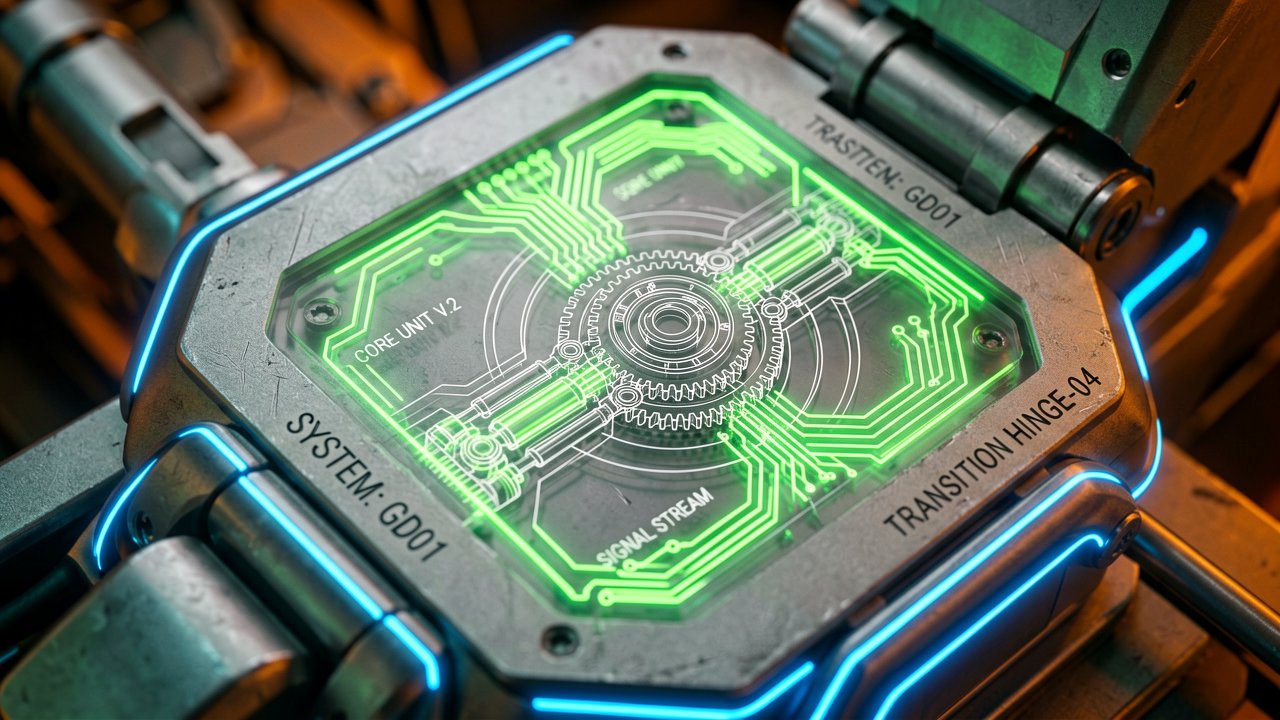
The robotics industry just got a lot more physical. Unitree Robotics has unveiled the GD01, a piloted transforming mecha that allows a human operator to sit inside and control the machine directly. Standing 2.7 meters tall and weighing 500 kilograms with a pilot aboard, the device represents a departure from the autonomous humanoid robots that have dominated recent industry announcements.
CEO Wang Xingxing demonstrated the machine in a video that circulated widely across social platforms. In the footage, Wang straps into the cockpit, maneuvers the bipedal machine forward, and uses its mechanical arms to smash through a brick wall. The robot then transitions into a four-legged configuration, showcasing its ability to navigate rough terrain. The demonstration feels less like a product launch and more like a scene from a science fiction film that somehow escaped the studio lot.
According to Global Times reporting, the GD01 is priced from 3.9 million yuan, approximately $650,000. The company has positioned this as a preliminary reference price, with marketing staff member Huang Jiawei acknowledging that the final production version may be adjusted depending on performance optimization. The price tag alone places the machine firmly in the realm of industrial equipment rather than consumer technology.
Unitree was founded in 2016 and has since become one of the world's leading manufacturers of robotic systems. The company shipped over 5,500 humanoid robots to the market last year alone, confirming rapid growth in demand for such technologies. Chinese companies accounted for nearly 90% of global humanoid robot sales in 2025, according to industry analysis cited in the coverage. This market dominance provides Unitree with the manufacturing ecosystem needed to produce complex machines like the GD01.
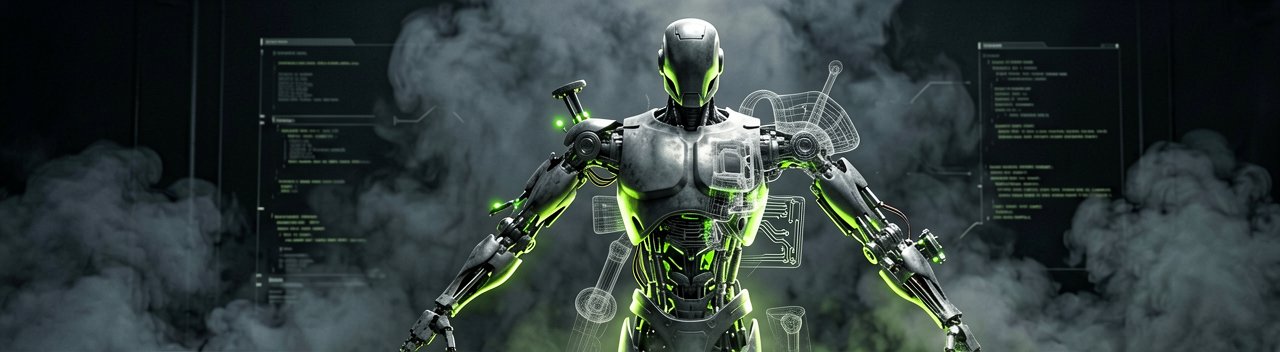
The physical reality of operating the GD01 raises immediate questions about usability. Getting in and out of a 500-kilogram machine is not trivial. The cockpit interface, battery life, and maintenance complexity all present challenges that autonomous robots avoid entirely. Chen Jing, vice president of the Technology and Strategy Research Institute, noted that weaknesses are mainly related to real-world usability, including difficulties getting in and out of the machine, battery-life concerns, limited comfort, regulatory uncertainty, and maintenance complexity.
Unitree issued a warning to users, urging them not to attempt dangerous stunts. The company emphasized that modern humanoid robotics is still in the early experimental stage and has a number of functional limitations for private use. This disclaimer appears necessary given the demonstration video shows the robot breaking through walls—a feat that would require significant structural engineering in any real-world application.
The robot's debut sparked lively discussion on the Chinese social media platform Weibo. Users noted that technologies that until recently existed only in science fiction films are gradually becoming a reality. Comments ranged from comparisons to Transformers to references to Gundam, reflecting the cultural resonance of piloted mechas in Asian media. The machine also went viral on overseas platforms, with users on YouTube and X expressing amazement at the engineering breakthrough.
Behind the buzz is China's rapidly expanding embodied intelligence industry. In February 2026, China's Ministry of Industry and Information Technology released a standard system for humanoid robots and embodied intelligence, further accelerating industry standardization and development. Cities including Beijing, Shenzhen, and Shanghai have rolled out supportive policies to speed up the construction of robotics industrial parks, open testing scenarios, and increase funding support for future industries.

Wang Peng, an associate research fellow at the Beijing Academy of Social Sciences, told the Global Times that Unitree's mecha represents not only the success of a single product but also a concentrated breakthrough built on years of industrial-chain accumulation. The company's ability to rapidly launch such products is backed by China's highly dense and responsive manufacturing ecosystem, from high-performance motors and batteries to carbon-fiber materials.
Unitree's application scenarios for its products are mainly aimed at changing the way people work. The company's robots can be used in high-risk and harsh environments, according to Huang. At this stage, Unitree's B2 and A2 quadruped robots are already being applied in consumer and inspection scenarios. The company hopes to improve work efficiency and optimize the way people work through the use of robots.
Earlier this year, Unitree announced the launch of international sales of its affordable R1 humanoid robot on the AliExpress platform. This will allow buyers from North America, Europe, Japan, and Singapore to purchase the device, which is positioned as a sports robot with advanced capabilities. The R1 represents a different market segment entirely—autonomous, consumer-focused, and significantly cheaper than the GD01.
Whether the GD01 finds a viable market remains uncertain. Veteran telecom and technology analyst Ma Jihua pointed to potential uses in theme parks, immersive entertainment, filmmaking, rescue efforts, and operations in challenging environments. These applications make more sense than civilian ownership, given the price and operational complexity.
The machine is billed as the world's first production-ready manned mecha, but the distinction between production-ready and demonstration-ready is often thin in robotics. The company has the capability for large-scale production, but further functional optimization and cost reduction will still take time following the product's initial launch. Huang noted that the product is still in its first generation at this stage, and there is indeed a lot of room for imagination.
What the GD01 demonstrates is less about practical utility and more about engineering capability. It proves that Chinese manufacturers can build complex, piloted robotic systems at scale. Whether anyone actually needs a $650,000 transforming robot for their daily work remains the real question.
The technology is impressive, but the business case is still being written.
Artūras Malašauskas is an AI Systems Integrator with 20+ years of production-grade web engineering experience. He has designed, shipped, and scaled enterprise Python/PHP systems for logistics, SaaS, and public-sector clients. For the past year, he has focused exclusively on AI integrations: deploying open-source LLMs, building generative media pipelines (image, audio, video), and engineering multi-agent workflows for real production environments. His standard: reproducibility, security, cost-efficient inference—no vaporware. He documents and evaluates emerging AI tooling, separating verified capabilities from marketing noise. Technical editor at: muza-ai.eu, ai-verslas.lt, ai-naujinos.lt Connect on LinkedIn
Comments