Benchling Launches Model Hub for Scientific AI in R&D Workflows

The biotech R&D platform Benchling launched Model Hub on May 13, 2026, embedding scientific AI models directly into the workflow where experimental data lives. The feature is available now to all Benchling customers through a new icon in the platform navigation bar.
Until this update, running AI models in a drug program required compute provisioning, DevOps work, API integrations, and ongoing maintenance. Teams often spent months on engineering overhead before a scientist ran a single prediction. Results lived outside the R&D stack, disconnected from experimental records.
Model Hub changes that dynamic. Scientists select inputs from their Benchling registry, choose from a curated model library, and run predictions individually or in batches of hundreds. They get back structured results with a full audit trail, all without leaving the platform where the rest of their R&D data lives.
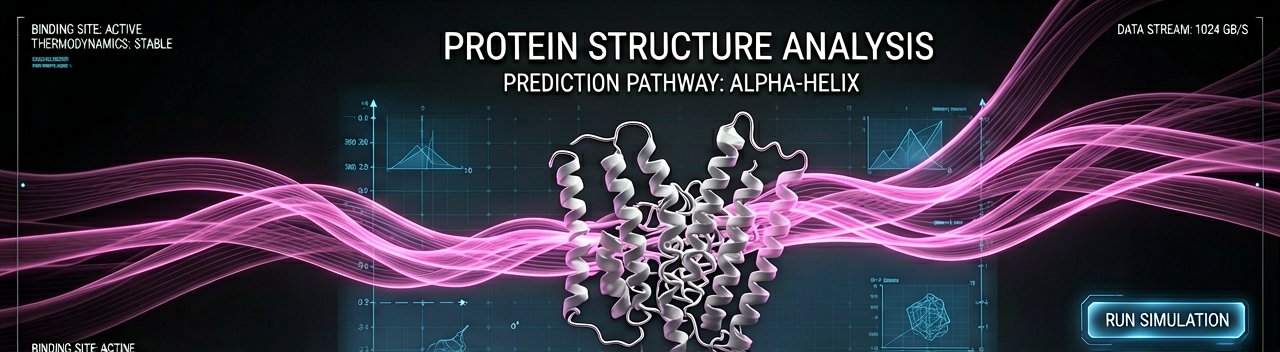
According to the official press release, the launch includes a curated set of open source and proprietary models. Open source options include AlphaFold, Chai-1, OpenFold 2, OpenFold 3-preview (developed by the OpenFold Consortium and the AlQuraishi Lab at Columbia University), and Protenix from ByteDance Research.
Proprietary model access is coming in the weeks following launch. Benchling announced a partnership with Boltz PBC, the team behind Boltz-2 and BoltzGen. The company also intends to make Lilly TuneLab available on the platform, as previously announced.
Access to scientific AI models shouldn't depend on whether your team has the engineering resources to build and maintain the infrastructure to run them, said Mihir Trivedi, Product Manager Scientific AI at Benchling. Model Hub gives any scientist on Benchling a way to run state-of-the-art models and connect those outputs directly to their experimental record.
New capabilities shipping with Model Hub include batch predictions, which allow scientists to submit structure predictions across a candidate library in a single run rather than one sequence at a time. Prediction tracking provides a centralized log of every model run, input set, and result with timestamps and links to source records.
MSA (Multiple Sequence Alignment) support incorporates evolutionary alignment data to improve prediction quality for structure models. Benchling runs GPU-accelerated MSAs, cutting one of the slowest steps in the prediction pipeline (a bottleneck that has frustrated computational biologists for years).

Faster execution comes through upgraded GPU infrastructure across Model Hub. With this update, you can now run 4X the structure predictions with the same credit allocation. The Benchling blog post details the infrastructure overhaul behind this improvement.
Model Hub is part of Benchling's broader AI Scientist work, where AI can select, run, and interpret models as a natural part of driving a drug program forward. Scientists direct the science rather than managing infrastructure.
The physical experience of using Model Hub is straightforward. Scientists click the new icon in the left navigation bar, browse the full model library, kick off prediction runs, and track results in one place. Results come back as an organized prediction batch, ready to review and act on. No more context switching between tools, no manual effort to connect model outputs to experimental records.
Benchling serves more than 1,300 companies worldwide, from pioneering startups to global leaders like Merck, Moderna, and Sanofi. The company positions itself as the AI platform for biotech R&D, unifying scientific data and automating workflows to accelerate discovery and development.
Whether this actually reduces the time from target to IND remains to be seen. The infrastructure is now there, but the real test is whether scientists will use it consistently enough to change how drug programs run. For now, the models are available, the credits are allocated, and the predictions are waiting.
Artūras Malašauskas is an AI Systems Integrator with 20+ years of production-grade web engineering experience. He has designed, shipped, and scaled enterprise Python/PHP systems for logistics, SaaS, and public-sector clients. For the past year, he has focused exclusively on AI integrations: deploying open-source LLMs, building generative media pipelines (image, audio, video), and engineering multi-agent workflows for real production environments. His standard: reproducibility, security, cost-efficient inference—no vaporware. He documents and evaluates emerging AI tooling, separating verified capabilities from marketing noise. Technical editor at: muza-ai.eu, ai-verslas.lt, ai-naujinos.lt Connect on LinkedIn
Comments