Dürr Unveils EcoRP4 Painting Robot with Asymmetric Arm Design
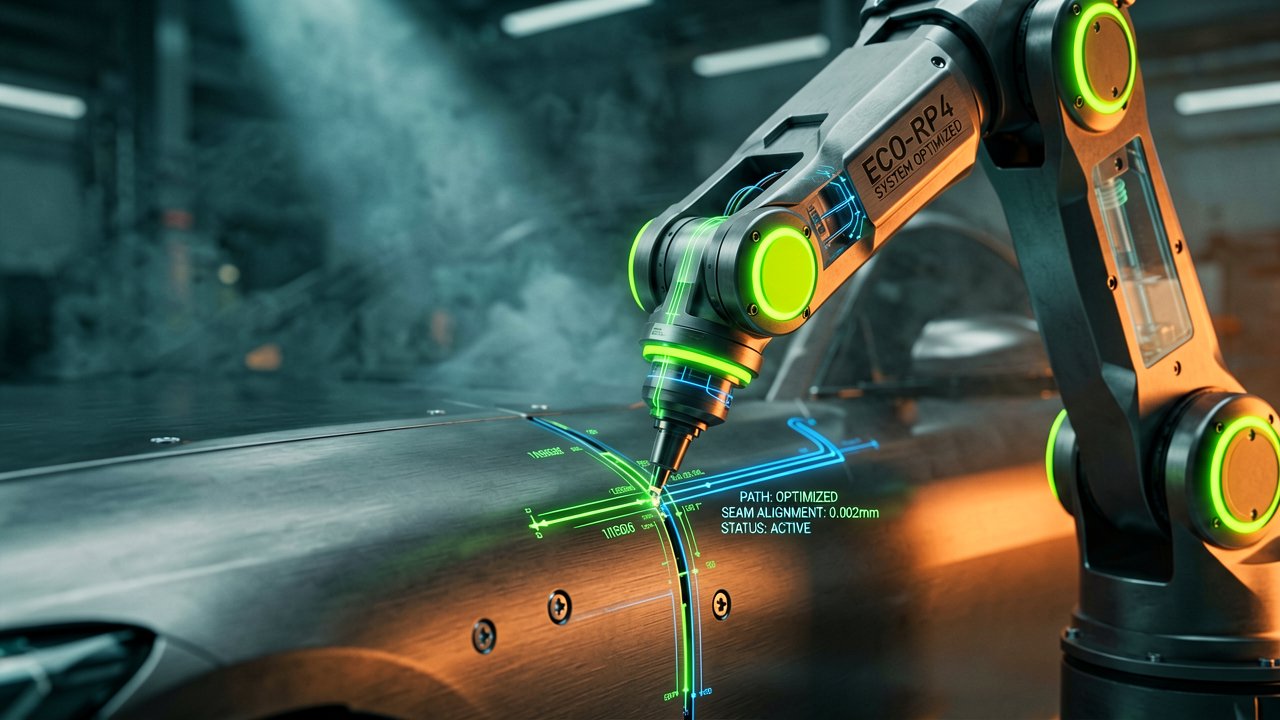
The industrial automation company Dürr has announced the EcoRP4, a fourth-generation painting robot designed specifically for automotive body coating operations. The machine represents a significant departure from traditional symmetric robot arm architecture, introducing an asymmetric design that positions the applicator tool center point more than 200 millimeters laterally from the main axis.
This offset configuration directly addresses a persistent physical constraint in paint shop automation: the robot arm itself often blocks access to interior vehicle surfaces. By moving the applicator away from the interference contour, the EcoRP4 can reach door rebates, hinges, and transition zones that previously required complex programming workarounds or additional robot positioning.
According to the official announcement on Dürr's corporate news portal, the EcoRP4 succeeds the six-axis EcoRP E/L x33iC robot and targets high-volume, standardized painting lines. The company has deployed nearly 20,000 units from its Ecopaint robotic family since 1998, establishing a substantial installed base for this product line.
Andreas Bokermann, product manager at Dürr, stated the fourth generation is "designed through and through for economy." The simplified mechanical system reduces lifecycle costs without compromising process technology. Fewer components mean less to fail, which matters when a paint shop runs thousands of cycles per shift.
The physical design changes extend beyond the asymmetric geometry. Arm 1 features a more compact profile, reducing the spatial footprint in the working area. This matters in crowded paint shops where every centimeter of clearance counts. Arm 2 carries the applicator, color changer, and metering pumps in close proximity to the paint outlet, keeping tubing lengths short.
Shorter tubing translates to faster valve switching times during color changes. It also minimizes paint and rinsing agent loss—waste that accumulates quickly across a production run. The difference between losing 50 milliliters versus 200 milliliters per color change adds up over thousands of cycles (a problem that has plagued users for years, frankly).
Maintenance access received substantial attention in the redesign. Most process control technology integrates into arm 1, a characteristic feature of Dürr painting robots. The housing concept was revised to include a continuous cover accessible from the side. Technicians can now reach process-related components without removing multiple panels, significantly reducing service times.
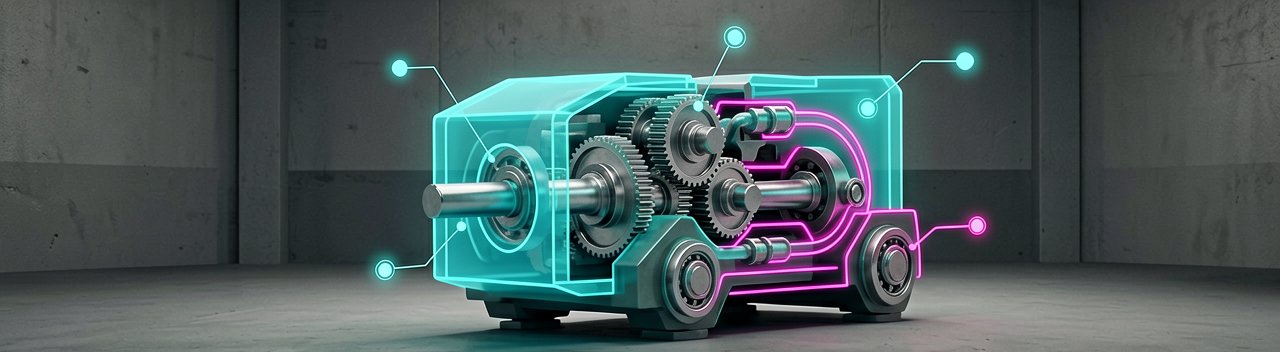
The drive technology for axis 2 and axis 3 underwent simplification. Instead of an angular gearbox with a reduction gear, the pinion gear drive now sits directly on the motor shaft. Eliminating additional gear stages reduces both component count and wear points. This is the kind of mechanical simplification that only becomes apparent when you're troubleshooting a failed gearbox at 2 AM.
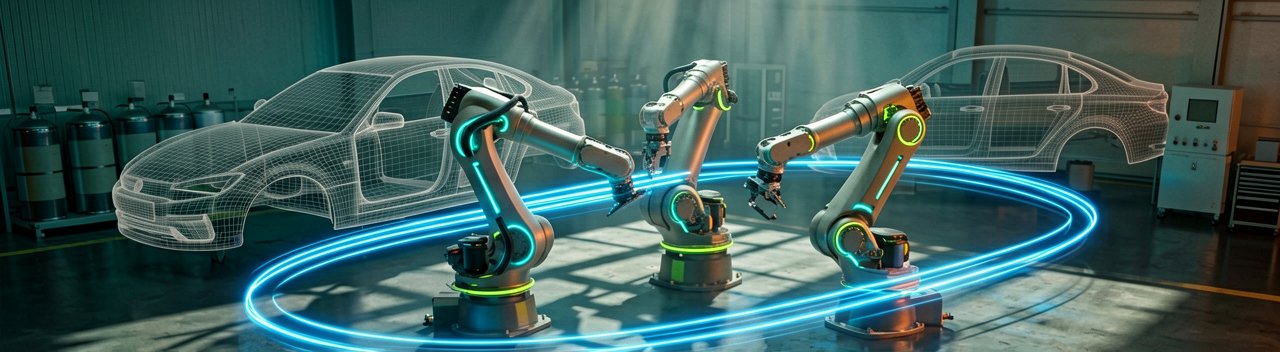
Independent coverage from Robotics & Automation News corroborates the technical specifications and market positioning. The publication notes the robot supports flexible integration into paint shops, from floor mounting to tower installation and linear rail configurations.
The EcoRP4 supports the HTE (High Transfer Efficiency) process and can combine with Dürr's latest application technology across various configurations. Market launch is scheduled for 2027, giving automotive manufacturers time to plan integration into existing or new paint lines.
Industry context matters here. Paint shop automation remains a major segment within industrial robotics deployment, but it faces unique challenges compared to general-purpose industrial robots. The environment is corrosive, the precision requirements are tight, and downtime costs run high. A robot that reduces maintenance frequency and improves first-pass coverage directly impacts operational economics.
The asymmetric design also enables mirrored versions for use on both sides of the vehicle body. This flexibility reduces the need for separate robot configurations depending on which side of the line the robot operates. For manufacturers running mixed-model production, this standardization simplifies spare parts inventory and technician training.
Whether the 2027 market launch timeline holds depends on supply chain conditions and customer adoption rates. Automotive manufacturers typically validate new automation equipment through extended pilot programs before committing to full production deployment. The EcoRP4's value proposition hinges on whether the reduced maintenance and improved reach translate to measurable cost savings in real-world operations.
The technology represents incremental refinement rather than radical innovation. The core painting process remains unchanged; the robot simply executes it more efficiently. That's appropriate for this segment—paint shops prioritize reliability over novelty. A robot that works consistently for years without unexpected downtime is worth more than one with flashy new features that introduce new failure modes.
Dürr's approach reflects the mature state of automotive paint automation. The company isn't trying to reinvent the wheel; it's optimizing a proven platform for the specific constraints of high-volume manufacturing. Whether users actually pay for the upgrade remains the real question, especially when existing EcoRP robots continue functioning adequately.
The final calculation comes down to total cost of ownership. If the EcoRP4 reduces maintenance hours, minimizes paint waste, and improves first-pass coverage rates, the investment pays for itself over time. But that requires actual deployment data, not just engineering specifications. Time will tell if the asymmetric geometry delivers the promised advantages at scale.
Artūras Malašauskas is an AI Systems Integrator with 20+ years of production-grade web engineering experience. He has designed, shipped, and scaled enterprise Python/PHP systems for logistics, SaaS, and public-sector clients. For the past year, he has focused exclusively on AI integrations: deploying open-source LLMs, building generative media pipelines (image, audio, video), and engineering multi-agent workflows for real production environments. His standard: reproducibility, security, cost-efficient inference—no vaporware. He documents and evaluates emerging AI tooling, separating verified capabilities from marketing noise. Technical editor at: muza-ai.eu, ai-verslas.lt, ai-naujinos.lt Connect on LinkedIn
Comments