JABAS.AI Launches GPS-Free Navigation for Agricultural Robot Fleets
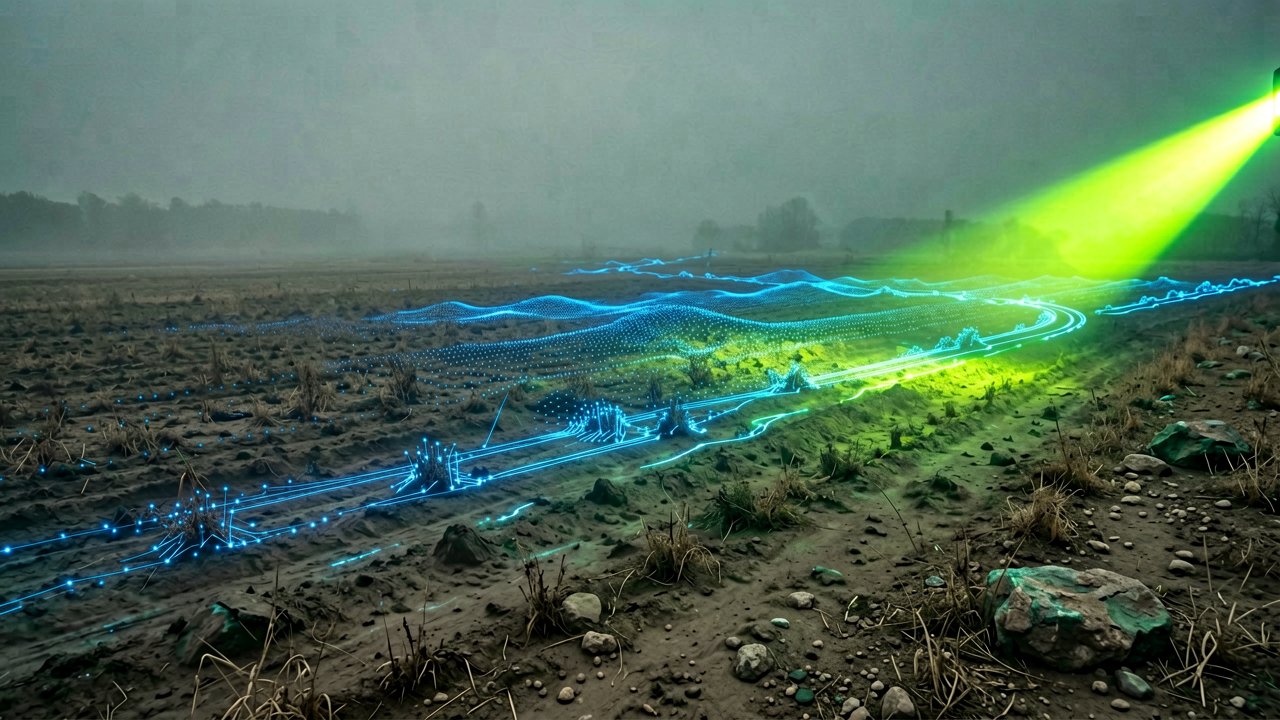
The agricultural robotics sector has long struggled with a fundamental problem: GPS doesn't work where farmers actually need robots. JABAS.AI has launched to address this gap, offering an autonomy platform that enables agricultural robot fleets to navigate without relying on satellite positioning, connectivity, or pre-mapped environments.
The company emerged as the fifth spinout from Ceres Agri-Tech, a partnership between the University of Lincoln, University of Cambridge, and University of East Anglia. According to Cambridge Enterprise's official announcement, the platform replaces GPS dependency with a combination of lidar, computer vision, and advanced localization algorithms.
Conventional GPS waypoint navigation fails under canopy, in polytunnels, or near farm structures. This limitation has restricted practical deployment of autonomous robots in horticulture. JABAS.AI's approach enables on-the-go environment mapping and optimal route selection in real time (a capability that has been frustratingly absent from most agri-robotics for years).
The platform functions as an "autonomy-as-a-service" layer that can integrate with any existing robot platform. This reduces the need for human intervention and pre-deployment setup while enabling safe, intelligent responses to dynamic obstacles including workers, tractors, and other robots operating in the same space.

Professor Marc Hanheide, Founder and Chief Technology Officer at JABAS.AI and Professor of Intelligent Robotics and Interactive Systems at the University of Lincoln, stated the company's mission is to make advanced autonomy work reliably on farms under real operating conditions which are inherently unpredictable.
A core application targets a specific labour bottleneck in horticulture: 15 to 20% of time on soft fruit farms is spent moving trays of picked fruit between pickers and collection points. The JABAS.AI platform enables any agri-robot to navigate autonomously, locate workers, and collect harvested produce, reducing physical strain on workers and supporting more efficient picking operations.
The company has secured pre-seed investment and is incorporated in Lincolnshire. It is currently working with six commercial operators on autonomous navigation testing and trials. Dr Louise Sutherland, Ceres Agri-Tech Director at Cambridge Enterprise, noted that robotic fruit logistics in unstructured farm environments is now possible with this new autonomy.
Ceres Agri-Tech has a pipeline of over 55 agri-tech innovations with global potential. Other spinouts in the portfolio include Agaricus Robotics (intelligent robotic mushroom harvesting), Fruitcast.AI (AI-enabled decision support and fruit forecasting), and Cellexcel (chemistry solutions to remove forever chemicals from industrial fibre applications). Together, the companies have created 34 high-value jobs in the rural sector.

Professor Simon Pearson, Founder and Director of the Lincoln Institute for Agri-Food Technology, described JABAS.AI as a strong example of how world leading research at the University of Lincoln can be translated into technologies that deliver effective solutions for agriculture.
The physical reality of farm navigation involves mud, uneven terrain, shifting obstacles, and environments where satellite signals bounce off metal structures or get blocked by tree canopies. JABAS.AI's sensor fusion approach means robots can actually feel their way through these conditions rather than relying on a signal that disappears when you need it most.
Whether growers will pay for this autonomy layer remains the real question. The technology solves a genuine problem, but adoption depends on whether the cost of integration delivers measurable returns on labour savings and productivity gains.
The robots work. The business model still needs to prove itself in muddy fields.
Artūras Malašauskas is an AI Systems Integrator with 20+ years of production-grade web engineering experience. He has designed, shipped, and scaled enterprise Python/PHP systems for logistics, SaaS, and public-sector clients. For the past year, he has focused exclusively on AI integrations: deploying open-source LLMs, building generative media pipelines (image, audio, video), and engineering multi-agent workflows for real production environments. His standard: reproducibility, security, cost-efficient inference—no vaporware. He documents and evaluates emerging AI tooling, separating verified capabilities from marketing noise. Technical editor at: muza-ai.eu, ai-verslas.lt, ai-naujinos.lt Connect on LinkedIn
Comments