Google Unveils Googlebook: Android Laptops Built for Gemini AI

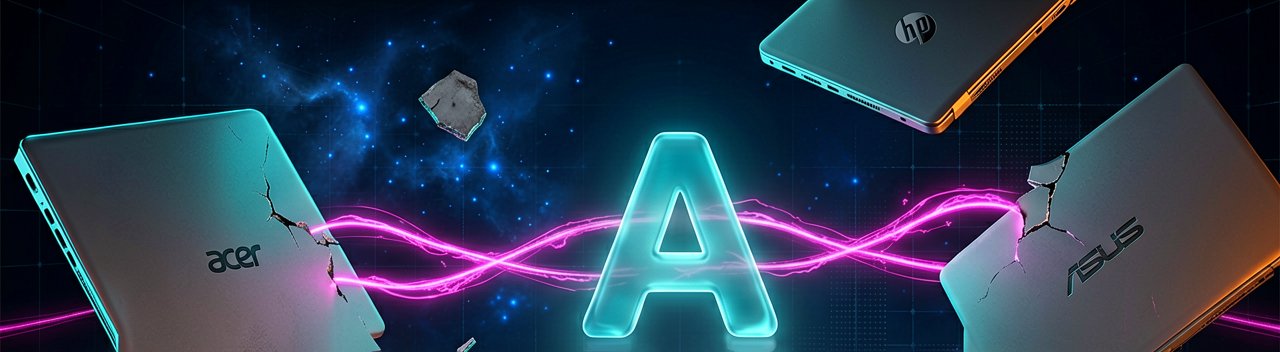
Google on Tuesday unveiled Googlebook, a new line of laptops built around Gemini, the company's flagship family of AI models. The announcement marks a significant pivot from ChromeOS toward an Android-based operating system with AI embedded at the foundation. Devices will launch this fall through hardware partners Acer, ASUS, Dell, HP, and Lenovo.
The official Google blog post frames this as a 15-year evolution from the Chromebook, which debuted in 2011 as a cloud-first laptop. Now, the company says it's moving from an operating system to an intelligence system. The result is Googlebook: a new category of laptops built with Gemini's helpfulness at its core.
Every Googlebook ships with Magic Pointer, a new AI-powered cursor built with the Google DeepMind team. Rather than just pointing and clicking, wiggling the cursor surfaces quick, contextual suggestions based on what's on your screen. Point at a date in an email to set up a meeting, or select two images—like your living room and a new couch—to instantly visualize them together. It lets you go from idea to I'm done in just a few clicks.
Alexander Kuscher, Google's senior director of Android tablets and laptops, told reporters the feature exemplifies how the company thinks about AI features throughout Googlebooks. "It's built in, but not in your face," he said. The cursor becomes the first thing you see when you open up your laptop, and for being the most often used tool on your laptop, it really hasn't seen much change since the right-click was added.
Users can also create custom widgets by prompting Gemini through the Create your Widget feature. Gemini can search the internet or connect to Google apps like Gmail and Calendar to create one personalized dashboard. Planning a family reunion in Berlin? Gemini can organize your flight and hotel information, restaurant reservations and even a countdown in a single, helpful spot on your desktop.
Being built on part of the Android tech stack allows Google to bring new innovations much faster to all users, including now on laptops. It also provides a much better experience when you have multiple devices, which more and more people have nowadays. If you're in the zone on your laptop but start to get hungry, you can tap a phone app, get that order out quickly and get back to it. Or if you get a reminder for your daily Duolingo language lesson, you can pop over and finish it without ever leaving your screen.
Quick Access lets you easily view, search or insert your phone's files on your laptop—no transfers needed. The file browser integration means you're not constantly reaching for your phone to grab a document or photo. It just works.
Every Googlebook will be built with premium craftsmanship and materials, coming in a variety of shapes and sizes. You will know it's a Googlebook by the unique glowbar—a statement that is both functional and beautiful. The hardware partners are just as excited as Google is about them.

Independent reporting from TechCrunch confirms the timeline and scope of the changes. The bigger story here may be what Googlebook replaces. The unveiling comes 15 years after Google introduced the Chromebook—the affordable, browser-based laptop that became a fixture in schools and workplaces worldwide.
A Google spokesperson told TechCrunch in an email that the company plans to continue supporting current Chromebook users, with devices receiving updates through their existing support commitments. Many Chromebooks will also be eligible to transition to the new experience, though the company didn't share specifics on what this would look like.
Google isn't just refreshing its laptop lineup—it's beginning a long transition away from ChromeOS and toward a new Android-based operating system with AI built in at the foundation. And with the biggest names in PC hardware already signed on, this is a platform play as much as a hardware one. It's also a direct answer to Microsoft, which has been pushing its own AI-native Copilot+ PCs since 2024.
The physical reality of using these devices matters. You'll feel the glowbar lighting up when Gemini is active. You'll notice the cursor wiggling before it offers suggestions. You'll experience the friction—or lack thereof—when switching between phone apps and laptop workflows. These aren't abstract features; they're tactile interactions that either work or they don't (and if they lag, you'll know immediately).
Whether users actually pay for it remains the real question. AI features are everywhere now, and consumers are increasingly skeptical of hardware that promises intelligence but delivers gimmicks. The fall launch window gives Google time to refine the experience, but it also means competitors have months to respond.
Time will tell if Googlebook becomes the next Chromebook or just another AI experiment that fades into the background. For now, the glowbar is on, and the cursor is waiting to be wiggled.
Artūras Malašauskas is an AI Systems Integrator with 20+ years of production-grade web engineering experience. He has designed, shipped, and scaled enterprise Python/PHP systems for logistics, SaaS, and public-sector clients. For the past year, he has focused exclusively on AI integrations: deploying open-source LLMs, building generative media pipelines (image, audio, video), and engineering multi-agent workflows for real production environments. His standard: reproducibility, security, cost-efficient inference—no vaporware. He documents and evaluates emerging AI tooling, separating verified capabilities from marketing noise. Technical editor at: muza-ai.eu, ai-verslas.lt, ai-naujinos.lt Connect on LinkedIn
Comments