Tutor Intelligence Opens Data Factory 1 for Robot AI Training
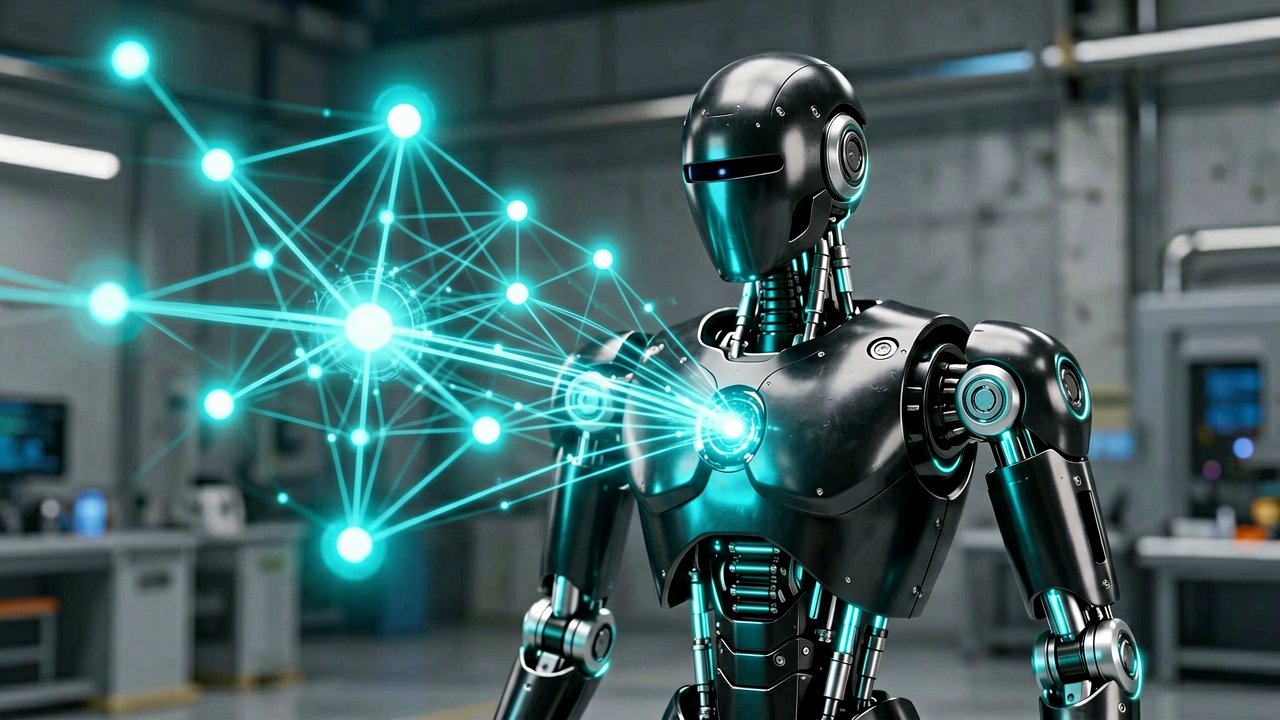
Tutor Intelligence has opened Data Factory 1 (DF1), a Watertown, Massachusetts facility the company describes as the largest robot data factory in the United States. The 35,000-square-foot site occupies a renovated mill along the Charles River and houses 100 semi-humanoid robots named Sonny, according to reporting by Manufacturing Dive.
Each Sonny robot functions as a bimanual manipulator equipped with four cameras mounted to stationary boxes—one at the head, one at the chest, and one on each claw. The facility combines onsite staff with remote teleoperators in the U.S., Mexico, and the Philippines to supervise and correct robot behaviors during object manipulation tasks.
CEO Josh Gruenstein described DF1 as an instrument of discovery rather than a turnkey automation service. The facility tour on April 22 revealed robots still learning to pick up random objects like hand lotion bottles and packages of Welch's Fruit Snacks. At this point, most of them do not.
The fleet trains a vision-language-action model called Ti0, which The Robot Report detailed in technical coverage published May 5. Rather than relying primarily on simulation, Tutor Intelligence prioritizes real-world data collection with human-in-the-loop corrective labels. This approach yields richer edge-case data for manipulation tasks but raises operational costs for instrumentation and remote tooling.
Tutor Intelligence, founded in 2021 by Gruenstein and chief technology officer Alon Kosowsky-Sachs out of MIT CSAIL, raised $34 million in Series A funding in December 2025. The capital-intensive DF1 deployment represents a shift toward fleet-scale, on-premise data infrastructure for physical AI.
The company claims DF1 can produce roughly 10,000 hours of training data per week. By evaluating the same policy across all 100 robots simultaneously, Tutor says it can detect and correct robot behaviors 100x faster. An edge case that may normally require eight hours of robot operation to notice will be visible in only five minutes of DF1 operation (which is the kind of scale that actually matters when you're debugging contact-rich manipulation).
Tutor participates in the Physical AI Fellowship, an accelerator supported by Amazon Web Services, NVIDIA, and MassRobotics. The startup received $200,000 in AWS credits and continues to use AWS for cloud compute and NVIDIA CUDA for modeling. All robots connect to AWS infrastructure for training pipelines.
While Sonny remains in development, Tutor has deployed its Cassie robot for autonomous case-picking and palletizing with U.S. customers. The 2,000-pound industrial robot can handle boxes weighing up to 50 pounds and move up to 14 cases per minute. Usage-based pricing runs $14 to $18 per hour, which the company says is competitive with increasingly scarce manual labor.

Paul Baker, CFO at Productiv, a third-party logistics provider, reported Tutor's robot operating at or better than human levels at its Dallas warehouse. The company is testing about 15 other robots performing high-variability, high-dexterity tasks with the goal of improving speed and efficiency.
For practitioners attempting similar programs, the DF1 model underscores that high-quality manipulation datasets currently require substantial physical infrastructure and human supervision. Teams should budget for multi-camera rigs, synchronized loggers, remote teleoperation tooling, and data pipelines that turn per-episode corrective traces into training signals compatible with VLA architectures.
Whether DF1 produces reproducible gains in pick-and-place and kitting metrics when transferred to partner plants remains to be seen. The real question is whether customers will actually pay for robots that still need 45 to 50 tutors watching them learn to pick up snack bags.
Artūras Malašauskas is an AI Systems Integrator with 20+ years of production-grade web engineering experience. He has designed, shipped, and scaled enterprise Python/PHP systems for logistics, SaaS, and public-sector clients. For the past year, he has focused exclusively on AI integrations: deploying open-source LLMs, building generative media pipelines (image, audio, video), and engineering multi-agent workflows for real production environments. His standard: reproducibility, security, cost-efficient inference—no vaporware. He documents and evaluates emerging AI tooling, separating verified capabilities from marketing noise. Technical editor at: muza-ai.eu, ai-verslas.lt, ai-naujinos.lt Connect on LinkedIn
Comments