L'Oreal Launches 2026 Beauty Tech Startup Program - Let's Data Science
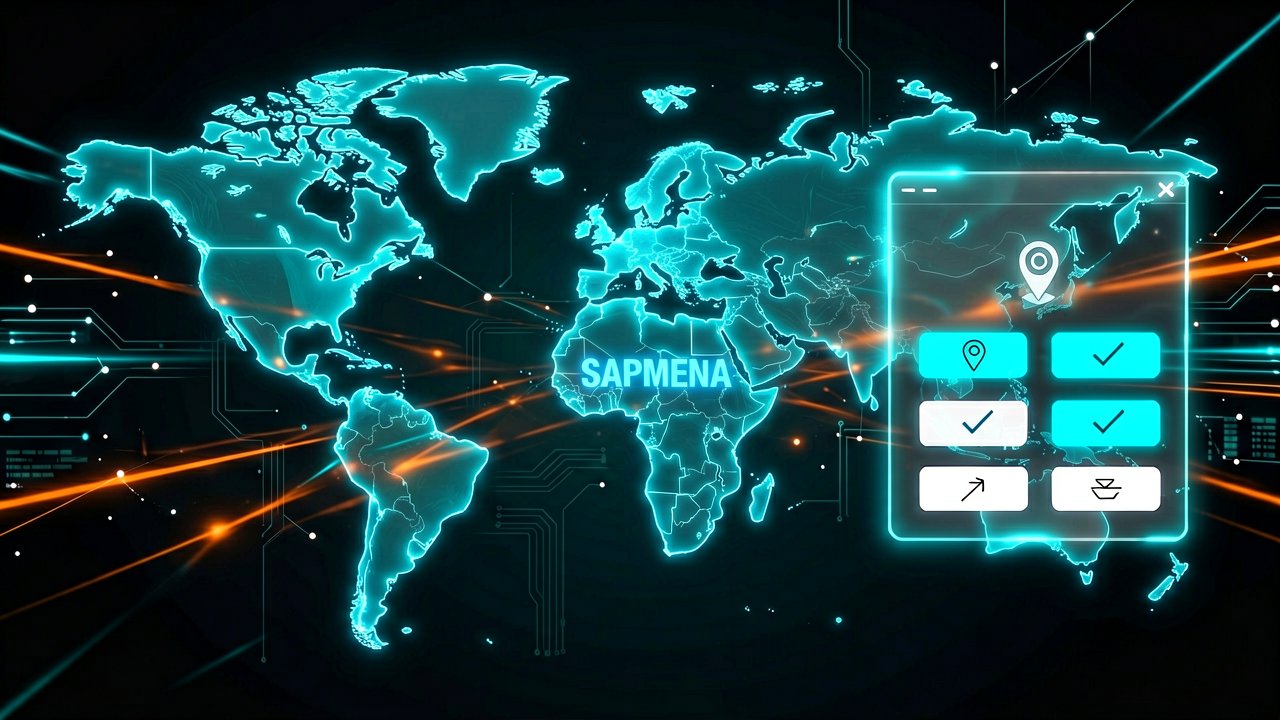
The beauty industry's largest open innovation competition has officially opened for the 2026 cycle. L'Oreal launched the Big Bang Beauty Tech Innovation Program for startups operating across South Asia Pacific, Middle East and North Africa (SAPMENA). The program, now in its third year, represents a significant distribution channel for early-stage beauty tech companies seeking commercial validation.
According to the PR Newswire release, applications run from May through November 2026. Winners secure a fully funded commercial pilot with one of L'Oreal's 40 international brands, potential scale across 35 SAPMENA markets, and year-long mentorship from L'Oreal senior leaders and programme partners.
Seven startups from earlier cohorts have already progressed to commercial pilots. This track record matters more than most accelerator programs can claim. The 2025 winners include Without (India), Sravathi AI (India), Heatseeker (Australia), Halo AI (UAE), and Wubble AI (Singapore).
The 2026 edition groups applications under five strategic innovation themes: Connected Brand Experience, Creators & Affiliates, AI-Powered Commerce, Science for Beauty, and Innovation for Good. These categories reflect where L'Oreal sees structural shifts in the industry. AI-powered commerce and creator economy solutions dominate the priorities.
Startups building AI-commerce solutions typically combine recommendation models, personalization engines, inventory-aware offers, and creator attribution systems. The physical reality of this work involves wrestling with API rate limits, debugging attribution pipelines that break when platforms change their tracking parameters, and convincing procurement teams to integrate new tools into legacy systems (a problem that has plagued users for years, frankly).
For creator and affiliate ecosystems, the technical challenges center on measurement and attribution. Startups must integrate with ecommerce platforms, payment rails, and provide creator-facing tooling for content-to-conversion workflows. The friction points are real: creators need dashboards that load quickly, brands need reports that reconcile with their finance systems, and both need the data to arrive before the campaign ends.
Vismay Sharma, President of L'Oreal SAPMENA Zone, commented that the region is becoming a global epicentre for tech innovation. He described SAPMENA as a "Silicon Valley" for Beauty Tech. The region houses 40% of the world's population with over 60% of young, digitally native consumers shopping online weekly.
The official L'Oreal Beauty Tech Atelier page details the global program structure. The Beauty Tech Atelier serves as the global platform for local and regional innovation chapters including Big Bang Beauty Tech Innovation Program in L'Oreal SAPMENA & North Asia. This creates a pathway for regional winners to access broader L'Oreal business units.
Corporate open-innovation programmes like this serve as distribution and validation channels for early-stage startups. For the SAPMENA region, access to a multi-brand pilot and potential rollout across 35 markets can materially reduce go-to-market friction for commerce and creator-economy solutions.
Practitioners should track the cohort selected for AI-commerce capabilities, measurable pilot KPIs such as conversion lift and average order value, and the integration approaches chosen for creator attribution. Whether selected startups publish technical case studies or metrics following pilots will indicate practical impact on commerce and creator workflows.
The programme offers concrete commercial pilots and regional scale that matter to startups building AI-commerce and creator tooling. Its direct technical novelty is limited. The story is notable for regional market access rather than a frontier-model release.
Whether L'Oreal's brands actually integrate these solutions at scale remains the real question. Most corporate pilots end in the pilot phase. The startups that survive will be the ones that can navigate procurement cycles, prove ROI in ways that resonate with beauty brand executives, and deliver something that doesn't just work in a demo environment.
Artūras Malašauskas is an AI Systems Integrator with 20+ years of production-grade web engineering experience. He has designed, shipped, and scaled enterprise Python/PHP systems for logistics, SaaS, and public-sector clients. For the past year, he has focused exclusively on AI integrations: deploying open-source LLMs, building generative media pipelines (image, audio, video), and engineering multi-agent workflows for real production environments. His standard: reproducibility, security, cost-efficient inference—no vaporware. He documents and evaluates emerging AI tooling, separating verified capabilities from marketing noise. Technical editor at: muza-ai.eu, ai-verslas.lt, ai-naujinos.lt Connect on LinkedIn
Comments