SiLC Technologies Launches Eyeonic Vista for Long-Range Perimeter Security
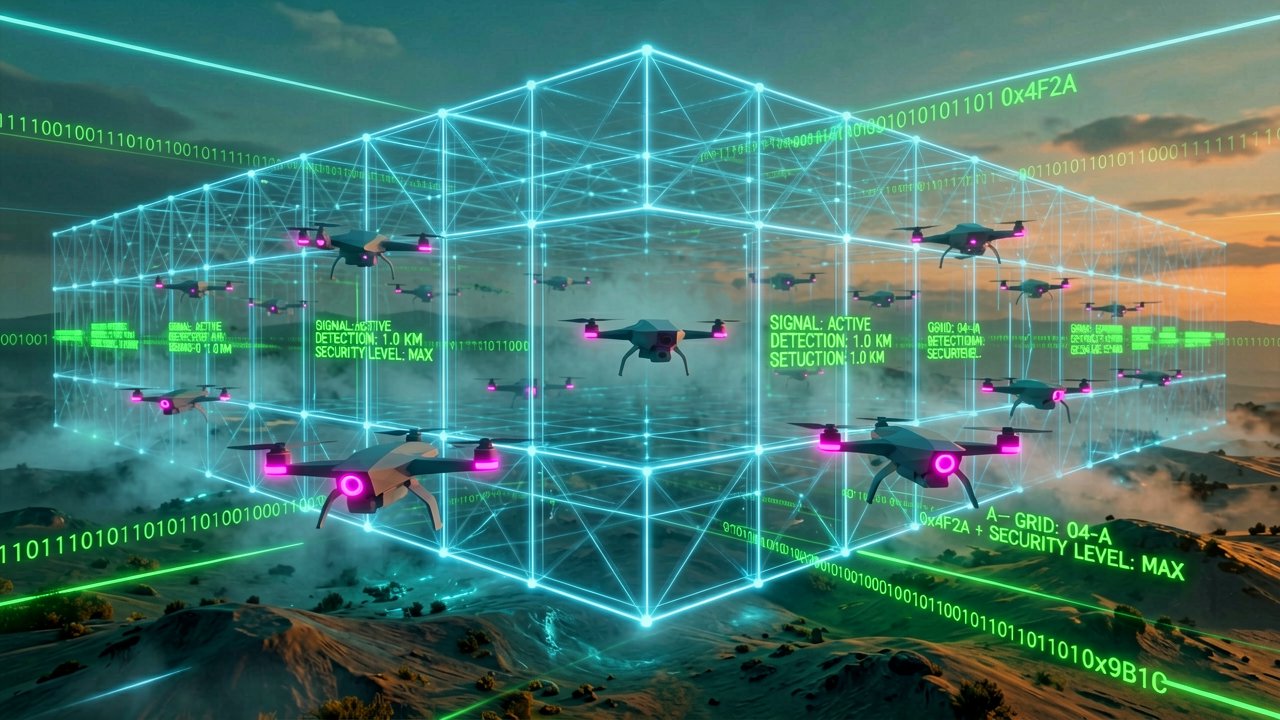
The perimeter security market just got a new contender. SiLC Technologies announced Eyeonic Vista, an ultra-long-range 4D vision system designed to detect and classify targets at distances exceeding 1 kilometer. The announcement arrived via official press release, positioning the product as a direct response to limitations in current radar and optical-electronic sensing technologies.
According to the BusinessWire press release, Vista combines silicon photonics with coherent detection to deliver what the company calls "unprecedented clarity" for small targets in complex environments. The 8-channel architecture leverages dynamic Region of Interest (ROI) scaling to prioritize resolution where it matters most.
Here's the technical breakdown that matters. Angular resolution reaches 8 millidegrees. Micro-Doppler velocity measurement provides real-time speed and direction data. Dual polarization sensing enables material classification. The system carries an IP65 rating for all-weather operation. These aren't marketing buzzwords—they're measurable specifications that differentiate Vista from conventional lidar or radar solutions.
SiLC's CEO Mehdi Asghari explained the underlying technology in the release. "Our high-resolution, long-range performance is driven by our innovative silicon photonics engine, which integrates multiple laser channels and coherent detectors on a single chip." The 8 parallel channels capture more data points per target, which should translate to better imaging in difficult outdoor conditions (fog, dust, dense foliage—scenarios where most sensors start hallucinating).

Independent coverage from VentureBeat confirms the core specifications and application scope. The system targets perimeter security, counter-UAS operations, port and maritime monitoring, airports, borders, prisons, power stations, and military assets. Public venues like stadiums and capital buildings also fall within the intended use cases.
The detection gap SiLC is addressing is real. Radar systems often lack resolution for small or slow-moving objects. Optical-electronic systems struggle with lighting conditions and environmental interference, plus they can't directly measure velocity. Small unmanned aerial systems operate at low altitude, move quickly, and blend into cluttered environments. Vista claims to handle all three weaknesses simultaneously.
Physical deployment considerations matter here. The IP65 rating means the unit can survive rain, dust, and temperature extremes without constant maintenance. That's not a trivial detail for infrastructure operators managing dozens of sensors across a facility. Less time recalibrating means more time actually monitoring threats.
SiLC is demonstrating Vista at XPONENTIAL 2026 in Detroit, Michigan, May 12–14 at Booth #22013. Asghari will present "A New 4D Vision System Provides High-Resolution Visibility for Perimeter Security at Distances Exceeding 1 km" on Tuesday, May 12, from 3:00–3:25 p.m. in the Innovations Theatre. Hands-on demos at trade shows reveal more than spec sheets ever could.

The company's investor roster includes Dell Technologies Capital, Sony Innovation Fund by IGV, Honda Xcelerator Ventures, FLUXUNIT – ams OSRAM Ventures, Alter Venture Partners, and Epson. That's a solid backing group for a silicon photonics startup established in 2018 by industry veterans.
SiLC positions itself as enabling "Physical AI"—machines that perceive, reason, plan, and act alongside humans. The 4D+ vision systems detect velocity and motion, which is the missing piece in most perception stacks. Whether this translates to reliable field performance remains to be seen. The difference between a spec sheet and a deployed system is usually measured in months of real-world testing.
SiLC Technologies claims Vista delivers capabilities not currently available in other commercial systems. That's a bold statement in a crowded sensing market. The technology stack is impressive on paper, but perimeter security operators care about false positive rates, integration complexity, and total cost of ownership. Those numbers don't appear in the press release.
Whether facilities managers actually pay for this capability remains the real question.
Artūras Malašauskas is an AI Systems Integrator with 20+ years of production-grade web engineering experience. He has designed, shipped, and scaled enterprise Python/PHP systems for logistics, SaaS, and public-sector clients. For the past year, he has focused exclusively on AI integrations: deploying open-source LLMs, building generative media pipelines (image, audio, video), and engineering multi-agent workflows for real production environments. His standard: reproducibility, security, cost-efficient inference—no vaporware. He documents and evaluates emerging AI tooling, separating verified capabilities from marketing noise. Technical editor at: muza-ai.eu, ai-verslas.lt, ai-naujinos.lt Connect on LinkedIn
Comments