Tennant X2 ROVR SCRUB Targets Tight Aisles and Labor Shortages
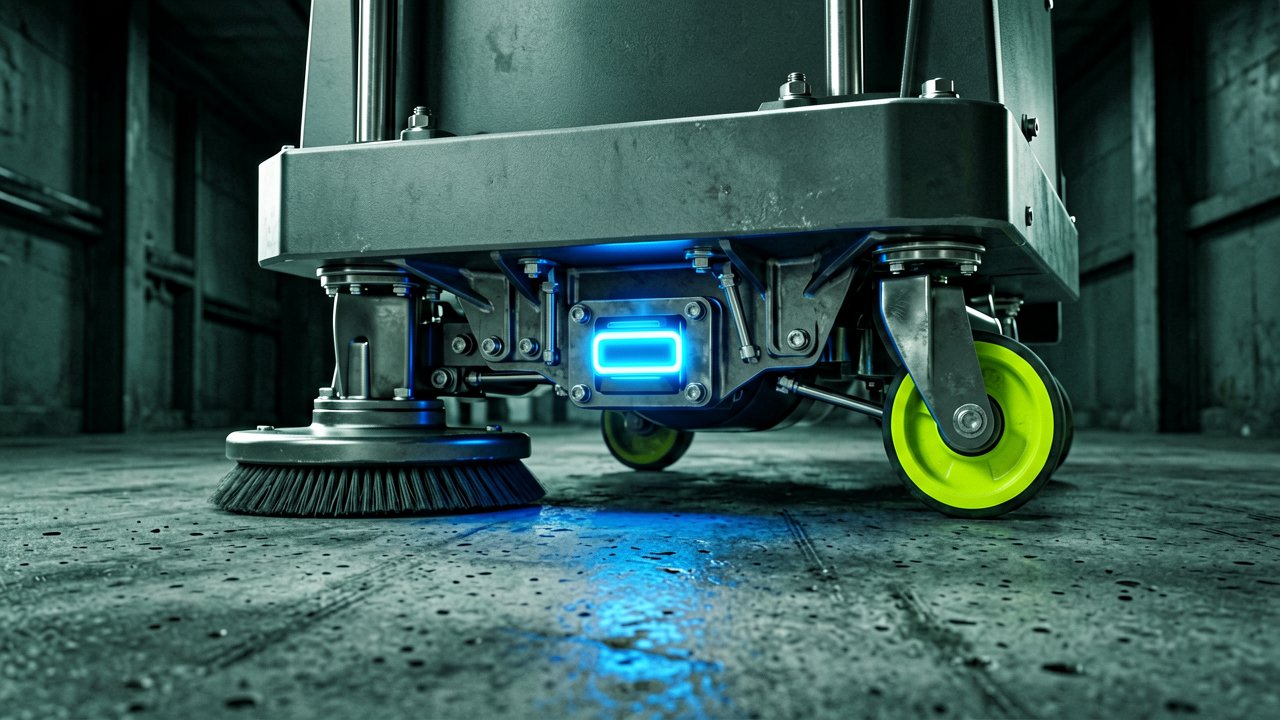
The industrial cleaning equipment manufacturer Tennant Company has unveiled the X2 ROVR SCRUB, its smallest autonomous floor scrubber designed specifically for cramped retail aisles and congested commercial spaces. The machine can navigate corridors as narrow as 29 inches (74 cm), addressing a gap in the autonomous cleaning market where larger robotic scrubbers simply cannot fit.
According to the official press release from Tennant, the X2 ROVR SCRUB will be available to order in late May 2026. The circular footprint allows the robot to pivot in place, eliminating the turning radius problems that plague rectangular autonomous cleaners in tight spaces.
Powered by BrainOS® Clean 2.0, the X2 incorporates SelfPath™ AI for real-time obstacle detection and dynamic route adjustment. This matters in practice: when a shopper stops to examine a product or a cart blocks an aisle, the robot recalculates its path without requiring manual intervention (a problem that has plagued users for years, frankly). The system maximizes unique square footage cleaned while reducing redundant passes.
The dock ecosystem completes the automation loop. The X2 Dock RFSH™ handles recharging, emptying recovered water, refilling clean water, and diluting cleaning solution to preset concentrations. This removes the daily manual tasks that typically require staff to stop and service the machine between cleaning cycles.
Aaron Stotko, Director of Product, Robotics at Tennant Company, stated the X2 ROVR SCRUB extends autonomous cleaning into smaller, high-traffic spaces customers clean every day but have struggled to automate. The compact form factor and integrated dock ecosystem help customers clean more efficiently while reducing manual touchpoints.
This launch aligns with Tennant's broader robotics strategy. The company is targeting $250 million in annual robotics sales within two years, up from the current $85 million run rate. If achieved, robots would contribute nearly 20% of total revenue. Pat Schottler, who moved to senior vice president of robotics to focus on the venture, emphasized the need to move much more quickly in a competitive market.
The eight-year partnership with Brain Corp continues to provide the autonomous navigation and spatial recognition technology. Tennant introduced its first robotic floor cleaner in 2018 and has added four more products since. Now the company plans to add 10 new robotic cleaners in the next two years through a dedicated venture within the organization.
Deployment is designed for low-touch operation. SmartSetup™ guided workflows and an intuitive touchscreen interface allow teams to move from unboxing to autonomous cleaning without specialized technical expertise. Remote scheduling, fleet visibility, and performance tracking through the Tennant Robotics App support single- or multi-site deployments.
The physical reality of using this machine differs from earlier generations. Instead of watching a robot get stuck in a corner and requiring someone to physically reposition it, the X2's circular design means it can spin 360 degrees in place. The touchscreen interface is responsive enough that scheduling a cleaning run takes seconds rather than minutes of navigating menus.
Tennant supports the X2 ROVR SCRUB through its Robotic Support Ecosystem, combining factory-direct field service, a dedicated customer success team, and automation success technicians. The company has successfully deployed and managed autonomous fleets across some of the world's largest retail, manufacturing, and logistics organizations.
The target markets include retail, education, and healthcare environments where labor shortages have created persistent staffing gaps. These sectors face the dual challenge of maintaining cleanliness standards while managing reduced workforce availability. The X2 ROVR SCRUB addresses the specific constraint of narrow aisles that larger autonomous scrubbers cannot navigate.
Whether facilities managers actually adopt this technology at scale remains the real question. The robotics market faces strong competition, and the $250 million revenue target requires significant market penetration. The machine's ability to deliver consistent results in real-world conditions will determine if this represents genuine progress or just another incremental product launch in an oversaturated category.
Artūras Malašauskas is an AI Systems Integrator with 20+ years of production-grade web engineering experience. He has designed, shipped, and scaled enterprise Python/PHP systems for logistics, SaaS, and public-sector clients. For the past year, he has focused exclusively on AI integrations: deploying open-source LLMs, building generative media pipelines (image, audio, video), and engineering multi-agent workflows for real production environments. His standard: reproducibility, security, cost-efficient inference—no vaporware. He documents and evaluates emerging AI tooling, separating verified capabilities from marketing noise. Technical editor at: muza-ai.eu, ai-verslas.lt, ai-naujinos.lt Connect on LinkedIn
Comments