ABB Robotics Unveils OmniVance Automated Surface Finishing Cell
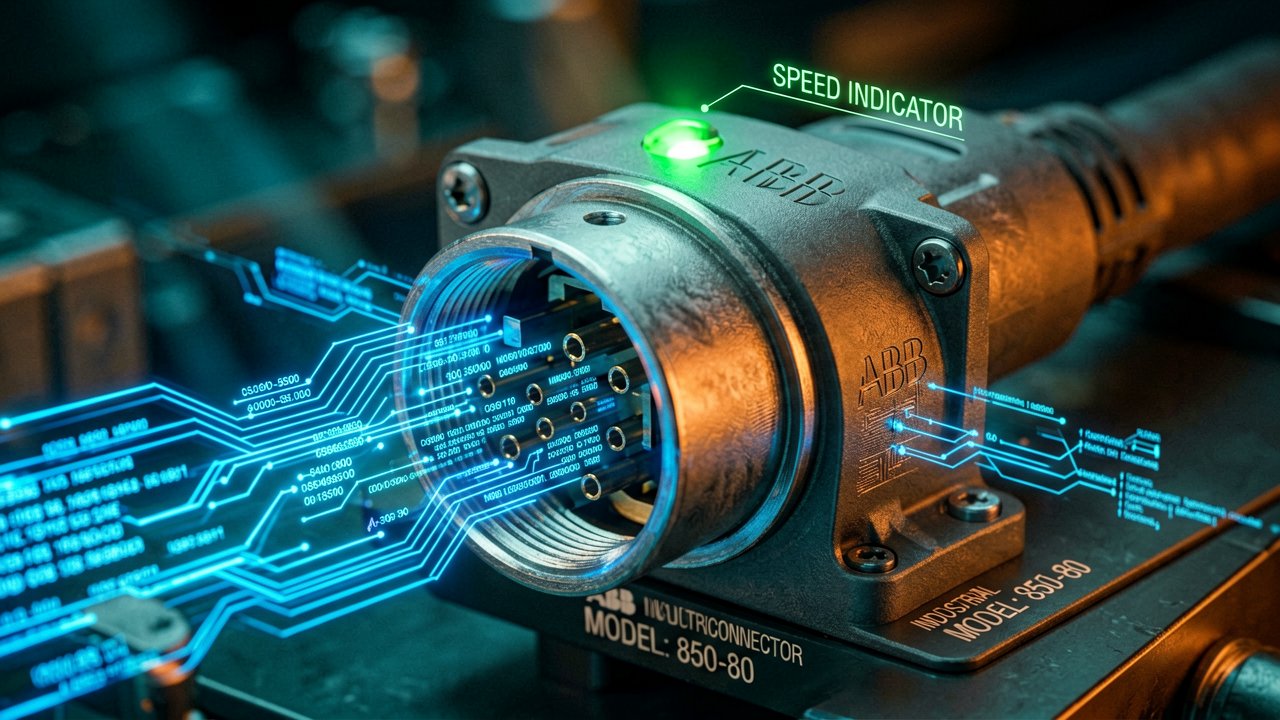
ABB Robotics has launched its first fully automated sanding and polishing system, the OmniVance Collaborative Surface Finishing Cell. The turnkey solution aims to bridge the gap between expensive custom automation and inadequate entry-level tool kits for manufacturers facing labor shortages.
According to the official press release, the cell uses a GoFa collaborative robot to execute precision surface finishing without requiring in-house robotics expertise. The system is entirely self-contained, delivered as a complete plug-and-play package including safety components and CE certification.
Surface finishing represents a critical bottleneck across manufacturing industries. Businesses face dual pressures of increasingly complex production demands alongside a documented shortage of skilled labor. Projections from Deloitte and The Manufacturing Institute indicate 1.9 million manufacturing jobs will remain unfilled by 2033 (a gap that's only widening with each passing quarter).
The physical reality of sanding and polishing involves repetitive motion, airborne particulates, and significant operator fatigue. The OmniVance cell addresses these pain points through integrated dust extraction readiness and automation of the most physically demanding tasks. This frees skilled workers to concentrate on higher-value activities while maintaining consistent quality across production runs.
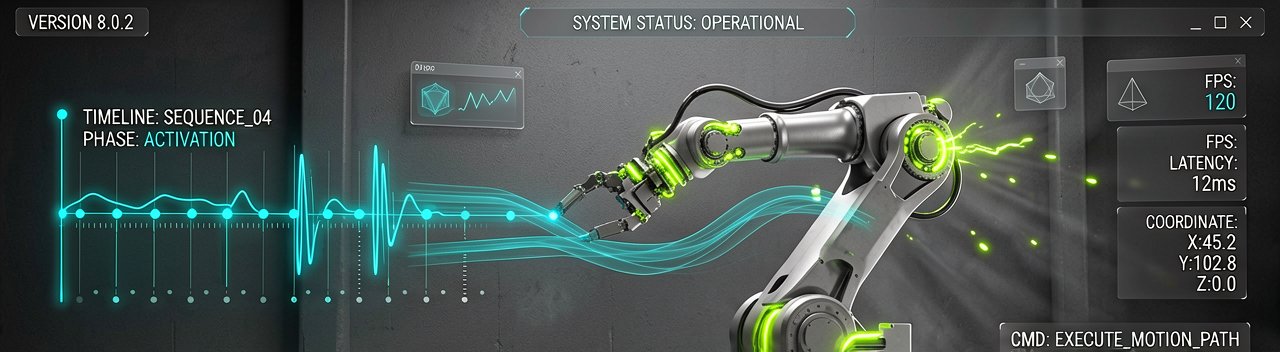
Operational simplicity drives the value proposition. ABB's software features a tablet-style interface designed for operators without robotics training. Lead-through 3D path recording, 2D preset path creation, and intuitive path editing integrated into Wizard Easy Programming blocks can reduce programming time by up to 90%. The cell handles various materials and geometries, from flat shapes to complex 3D forms.
Craig McDonnell, Managing Director of Business Line Industries at ABB Robotics, explained the market gap. Many smaller businesses lack in-house robotics expertise while needing to deliver perfect quality consistently. Off-the-shelf tools lack scalability, while bespoke automation requires investment many cannot justify.
The GoFa robot brings 12 kg payload capacity and 1270 mm reach with integrated force control. An automatic abrasive changer kit with remover unit and storage for 77–125 mm discs is available as an optional add-on. The system's adaptability makes it suitable for high-mix environments where tool changes happen frequently.
Independent reporting from The Robot Report corroborates the specifications and deployment timeline. The coverage notes this launch joins ABB's broader portfolio including industrial automation, collaborative robots, and autonomous mobile robots.
Context matters here. In October 2025, ABB Group announced plans to sell its robotics unit to SoftBank Group for $5.3 billion. The business employs approximately 7,000 people with U.S. headquarters in Auburn Hills, Michigan. This launch represents continued investment in the portfolio during the transition period.
Whether small manufacturers actually adopt this technology at scale remains the real question. The 90% programming time reduction sounds impressive on paper, but real-world deployment often encounters friction that spec sheets don't capture. The market will decide if plug-and-play automation delivers the promised ROI or just another expensive box gathering dust in the corner.
Artūras Malašauskas is an AI Systems Integrator with 20+ years of production-grade web engineering experience. He has designed, shipped, and scaled enterprise Python/PHP systems for logistics, SaaS, and public-sector clients. For the past year, he has focused exclusively on AI integrations: deploying open-source LLMs, building generative media pipelines (image, audio, video), and engineering multi-agent workflows for real production environments. His standard: reproducibility, security, cost-efficient inference—no vaporware. He documents and evaluates emerging AI tooling, separating verified capabilities from marketing noise. Technical editor at: muza-ai.eu, ai-verslas.lt, ai-naujinos.lt Connect on LinkedIn
Comments