Faraday Future Returns Founder YT Jia as CEO, Pivots to Physical AI Strategy

Faraday Future has executed a significant leadership overhaul, reinstating founder YT Jia as sole Global CEO and appointing Jerry Wang as Global Executive Chairman. The changes took effect May 5, 2026, with the formal announcement released May 10.
According to the company's official investor relations filing, Matthias Aydt has resigned from his position as Global Co-CEO. Aydt will temporarily serve as an internal advisor while management discusses a potential new role. Independent director Chad Chen has been appointed Lead Independent Director.
The leadership transition marks what the company describes as a return to founder-driven execution. Jia, who had been serving as Co-CEO since April 2025, will now oversee Product, EAI R&D, Supply Chain, Manufacturing, Quality, and other core business areas. Wang will directly manage Finance, Legal, Government Affairs, and Risk Management.
This isn't just a personnel shuffle. The company is officially rebranding from an electric vehicle startup to a U.S.-based Physical AI ecosystem company. The new strategy centers on two product engines: EAI humanoid and bionic robots, plus EAI automotive robots.
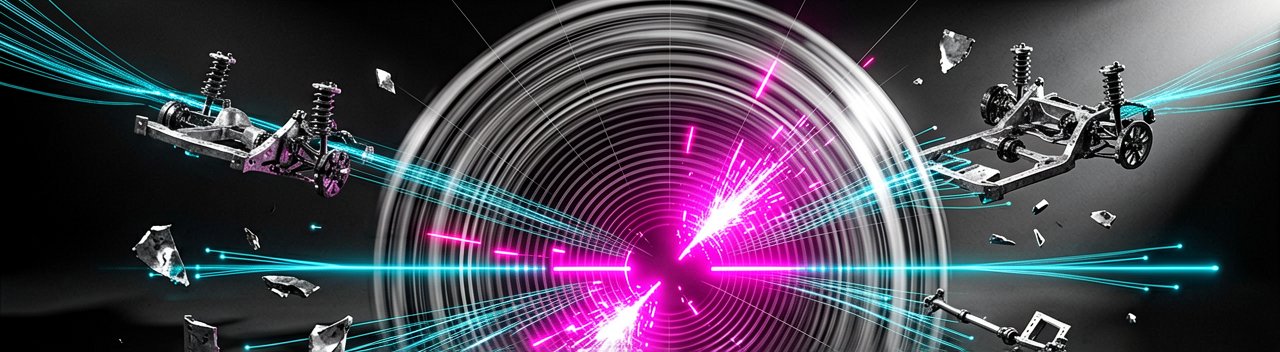
According to the official press release, Faraday Future's investor relations page details the "Three-in-One" ecosystem approach combining Device, Data, and Brain & Open-Source platforms. The goal is creating what they call an "evolutionary flywheel" of scaled device delivery, data collection, and continuous AI brain evolution.
The numbers behind this pivot are modest but specific. EAI Robotics has shipped 68 units with positive unit gross margin. That's not a mass-market number, but it's a concrete starting point for a company that has struggled to deliver on promises for years.
One tangible milestone: the SEC investigation that lasted more than four years concluded with no penalties. This removes a historical overhang that had constrained the company's development. For investors who've watched this ticker for years, that's the kind of clarity that matters more than press release language.
The company is now in a 180-day period to regain compliance. This is the kind of deadline that keeps executives awake at night (and frankly, should keep investors equally alert).

From a governance perspective, the optimized structure is expected to streamline decision-making. But organizational charts don't guarantee execution. The real test will be whether Jia can convert first-mover advantages into sustainable competitive positioning.
Secondary reporting from Las Vegas Sun corroborates the timeline and scope of the leadership changes. The outlet notes the company plans to announce upgraded transformation initiatives within the week following the announcement.
The physical reality of this strategy involves actual hardware. EAI robotics units need to be manufactured, shipped, and deployed. Unlike software updates that roll out overnight, robots require supply chains, quality control, and physical delivery logistics. Each unit shipped represents real capital expenditure and operational friction.
Jia's commitment to 53 consecutive weekly investor reports demonstrates a level of transparency that's rare in this space. Whether that discipline translates to operational results remains to be seen.
The capital market implications are straightforward. The founding team's return aligns early investor interests with stockholder interests, theoretically helping attract strategic investors. But alignment doesn't equal liquidity.
Whether users actually pay for these robots, or whether the automotive division can achieve scale, remains the real question. The company has the strategy. The execution is what separates vision from viability.
Artūras Malašauskas is an AI Systems Integrator with 20+ years of production-grade web engineering experience. He has designed, shipped, and scaled enterprise Python/PHP systems for logistics, SaaS, and public-sector clients. For the past year, he has focused exclusively on AI integrations: deploying open-source LLMs, building generative media pipelines (image, audio, video), and engineering multi-agent workflows for real production environments. His standard: reproducibility, security, cost-efficient inference—no vaporware. He documents and evaluates emerging AI tooling, separating verified capabilities from marketing noise. Technical editor at: muza-ai.eu, ai-verslas.lt, ai-naujinos.lt Connect on LinkedIn
Comments