China's Origin Quantum Launches 180-Qubit Wukong-180 System
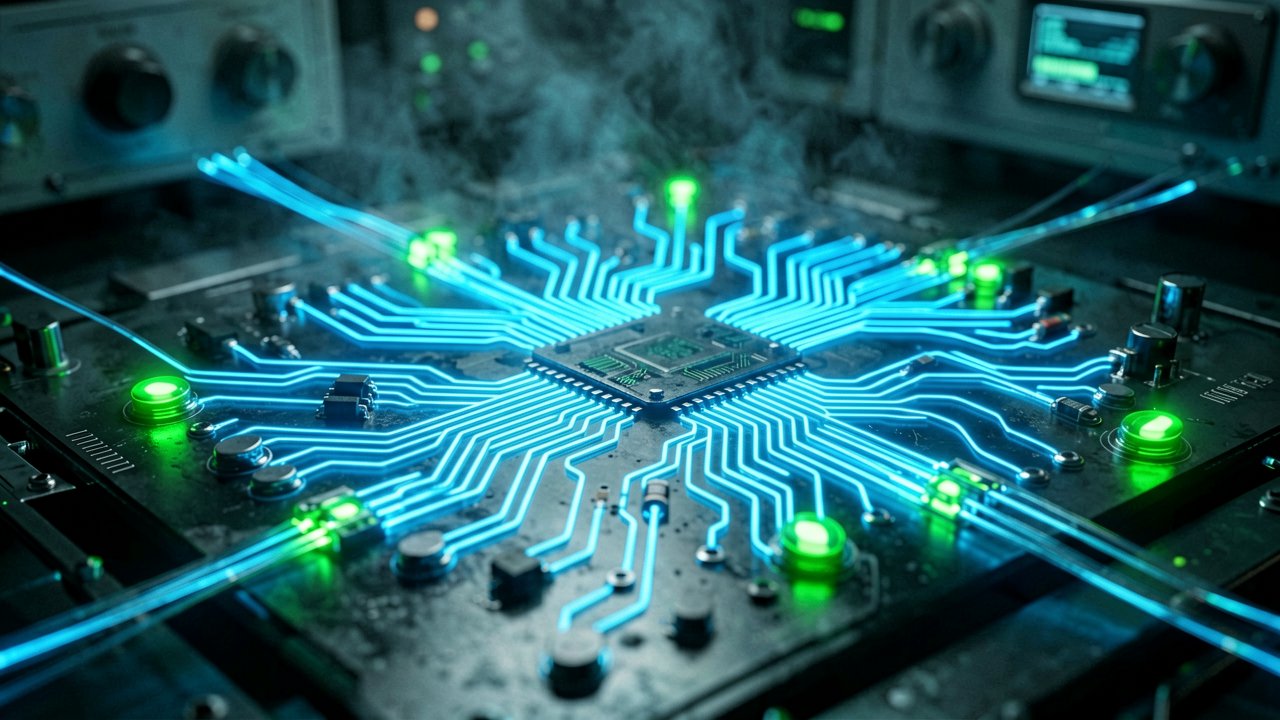
Chinese quantum computing firm Origin Quantum has officially launched its fourth-generation superconducting quantum computer, the Origin Wukong-180, marking a significant escalation in Beijing's push toward quantum-AI convergence. The system went online Saturday and is now accepting computing tasks from users worldwide.
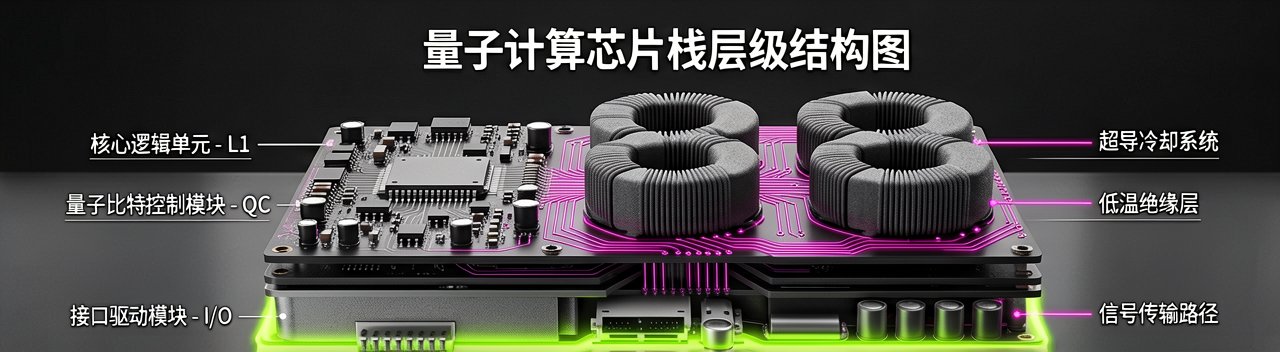
The machine houses a single-chip 180-qubit superconducting quantum processor, more than doubling the scale of its predecessor, the 72-qubit Origin Wukong system that debuted in January 2024. According to the company's official documentation, all four major components were independently developed inside China: the quantum chip system, measurement and control infrastructure, environmental support system, and operating system.
That claim of full-stack independence carries strategic weight. Washington has tightened restrictions on advanced semiconductor exports to China in recent years, pushing Beijing to accelerate domestic alternatives across critical computing sectors. Global Times reported the developer described this as China's first systematic integration of independently developed quantum computing power into the AI application ecosystem.
The technical specifications read like a spec sheet from a different era of computing. Origin Quantum lists 99.9% single-qubit gate fidelity, 99% two-qubit gate fidelity, and 99% readout fidelity. Average T1 coherence time sits at 40 microseconds, with T2 echo coherence at 20 microseconds. The system includes 251 coupling qubits alongside the 180 computational qubits.

These numbers matter less to most readers than the physical reality of accessing the machine. Users interact with the system through the OriginQ Cloud platform, clicking through web interfaces to submit quantum circuits that execute on hardware housed in cryogenic chambers. The previous 72-qubit system reportedly handled more than 900,000 quantum computing tasks from users across 160 countries, generating approximately 50 million remote visits since launch.
The AI integration angle represents the more interesting development. Origin Quantum announced on April 20 that the system supports AI computing and has launched quantum AI tools including the Origin Brain quantum knowledge large model and the QPanda3 Runtime MCP platform. The company is positioning quantum systems as potential accelerators for AI training, optimization, and inference tasks that currently consume enormous computing resources and electricity.
Global competition in this space has intensified dramatically. In the United States, companies including IBM, Google, Microsoft, and startups such as IonQ and Rigetti Computing are racing to build increasingly powerful quantum systems. Governments across Europe and Asia are rapidly increasing investments amid concerns that quantum breakthroughs could reshape economic and military power balances.
Origin Quantum also said it achieved China's first overseas export sale of independently developed quantum computing power in 2025. That achievement, Beijing is likely to frame as evidence of growing global competitiveness in advanced computing. The company's official blog post notes the system transitions domestic superconducting machines into the 100-qubit engineering phase ready for real-world delivery.
Experts caution that qubit counts alone do not determine practical capability. Quantum systems remain highly unstable and error-prone, and many researchers argue the true challenge lies in improving error correction, coherence, and reliability rather than merely increasing qubit numbers (a problem that has plagued users for years, frankly). Even so, the launch signals China is moving aggressively from experimental research toward commercial deployment and ecosystem-building.
The development also underpins how the AI boom is now spilling into adjacent advanced-computing sectors. As artificial intelligence models become larger and more computationally demanding, governments and companies are increasingly searching for entirely new computing paradigms capable of handling future workloads. Quantum computing, once viewed largely as a distant scientific pursuit, is increasingly being positioned as part of the long-term infrastructure underpinning the next era of AI competition.
Whether users actually pay for quantum computing time remains the real question. The technology promises exponential speedups for specific problem classes, but practical large-scale quantum advantage remains years away in many areas. For now, the Wukong-180 sits in a cryostat somewhere in Hefei, waiting for workloads that may not exist yet.
Artūras Malašauskas is an AI Systems Integrator with 20+ years of production-grade web engineering experience. He has designed, shipped, and scaled enterprise Python/PHP systems for logistics, SaaS, and public-sector clients. For the past year, he has focused exclusively on AI integrations: deploying open-source LLMs, building generative media pipelines (image, audio, video), and engineering multi-agent workflows for real production environments. His standard: reproducibility, security, cost-efficient inference—no vaporware. He documents and evaluates emerging AI tooling, separating verified capabilities from marketing noise. Technical editor at: muza-ai.eu, ai-verslas.lt, ai-naujinos.lt Connect on LinkedIn
Comments