X-Humanoid Unveils Wise KaiWu Agent With Spatial Memory
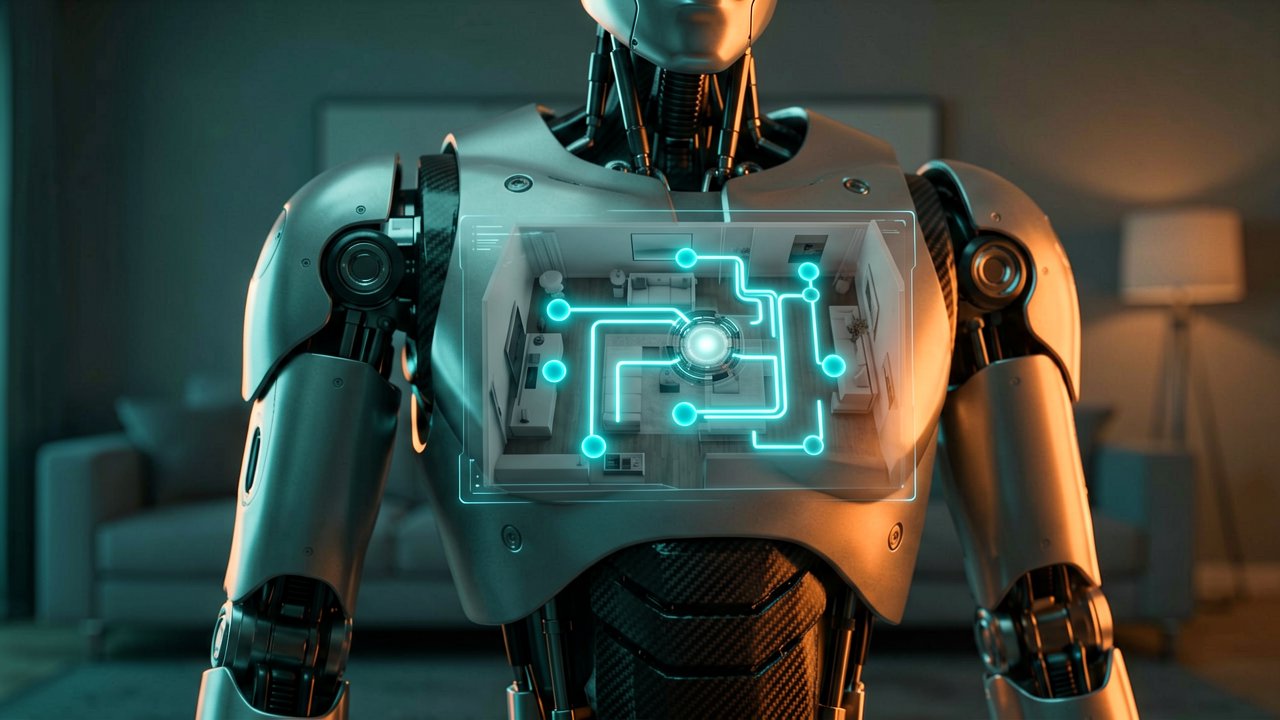
The robotics sector received a significant update when X-Humanoid announced the Wise KaiWu Agent, an artificial intelligence system designed to give humanoid robots spatial memory and personalized user memory capabilities.
According to the announcement report, the platform enables robots to remember physical environments, object locations, and navigation paths while simultaneously tracking user preferences and behavioral patterns.
This development represents a convergence of embodied intelligence and long-term memory systems. Spatial memory allows robots to understand and recall three-dimensional spaces, while user-memory functions enable recognition of routines and repeated behaviors over time.
X-Humanoid demonstrated related technology at CES 2026, where the company showcased the Embodied Tien Kung 2.0 platform alongside the Wise KaiWu AI system. The demonstrations included fully autonomous parts sorting, bimanual coordination, and adaptive responses to environmental variables.

The underlying architecture relies on X-Humanoid's proprietary XR-1 Base Model VLA (Vision-Language-Action) and UVMC (Unified Vision-Motion Codes) technology. This creates a direct bridge between visual perception and physical action, reducing latency between seeing and doing (which is critical when a robot needs to catch a falling object before it hits the floor).
Technical specifications include high-frequency control exceeding 60 Hz, enabling real-time conversion of visual data into motion commands. The system demonstrates resilience through bimanual coordination—if one arm misses a grasp, the other immediately compensates.
Deployment has already moved beyond controlled testing environments. X-Humanoid reports operational units at a Foton Cummins engine plant handling bin pickup, transport, and placement tasks. Additional partnerships include the China Electric Power Research Institute for grid inspections and Bayer for pharmaceutical manufacturing applications.
The Embodied Tien Kung Ultra variant achieved notable endurance milestones, completing a half-marathon autonomously in 2 hours, 40 minutes, and 42 seconds. It also ran 100 meters in 21.50 seconds during the first humanoid robot games.
These capabilities address a fundamental limitation in current robotics: most systems operate in isolated sessions without retaining context between interactions. Memory-based AI enables long-term planning and contextual understanding that resembles human learning patterns.
Industry analysts note the global robotics market continues expanding as automation adoption accelerates across healthcare, logistics, manufacturing, and service sectors. The integration of spatial and user memory represents a shift from task-specific robots to adaptable, general-purpose systems.
However, the technology's practical deployment faces significant hurdles. Industrial environments offer controlled conditions, but real-world homes and public spaces present unpredictable variables that test memory systems' reliability and safety protocols.
Privacy concerns also emerge with user-memory capabilities. Robots that remember preferences and routines inherently collect behavioral data, raising questions about storage, consent, and potential misuse.
Whether manufacturers can balance capability with responsible data handling remains an open question. The hardware may be ready, but the regulatory framework for memory-equipped robots is still catching up.
For now, the technology demonstrates impressive engineering. Whether it translates to affordable, reliable products that consumers actually want to live with is the real test.
Artūras Malašauskas is an AI Systems Integrator with 20+ years of production-grade web engineering experience. He has designed, shipped, and scaled enterprise Python/PHP systems for logistics, SaaS, and public-sector clients. For the past year, he has focused exclusively on AI integrations: deploying open-source LLMs, building generative media pipelines (image, audio, video), and engineering multi-agent workflows for real production environments. His standard: reproducibility, security, cost-efficient inference—no vaporware. He documents and evaluates emerging AI tooling, separating verified capabilities from marketing noise. Technical editor at: muza-ai.eu, ai-verslas.lt, ai-naujinos.lt Connect on LinkedIn
Comments