Xiaomi Open-Sources OmniVoice AI for 646 Languages
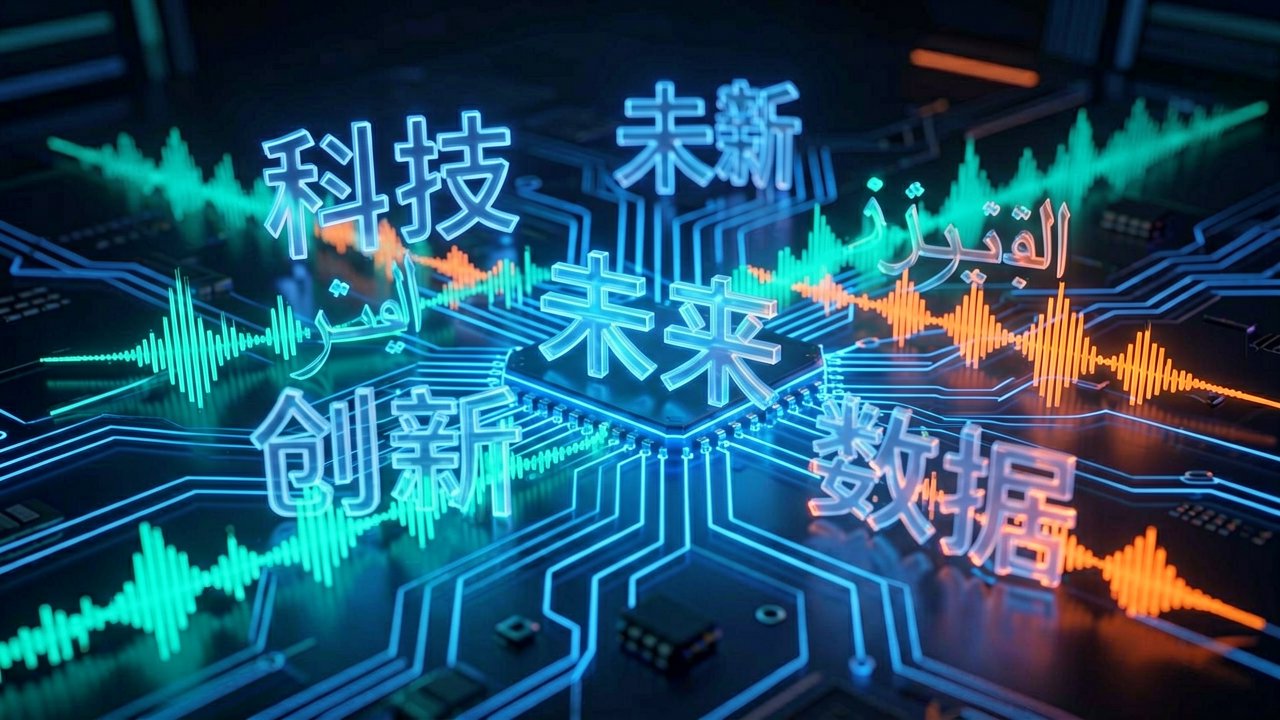
Xiaomi has open-sourced OmniVoice, a text-to-speech model capable of generating speech across 646 languages with zero-shot voice cloning. The announcement came through the company's official WeChat account, positioning the tool as a direct competitor to proprietary systems from Google and Microsoft.
The model's architecture is notably minimalist compared to industry standards. Instead of the traditional two-stage pipeline that converts text to semantic tokens before acoustic tokens, OmniVoice uses a single bidirectional Transformer network to map text directly to multi-codebook acoustic tokens. This design choice reportedly allows training on 100,000 hours of data in a single day (a speed that would make any data scientist weep with joy).
According to Gizmochina's coverage, the model was trained on 580,000 hours of audio from 50 open-source speech datasets after noise reduction and quality filtering. Inference runs at up to 40 times real-time speed using PyTorch without requiring additional optimization.
Performance claims are aggressive. Xiaomi states that across 24 languages, OmniVoice outperformed multiple commercial systems in both voice similarity and intelligibility. For 102 languages, the model's speech intelligibility approached or exceeded that of real human recordings. Even for low-resource languages with less than 10 hours of training data, the company claims high-quality synthesis remains achievable.

The practical implications for developers are immediate. The code, weights, and training data are fully open-sourced under the Apache 2.0 license on GitHub. This means any startup with a laptop can clone voices and generate speech in multiple languages. Input a Chinese recording, and the model will speak Japanese, Korean, or other languages using the same voice characteristics.
Feature-wise, OmniVoice includes several capabilities that address real-world friction points. Users can create custom voices by describing characteristics like age, gender, pitch, accent, or dialect. The model can generate whispering voices without requiring reference audio samples. It also automatically removes background noise from reference recordings, extracting clearer voice characteristics even from less-than-ideal recordings.
Expressive speech synthesis is built in through intonation controls. The model supports laughter and sighing effects, making generated voices sound more conversational. For pronunciation accuracy, tools allow manual correction of difficult pronunciations, including polyphonic Chinese characters and English proper nouns. This matters when you're trying to make a voice assistant say "Xiaomi" correctly instead of "Shia-mee."
The low-resource language support is where OmniVoice differentiates itself most sharply. Most commercial TTS systems require thousands of hours of training data per language. OmniVoice's dynamic upsampling approach for low-resource languages could expand speech technology support for smaller regional and niche languages that have been historically underserved.

Two technical innovations enable this performance. The first is a full-codebook random masking strategy that reportedly boosts training efficiency and overall model capability. The second is initialization with pre-trained parameters from large language models. Kucoin's technical breakdown notes this is the first time a large language model has been effectively integrated into a non-autoregressive TTS model to improve pronunciation accuracy.
For developers deploying this, the physical experience matters. The 40x real-time inference speed means users won't stare at loading spinners while waiting for speech generation. The single-architecture design reduces the computational overhead that typically plagues multi-stage TTS systems. This translates to faster response times in consumer applications and services.
The open-source nature raises questions about commercial viability. If the model is freely available, what's Xiaomi's business case? The answer likely lies in ecosystem integration. By making the technology accessible, Xiaomi positions itself as a leader in AI infrastructure while potentially driving adoption of its hardware and cloud services.
Whether developers actually adopt this over established commercial alternatives remains the real question. The Apache 2.0 license is permissive, but enterprise users may still prefer the support contracts and SLAs that come with proprietary systems. For hobbyists and startups, though, the barrier to entry has just dropped significantly.
Artūras Malašauskas is an AI Systems Integrator with 20+ years of production-grade web engineering experience. He has designed, shipped, and scaled enterprise Python/PHP systems for logistics, SaaS, and public-sector clients. For the past year, he has focused exclusively on AI integrations: deploying open-source LLMs, building generative media pipelines (image, audio, video), and engineering multi-agent workflows for real production environments. His standard: reproducibility, security, cost-efficient inference—no vaporware. He documents and evaluates emerging AI tooling, separating verified capabilities from marketing noise. Technical editor at: muza-ai.eu, ai-verslas.lt, ai-naujinos.lt Connect on LinkedIn
Comments