MeitY Launches Open-Source VoicERA Voice AI Stack on BHASHINI Infrastructure
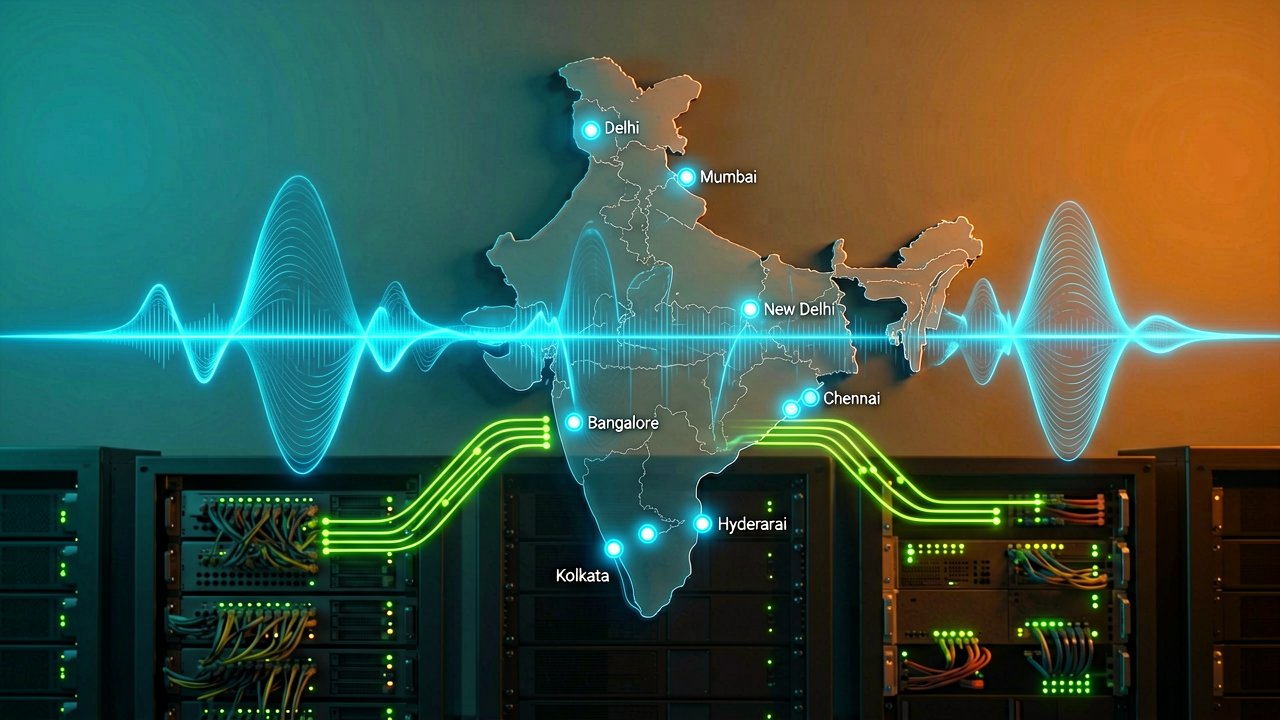
The Ministry of Electronics and Information Technology unveiled VoicERA, an open-source, end-to-end Voice AI stack, at the India AI Impact Summit 2026. The launch marks a significant expansion of India's Digital Public Infrastructure for multilingual voice technologies. This isn't just another AI announcement—it's a government building the actual plumbing for voice-based citizen services.
The initiative was led by the Digital India BHASHINI Division under the Digital India Corporation, an entity of MeitY. Amitabh Nag, Chief Executive Officer of the Digital India BHASHINI Division, spearheaded the effort in collaboration with EkStep Foundation, the Centre for Open Source Software, IIIT Bengaluru, and AI4Bharat. The announcement came on February 18, 2026, according to official Press Information Bureau documentation.
Deployed directly on the BHASHINI National Language Infrastructure, VoicERA establishes what officials call a national execution layer for multilingual Voice and Language AI. The platform is designed to be open, modular, interoperable, cloud-deployable, and ready for on-premise use. This architecture enables secure and scalable deployment across government agencies, research institutions, and innovation ecosystems. The flexible design reduces duplication of effort while avoiding vendor lock-in—a problem that has plagued users for years, frankly.
This integration expands BHASHINI's capabilities beyond translation and language technologies to encompass real-time speech systems, conversational AI, and multilingual telephony at population scale. Government departments can now quickly deploy voice-enabled citizen services in areas such as agriculture advisories, education support, livelihood services, grievance redressal, citizen feedback, and scheme discovery. Think about the physical reality: a farmer in rural Karnataka speaking to a government service in their native dialect, not typing on a touchscreen they've never used before.
Amitabh Nag emphasized the platform's transformative potential during the launch. "With BHASHINI as national language infrastructure and VoicERA as the open execution stack, India is entering a new phase of Digital Public Infrastructure where voice becomes the most natural interface for Bharat," he stated. "This framework enables secure, scalable multilingual systems while empowering innovators to build on a shared national foundation. It is about dignity, access, and ensuring every citizen can speak to the State and be understood. This marks the beginning of a new Voice Era, and in this era, India owns its voice."
Santosh Kevlani, Voice AI Strategist and Advisor to the initiative, described VoicERA as a digital public good for voice. "VoicERA is designed as digital public good for voice, enabling interoperable, execution-ready deployment without reconstructing entire technology stacks," he stated. This distinction matters—developers don't need to rebuild the wheel every time they want to add voice capabilities to a government service.
Shankar Maruwada, Co-Founder and CEO of EkStep Foundation, highlighted the progression from BHASHINI's language focus. "Over the past three years, BHASHINI has demonstrated the power of language as Digital Public Infrastructure," he said. "With VoicERA, that vision now extends to voice, strengthening equitable access for citizens at national scale." The three-year timeline shows this wasn't a rushed announcement but a deliberate infrastructure buildout.
Mitesh Kapra from IIT Madras noted the boost to sovereign capabilities. "The continued expansion of BHASHINI, integrated with VoicERA, will accelerate sovereign language and voice capabilities and deepen inclusive AI innovation," he added. Sovereign AI infrastructure means India controls its own voice technology stack rather than relying on foreign vendors.

The launch reinforces BHASHINI's role as India's population-scale Language and Voice Infrastructure, supporting secure, inclusive, and interoperable AI systems that drive next-generation public service delivery across sectors and regions. VoicERA was available for live demonstration at the BHASHINI Pavilion and at the EkStep Pavilion, Hall No. 3, First Floor, Bharat Mandapam during the summit. Attendees could actually interact with the system, not just read about it.
From a technical perspective, the modular architecture is significant. Developers can plug in specific voice components without rebuilding entire stacks. This matters for deployment speed and maintenance. Government IT teams can update speech recognition modules independently from text-to-speech engines. The cloud-deployable and on-premise ready design gives agencies flexibility based on their security requirements and infrastructure constraints.
The open-source nature of VoicERA creates a different dynamic than proprietary voice AI platforms. Organizations can inspect the code, modify it for specific use cases, and contribute improvements back to the community. This transparency builds trust—critical when handling citizen data at national scale. The collaboration with academic institutions like IIIT Bengaluru and AI4Bharat suggests ongoing research integration rather than a static product release.
Whether this infrastructure actually reaches the citizens it's designed to serve remains the real question. Building the stack is one thing. Deploying it across thousands of government departments with varying technical capabilities is another. The difference between announcement and adoption is often measured in months of integration work, not summit speeches.
The official Digital India Corporation press release confirms the launch details and participating organizations. Coverage from DD News provides additional context on the summit presentation and stakeholder reactions.
For developers and researchers, the open-source availability means immediate access to the codebase. For government agencies, it means a standardized approach to voice-enabled services. For citizens, it promises more natural interaction with public services. The execution will determine whether this becomes a transformative infrastructure or another underutilized government platform.
Artūras Malašauskas is an AI Systems Integrator with 20+ years of production-grade web engineering experience. He has designed, shipped, and scaled enterprise Python/PHP systems for logistics, SaaS, and public-sector clients. For the past year, he has focused exclusively on AI integrations: deploying open-source LLMs, building generative media pipelines (image, audio, video), and engineering multi-agent workflows for real production environments. His standard: reproducibility, security, cost-efficient inference—no vaporware. He documents and evaluates emerging AI tooling, separating verified capabilities from marketing noise. Technical editor at: muza-ai.eu, ai-verslas.lt, ai-naujinos.lt Connect on LinkedIn
Comments