Testkube Embeds AI Agents Into Testing Execution Layer
Testkube has launched Testkube AI, a testing platform update that embeds artificial intelligence directly into the execution layer rather than analyzing results after the fact. The announcement includes three simultaneous releases: AI agents with native workflow access, a Model Context Protocol (MCP) server for external AI tools, and a free Test Execution Viewer for open-source users.
The company's official blog post explains the core distinction driving this architecture. Most AI testing tools sit outside the execution environment, summarizing logs and outcomes after tests complete. Testkube AI operates within the testing engine itself, giving agents the same visibility into workflows, artifacts, and real-time execution data that human engineers receive. This difference matters because testing context lives below the surface—in parallel worker logs, partial execution states, and runtime artifacts that external tools cannot access.
According to the company's announcement, Testkube AI includes three primary capabilities at launch. AI Authoring lets engineers describe tests in natural language and generate executable tests for any framework. Autonomous Agents respond to test failures automatically, classifying whether issues are flaky or reproducible before posting conclusions to Slack or ticketing systems. The Testkube MCP Server exposes workflows, logs, and results to any AI tool supporting the Model Context Protocol, enabling integration with tools like Claude Code or Cursor without custom connectors.
Ole Lensmar, CTO at Testkube, emphasized the architectural difference in a press release distributed via Access Newswire. "Most AI tools that touch testing today are working with whatever data they can scrape from outside the execution layer," he said. "Testkube AI works with the same fidelity our platform has, every workflow, every artifact, every log, in real time." This approach allows agents to participate in the work rather than just describe what happened.
The open-source community receives a separate benefit: a free Test Execution Viewer. For years, open-source users ran Testkube without a user interface, piecing together results, logs, and artifacts using the CLI. The new viewer aggregates execution data into a browser-based interface requiring no login or account creation. Users run `testkube view
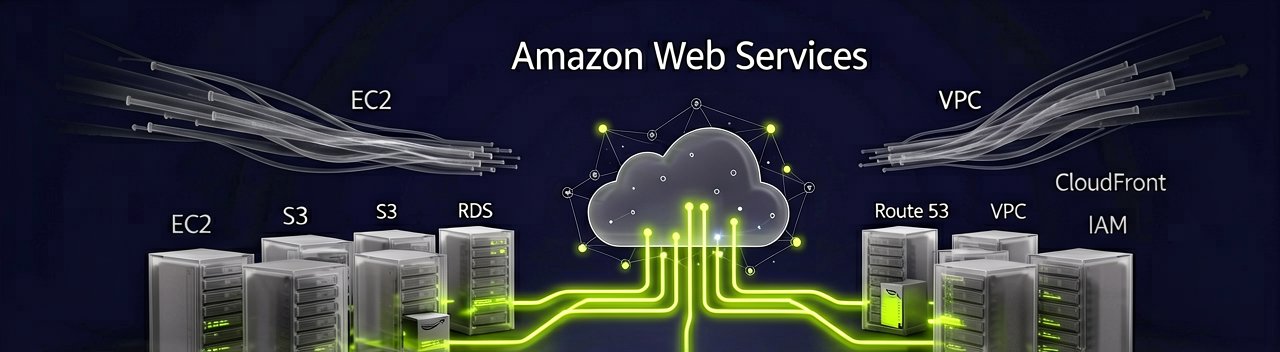
Enterprise procurement also gets a new path. Testkube is now available through AWS Marketplace, allowing teams standardized on AWS to apply existing committed spend toward the platform. Deployment still runs through the standard install path into customer Kubernetes environments—nothing changes about how Testkube actually runs. What changes is how easy it is to start, particularly for organizations where procurement friction slows vendor onboarding.
Valerii Timofeev, Staff QA Automation Engineer at AlphaSense, provided a customer perspective in the press release. "Testkube is a core part of our testing orchestration. It lets our developers build fast, with powerful checks in CI/CD pipelines," he said. "With Testkube AI Agents, we enable automated failure analysis and troubleshooting, so we spend less time debugging and more time shipping." This represents the kind of workflow shift the platform targets: moving from manual triage to automated investigation.
The Early Access Program for Testkube AI is open to teams who want to use it on real projects and provide feedback. AI Authoring and Autonomous Agents are part of Testkube's Pro and Enterprise offerings, while the MCP Server is available to all users including open-source. Teams can select their preferred LLM provider within the Testkube UI, with support for OpenAI and Anthropic at launch. Cloud customers can bring their own LLM for organizations with model licensing requirements or data residency constraints.

Andy Pemberton, President at Testkube, framed the broader context in the press release. "AI is dramatically accelerating how quickly organizations can ship code, but it's also raising the stakes on quality," he said. "Teams come to Testkube because they refuse to choose between velocity and confidence—they want both." The three announcements reflect an attempt to serve engineering teams at different stages: open-source users getting better visibility, enterprise teams getting easier procurement, and all users getting AI that actually knows their tests.
There's a practical reality here that matters. When AI accelerates release cycles, every hour tests can't keep up becomes an hour of risk. Testkube AI attempts to close that gap by lowering the barrier to creating tests while ensuring those tests run against real infrastructure, real data, and real applications. The question is whether embedding AI into the execution layer actually delivers on the promise of autonomous testing, or if it just adds another layer of complexity to an already crowded toolchain.
Whether the autonomous agents reduce actual debugging time or just shift where engineers spend their attention remains to be seen. The architecture is sound, but the real test comes when teams stop treating AI features as novelty and start measuring whether they actually ship faster with fewer regressions. That's the metric that matters, not the feature list.
Artūras Malašauskas is an AI Systems Integrator with 20+ years of production-grade web engineering experience. He has designed, shipped, and scaled enterprise Python/PHP systems for logistics, SaaS, and public-sector clients. For the past year, he has focused exclusively on AI integrations: deploying open-source LLMs, building generative media pipelines (image, audio, video), and engineering multi-agent workflows for real production environments. His standard: reproducibility, security, cost-efficient inference—no vaporware. He documents and evaluates emerging AI tooling, separating verified capabilities from marketing noise. Technical editor at: muza-ai.eu, ai-verslas.lt, ai-naujinos.lt Connect on LinkedIn
Comments