Samsung Electronics Launches Humanoid Robot Development Initiative
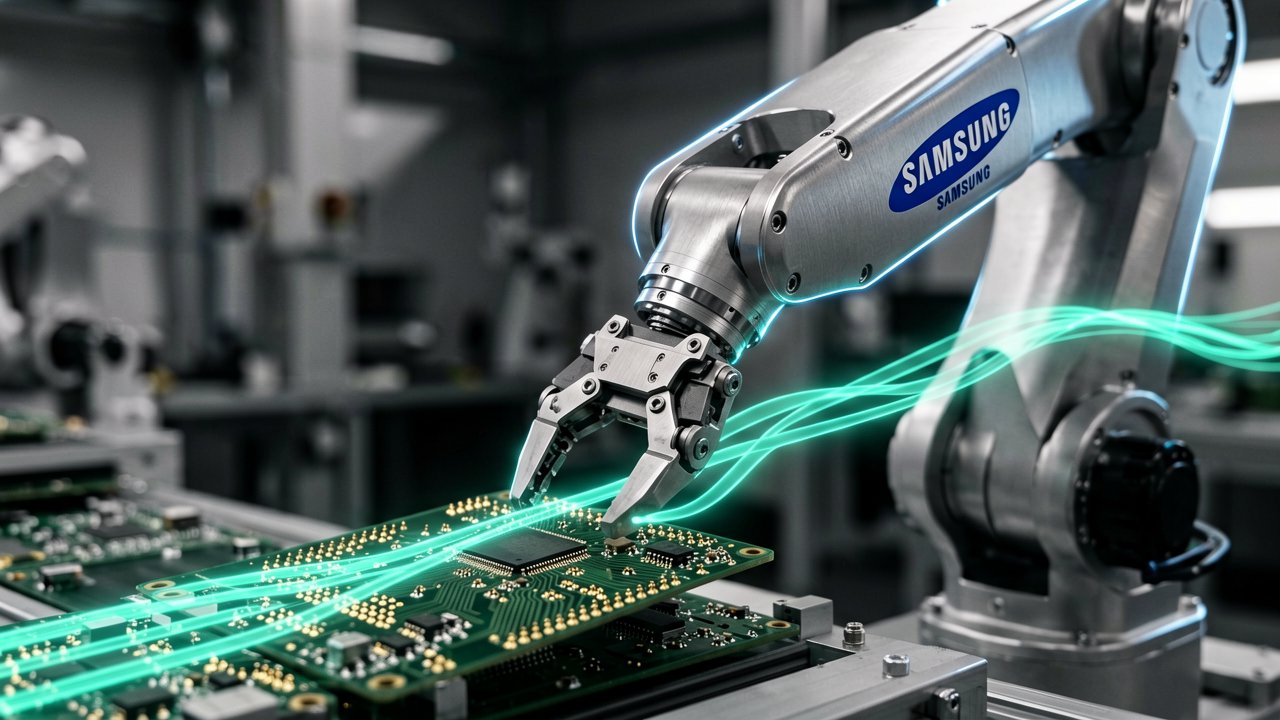
Samsung Electronics is doubling down on robotics with a formal organizational push that signals a transition from research to execution. The company has re-established its Future Robotics Team within the Device Experience (DX) division, conducting internal recruitment to bolster development capabilities for AI-based future projects including manufacturing robots and humanoids.
The recruitment drive, which concluded May 8, 2026, represents more than organizational expansion. According to industry sources, Samsung held briefings for employees to clarify the team's roles before accepting applications. This workforce expansion is seen as a strategic move to transition the robotics business roadmap into the execution phase rather than merely expanding the organization.
During a recent earnings call, Samsung outlined its phased approach: first develop manufacturing robots, then expand into home and retail sectors. The company also indicated it would consider internalizing key robotic components and collaborating with domestic firms, as well as being open to investments and acquisitions if necessary.
This renewed focus builds on earlier infrastructure. In 2021, the company formed a task force for robotics commercialization, which evolved into a formal robotics team the following year. In January 2023, Samsung invested approximately 59 billion won in Rainbow Robotics, securing its position as the largest shareholder. Rainbow Robotics, known for its bipedal and collaborative robot technologies, has been viewed as a crucial external technology partner for accelerating Samsung's humanoid development.
Within the DX division, there is also a visible effort to integrate robotics as a core aspect of AI transformation. Last August, Samsung established the InnoX Lab, a dedicated organization for key strategic projects within the DX division. This execution-focused team is responsible for the expansion of digital twin solutions, logistics operation innovations, manufacturing automation, and the development of core technologies for humanoid robots.
Industry experts interpret the establishment of InnoX Lab as a signal that Samsung aims to approach robotics not merely as a standalone product but as part of an AI-based platform business connecting factories, logistics, homes, and retail. The physical reality of this strategy means Samsung's robots will first encounter real factory floors rather than pristine demo environments.
The company's broader manufacturing vision was announced in March 2026. Samsung's official announcement details plans to transition all manufacturing operations into "AI-Driven Factories" by 2030. This initiative aims to fully integrate AI across the entire manufacturing value chain — from inbound material logistics and production to quality inspection and final shipment.
At the center of this transformation is "Agentic AI" — first introduced on the Galaxy S26 series — which is capable of autonomously planning, executing and optimizing decisions to achieve defined objectives. Building on its advanced AI capabilities developed in the mobile sector, Samsung is extending its expertise into manufacturing to create a robust foundation for on-site autonomy.
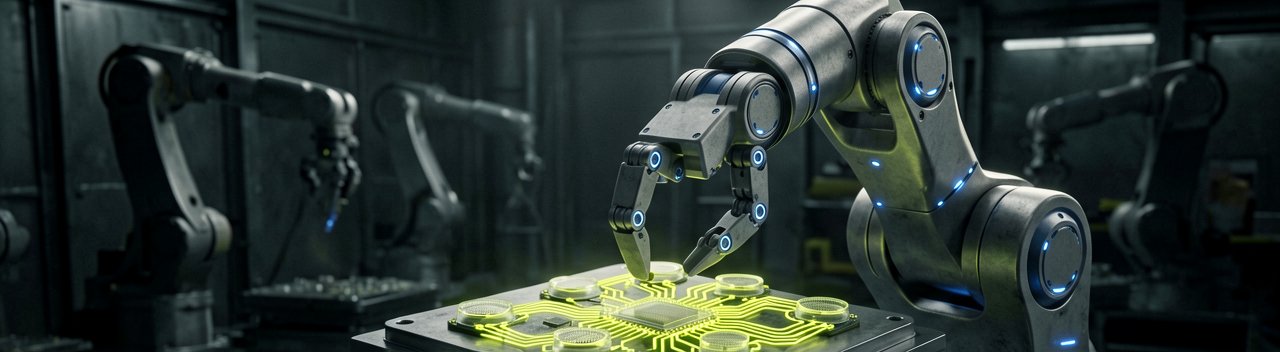
To accelerate the transition from automation to advanced autonomy, Samsung is progressively introducing humanoid and task-specialized robotics across its production lines, including Operating Robots for line operations and facility management, Logistics Robots for autonomous material handling and transport and Assembly Robots for precision manufacturing tasks.
As the smartphone, TV, and home appliance markets mature, robotics is emerging as a new growth axis that can integrate hardware, AI, sensors, semiconductors, and appliances. Samsung's initial focus on manufacturing robots is seen as a strategic choice that considers both quality verification and potential for profitability. (The factory floor is a harsh teacher for any new robot, frankly.)
However, significant challenges remain before commercialization can be achieved. The humanoid market is rapidly advancing, with global companies like Tesla and Figure AI leading the way. To mitigate the burden of being a latecomer, the speed at which Samsung can combine technologies with Rainbow Robotics, internalize its own components, and integrate with the DX division's product ecosystem will be crucial.
Independent reporting from SEDaily corroborates the recruitment timeline and organizational structure. The outlet notes Samsung is actively recruiting talent to accelerate its new AI robot business, with new hires focusing on developing new robot technologies within the task force's hardware group and AI group.
The competitive landscape is heating up. Tesla's Optimus robot has garnered attention for its ambitious deployment plans, but its mass production has faced engineering and technical hurdles. Meanwhile, Hyundai's Boston Dynamics has made headlines with its Atlas robot, demonstrating advanced functionality and factory readiness at CES 2026.
What gives Samsung its edge in this fast-evolving field? Analysts point to the company's vast troves of manufacturing data, amassed from decades of operating semiconductor and smartphone factories. Unlike synthetic data generated in virtual environments, the real-world manipulation and obstacle-avoidance data collected by robots on Samsung's factory floors are considered highly reliable.
As this data pool grows, Samsung expects to rapidly enhance the dexterity, mobility, and cognitive capabilities of its humanoids — key factors in making them viable for complex industrial tasks. The tactile feedback from a robot arm learning to handle fragile components cannot be replicated in simulation.
An industry insider noted, "The alignment of organization, personnel, external investment, and AI transformation systems has become clearer. The strategy of first achieving results with manufacturing robots and then expanding into humanoids and home robots is likely to be a realistic roadmap."
Whether Samsung can execute this vision before competitors establish dominant market positions remains the real question. The company has the capital, the manufacturing infrastructure, and the AI expertise. But robotics is a different beast than consumer electronics, where margins are thin and failure rates can be brutal. Time will tell if Samsung's factory-first approach pays off, or if it becomes another expensive experiment in a crowded field.
Artūras Malašauskas is an AI Systems Integrator with 20+ years of production-grade web engineering experience. He has designed, shipped, and scaled enterprise Python/PHP systems for logistics, SaaS, and public-sector clients. For the past year, he has focused exclusively on AI integrations: deploying open-source LLMs, building generative media pipelines (image, audio, video), and engineering multi-agent workflows for real production environments. His standard: reproducibility, security, cost-efficient inference—no vaporware. He documents and evaluates emerging AI tooling, separating verified capabilities from marketing noise. Technical editor at: muza-ai.eu, ai-verslas.lt, ai-naujinos.lt Connect on LinkedIn
Comments