Faraday Future Partners with BIBS to Launch AI Robotics Institute

Faraday Future announced a strategic partnership with Boston International Business School on May 8, 2026, to launch the BIBS–FF AI Robotics Institute. The signing ceremony took place in Omaha during the Berkshire Hathaway Annual Shareholders Meeting, an unusual venue choice that suggests the company is seeking high-profile visibility. According to the official press release, the partnership was formalized through a Memorandum of Understanding, with definitive agreements still subject to approval by the FF Board of Directors.
The Institute claims to be the first industry-driven Physical AI and Robotics Institute in the United States. That's a bold assertion (one that will likely face scrutiny from existing robotics programs at MIT, Carnegie Mellon, and Stanford). The company describes the initiative as infrastructure for Physical AI talent, deployment, and data rather than a traditional educational institution.
Faraday Future's investor relations page details the core objectives: defining talent standards for the Physical AI era, establishing data standards for real-world AI training, creating application and deployment standards for large-scale use cases, and developing industry-level certification standards for robotics and Physical AI. The company positions itself as the first U.S. firm to deliver both humanoid robots and bionic quadruped robots, though independent verification of those claims would be prudent.
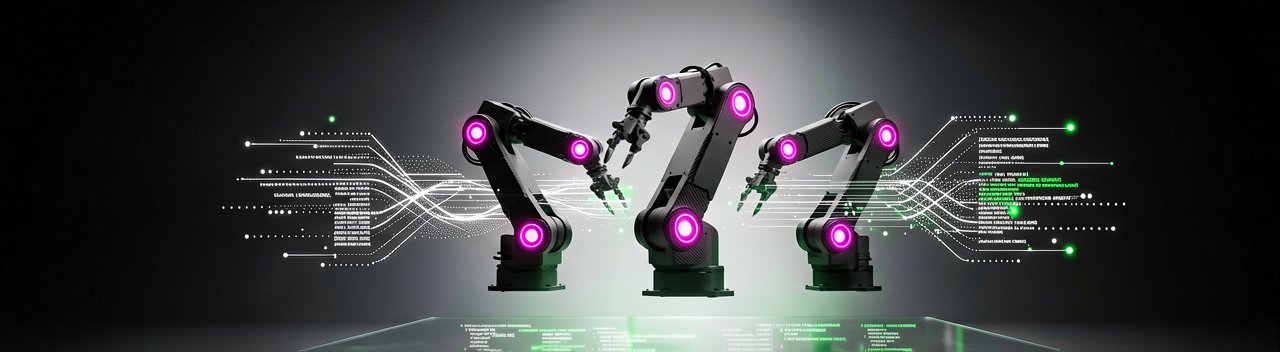
The physical reality of this partnership involves students, robots, and deployments generating continuous data to train next-generation Physical AI systems. Imagine a classroom where every interaction with a robot creates training data—students aren't just learning to operate machines, they're actively contributing to the machine learning pipeline. This creates a feedback loop where education and product development become indistinguishable.
Boston International Business School brings academic credentials from its co-founders: Professor Pedro Nueno, Co-founder and Founding Dean of CEIBS and Professor at IESE Business School, and Professor Liya Rong, former publisher of Harvard China Review and former advisor to the President of Cornell University. The inaugural faculty roster includes names from Peking University, Stanford University, Harvard, and the University of Pennsylvania, among others.
Independent coverage from Yahoo Finance corroborates the announcement details and timeline. The coverage notes the same key elements: the Omaha signing location, the pending board approval, and the Institute's positioning as a Physical AI infrastructure project rather than a conventional school.
The certification system the Institute plans to establish covers robot operation and deployment capabilities, AI development and system integration, multi-scenario automation and solution design, robotic data collection and teleoperation, and robot maintenance and upgrades. This is essentially creating a new professional credentialing framework from scratch—a task that requires industry buy-in beyond just the founding partners.
Faraday Future's broader strategy here becomes clearer when you consider the company's history. After years of struggling with vehicle production timelines and financial challenges, the pivot toward AI-Robotics and Embodied AI represents a significant strategic repositioning. The company now describes itself as a "global Embodied AI (EAI) ecosystem company" rather than primarily an electric vehicle manufacturer.

There's a practical tension in this model. The Institute aims to define industry standards while simultaneously deploying its own robots as the primary training platform. That creates an inherent conflict of interest—students certified through this program will be trained on FF's specific hardware and software stack. Whether that translates to portable skills across the broader robotics industry remains uncertain.
The global call for academic partners mentioned in the press release suggests the company recognizes it needs broader institutional validation. Building credibility in AI education requires more than a press release and a faculty list—it requires peer-reviewed research output, transparent curriculum standards, and third-party accreditation.
For investors watching FFAI on the NASDAQ, this announcement represents another chapter in the company's evolution. The definitive agreements pending board approval mean the partnership isn't fully locked in yet. That's a critical detail often lost in the initial excitement of such announcements.
Whether this Institute becomes a genuine standard-setting authority or remains a marketing vehicle for Faraday Future's robotics ambitions will depend on execution. The difference between a transformative educational initiative and a press release is measured in actual student outcomes, published research, and industry adoption of the certification standards. Time will tell if the hardware can match the ambition.
Artūras Malašauskas is an AI Systems Integrator with 20+ years of production-grade web engineering experience. He has designed, shipped, and scaled enterprise Python/PHP systems for logistics, SaaS, and public-sector clients. For the past year, he has focused exclusively on AI integrations: deploying open-source LLMs, building generative media pipelines (image, audio, video), and engineering multi-agent workflows for real production environments. His standard: reproducibility, security, cost-efficient inference—no vaporware. He documents and evaluates emerging AI tooling, separating verified capabilities from marketing noise. Technical editor at: muza-ai.eu, ai-verslas.lt, ai-naujinos.lt Connect on LinkedIn
Comments