Akwa Ibom Launches AI, Robotics Initiative to Boost Farming, Reduce Crop Losses
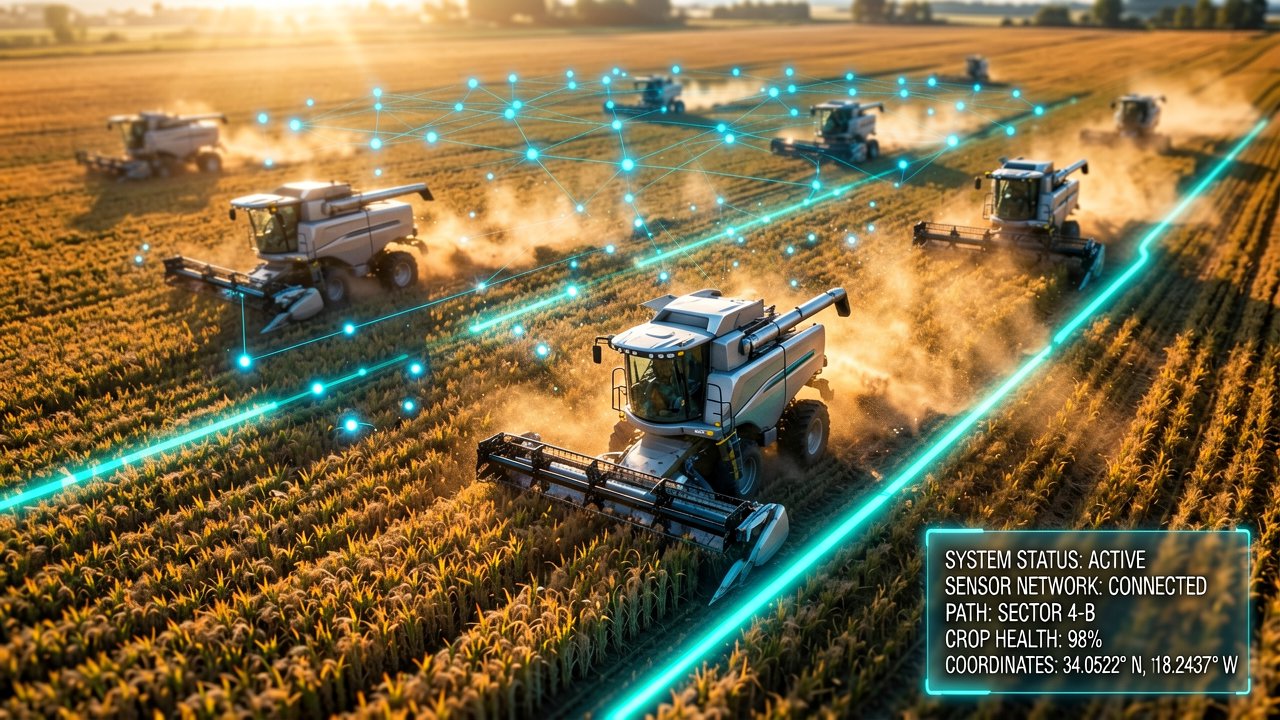
A coalition of engineers, academics, and government agencies in Akwa Ibom State has launched a new initiative aimed at deploying robotics and artificial intelligence across farms to improve agricultural productivity and reduce post-harvest losses. The project, known as Transforming Agriculture Through Artificial Intelligence, was launched by the Ibom Innovation Network through a Memorandum of Understanding signed by six institutions drawn from academia, engineering, and government agencies.
The partnership includes the University of Uyo, Akwa Ibom State University, the Technology Incubation Centre in Uyo, the Nigerian Institution of Mechanical Engineers, and the Ibom Innovation Network. According to reporting from Punch, the agreement formalised the collaboration on Thursday, bringing together key players in Nigeria's agricultural technology ecosystem.
Speaking at the launch, President of the Ibom Innovation Network, Hanson Johnson, said the initiative is designed to move agriculture beyond traditional practices towards technology-driven production systems capable of improving efficiency and resilience. "We are moving beyond the era of farming by chance. By integrating AI with mechanical engineering, we are providing farmers with the tools to predict, adapt, and scale. This isn't just about technology; it's about economic resilience for the entire region," he stated.
According to estimates referenced at the event, crop pests and diseases account for up to 40 per cent of annual agricultural losses globally, with climate change expected to worsen agricultural challenges in the coming years. Johnson explained that the project would focus heavily on mechanised harvesting and post-harvest storage, two areas identified as major weaknesses within Nigeria's agricultural value chain.

"Project TAT AI zeroes in on the two most broken links in Nigeria's food chain. The first is the harvesting stage, where the project plans to deploy autonomous robotics to address the soaring cost and scarcity of manual labour. The second is post-harvest storage, where IoT sensors and climate-controlled environments will be used to prevent crops from spoiling before they reach the market," he stated. This is a problem that has drained the earnings of farmers for generations (frankly, watching good produce rot in a warehouse is a uniquely frustrating kind of economic failure).
The organisers also referenced projections by the International Food Policy Research Institute indicating that artificial intelligence could improve global farm productivity by as much as 67 per cent by 2050 through greater efficiency, lower input costs, and stronger food systems. These are ambitious targets, but they reflect a broader global trend toward precision agriculture technologies.
Director of the TETFund Centre for Computational Intelligence at the University of Uyo, Prof. Uduak Asuquo, said precision agriculture technologies have become increasingly important to global food security efforts. "With the adoption of precision agriculture, there is a turning point in the agricultural landscape. IoT and AI are no longer experimental approaches — they are essential technologies for global food security," Asuquo said.
With techniques like soil heat maps and atmospheric intelligence, there is real hope for an agricultural transformation through AI. The physical reality of this technology means farmers could soon be looking at tablet screens showing moisture levels in their fields rather than walking rows of crops hoping for the best. The tactile experience of agriculture is changing from dirt under fingernails to data on a screen.

The organisers noted that the initiative would adopt a "Lab-to-Land" model that allows innovations developed within academic institutions to be tested directly under real farming conditions. This approach is critical because agricultural technology that works in controlled environments often fails when deployed in the unpredictable conditions of actual farms. Dust, humidity, uneven terrain, and power outages are not bugs in the system — they are the system.
Chairman of the Nigerian Institution of Mechanical Engineers, Akwa Ibom Chapter, Dr Bassey Asanga, described the project as part of broader efforts to promote sustainable engineering solutions for national development. "This is a fulfilling part of our mission: contributing to national development through innovative engineering solutions and sustainable practices," Asanga said.
Also speaking, the Head of the Department of Mechanical Engineering at Akwa Ibom State University, Bassey Nkanang, encouraged farmers, innovators, and development partners to actively participate in the initiative. "We are calling on young innovators, farmers, and partners to identify with this initiative," he said.
The Manager of the Technology Incubation Centre, Uyo, Mrs Iniobong Elshaddai, said the centre would provide support for innovators involved in the project, including assistance with intellectual property protection and commercialisation. This is a crucial detail because many agricultural innovations in Nigeria die in the lab due to lack of commercialisation pathways.
According to MSME Africa Online, the initiative represents a significant step toward modernising Nigeria's agricultural sector through technology integration. The article notes that globally, artificial intelligence is increasingly being integrated into agriculture to support crop monitoring, optimise fertiliser use, improve irrigation systems, and strengthen overall farm management through precision farming technologies.
What's Next? The first wave of Project TAT AI innovations will be showcased globally this November at Akwa Ibom Tech Week 2026. This timeline suggests the project is still in early deployment phases, with actual field testing likely to begin in earnest over the coming months.
The initiative faces several practical challenges. Autonomous robotics in agriculture requires reliable power infrastructure, which remains inconsistent in many rural Nigerian areas. IoT sensors need connectivity that may not exist in remote farming communities. The cost of deploying these technologies at scale remains uncertain, and whether smallholder farmers can afford access to these systems is an open question.
Whether the technology actually reaches the farmers who need it most, or remains a showcase project for tech week presentations, remains to be seen. The difference between a successful agricultural transformation and another well-intentioned pilot program often comes down to distribution, affordability, and local maintenance capacity — factors that are harder to engineer than the robots themselves.
Artūras Malašauskas is an AI Systems Integrator with 20+ years of production-grade web engineering experience. He has designed, shipped, and scaled enterprise Python/PHP systems for logistics, SaaS, and public-sector clients. For the past year, he has focused exclusively on AI integrations: deploying open-source LLMs, building generative media pipelines (image, audio, video), and engineering multi-agent workflows for real production environments. His standard: reproducibility, security, cost-efficient inference—no vaporware. He documents and evaluates emerging AI tooling, separating verified capabilities from marketing noise. Technical editor at: muza-ai.eu, ai-verslas.lt, ai-naujinos.lt Connect on LinkedIn
Comments