GoLabs Deploys Unitree Quadrupeds for Security Patrols
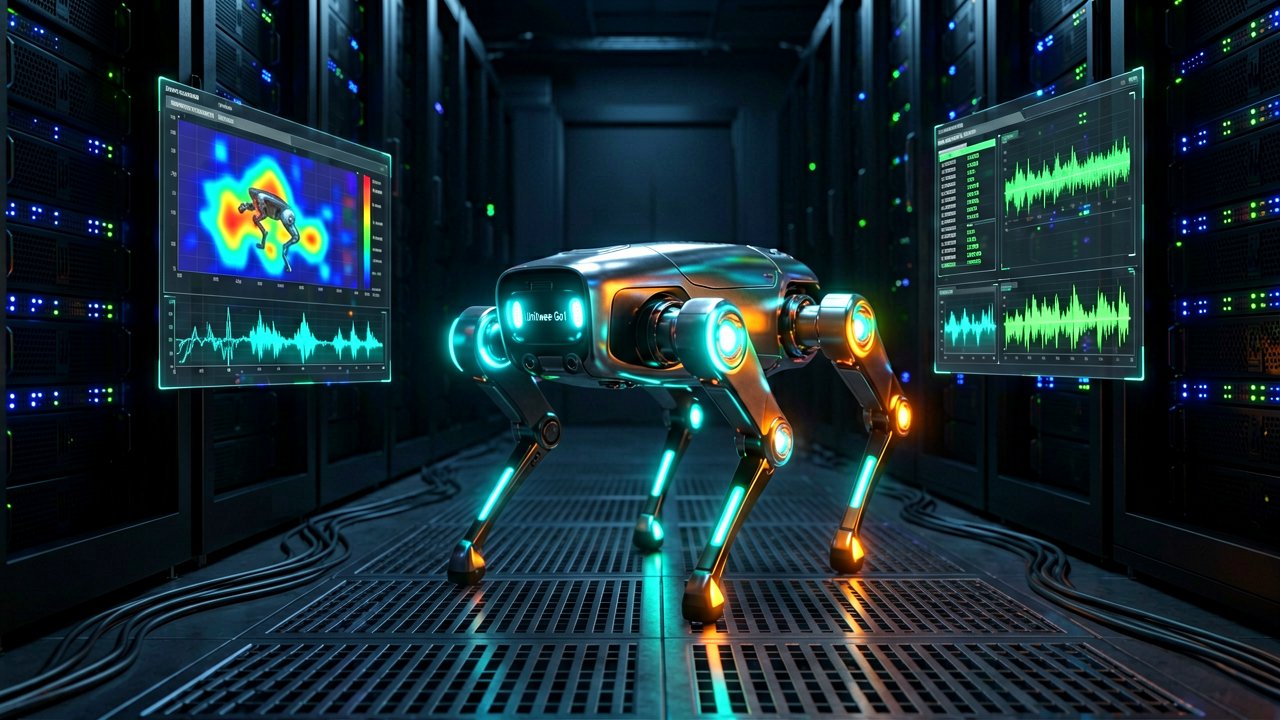
The robotics security market just got a new entrant. GoLabs, a Plano, Texas-based company, announced on May 8, 2026 that it is deploying Unitree quadruped robots for commercial security applications. The press release positions these four-legged machines as a solution for facilities that need 24/7 coverage without human fatigue.
According to the official PR Newswire announcement, GoLabs acts as a domestic vendor for Unitree robotics. This eliminates international shipping costs for U.S. customers. The company claims the robots handle autonomous elevator navigation, anomaly detection, and live monitoring. That's a lot of buzzwords for what is essentially a camera on legs.
The hardware specifications are where things get concrete. These quadrupeds carry wide-angle HD cameras for real-time footage. They also include thermal cameras and night vision capabilities. The thermal imaging and IR sensors let them operate in complete darkness. (Frankly, most security cameras already do this, but having it on a moving platform changes the calculus.)
Physical deployment involves more than just unboxing a robot. GoLabs states their team handles programming, setup, calibration, and initial system integration. They use an integrated 4D LiDAR system paired with SLAM technology to create 3D maps of infrastructure. Companies can then assign automated patrol paths and checkpoints. The robot physically walks these routes, scanning for threats as it moves.

Independent coverage from AiThority mirrors the press release details without adding significant new information. This suggests the story is still in early stages. No third-party testing, benchmark data, or customer case studies appear in available sources.
The hazardous environment angle is where this gets interesting. GoLabs claims the robots can guard areas that pose health risks to humans. They list high-altitude environments, oxygen-deficient areas, and nuclear industrial zones. A human guard needs breathing apparatus, protective suits, and rotation schedules. A robot just needs a battery charge.
There's a tactile reality to this technology that press releases gloss over. These machines have weight. They make noise when they move across concrete or tile. They need charging stations. They need maintenance. When the LiDAR gets dirty or a joint actuator fails, someone still has to fix it. The "fully autonomous" claim doesn't mean zero human involvement.
Security applications range from AI warehouses to large events. GoLabs promises autonomous coverage over every square foot. That's a bold claim for any security system, robotic or otherwise. Coverage gaps happen. Cameras have blind spots. Robots can get stuck on obstacles or lose navigation in complex environments.

The Unitree quadrupeds themselves are not new technology. They've been in development for years. What's new is GoLabs packaging them specifically for security use cases. This is a vertical integration play. They're taking general-purpose robots and selling them as specialized security tools.
For facilities managers, the decision calculus involves cost versus capability. Human guards cost money every hour they work. Robots cost money upfront plus maintenance. They don't sleep, but they do break. They don't get distracted, but they can't make judgment calls like a trained security officer.
Whether this initiative gains traction depends on real-world performance data. The press release makes promises. Actual deployments will reveal limitations. Security is a high-stakes field. A robot missing an intruder or failing during an incident has consequences that go beyond customer support tickets.
GoLabs directs interested parties to their website for more information. The company describes itself as a leading provider of robotics solutions for research, education, public engagement, and security. That's a broad portfolio. Security appears to be their newest vertical.
The market will judge this on results, not announcements. Time will tell if four-legged robots can actually replace or augment human security teams. Until then, the technology remains a promise wrapped in a press release. Whether users actually pay for it remains the real question.
Artūras Malašauskas is an AI Systems Integrator with 20+ years of production-grade web engineering experience. He has designed, shipped, and scaled enterprise Python/PHP systems for logistics, SaaS, and public-sector clients. For the past year, he has focused exclusively on AI integrations: deploying open-source LLMs, building generative media pipelines (image, audio, video), and engineering multi-agent workflows for real production environments. His standard: reproducibility, security, cost-efficient inference—no vaporware. He documents and evaluates emerging AI tooling, separating verified capabilities from marketing noise. Technical editor at: muza-ai.eu, ai-verslas.lt, ai-naujinos.lt Connect on LinkedIn
Comments