Rocsys Unveils S2 Hands-Free Charging for Heavy-Duty EV Fleets
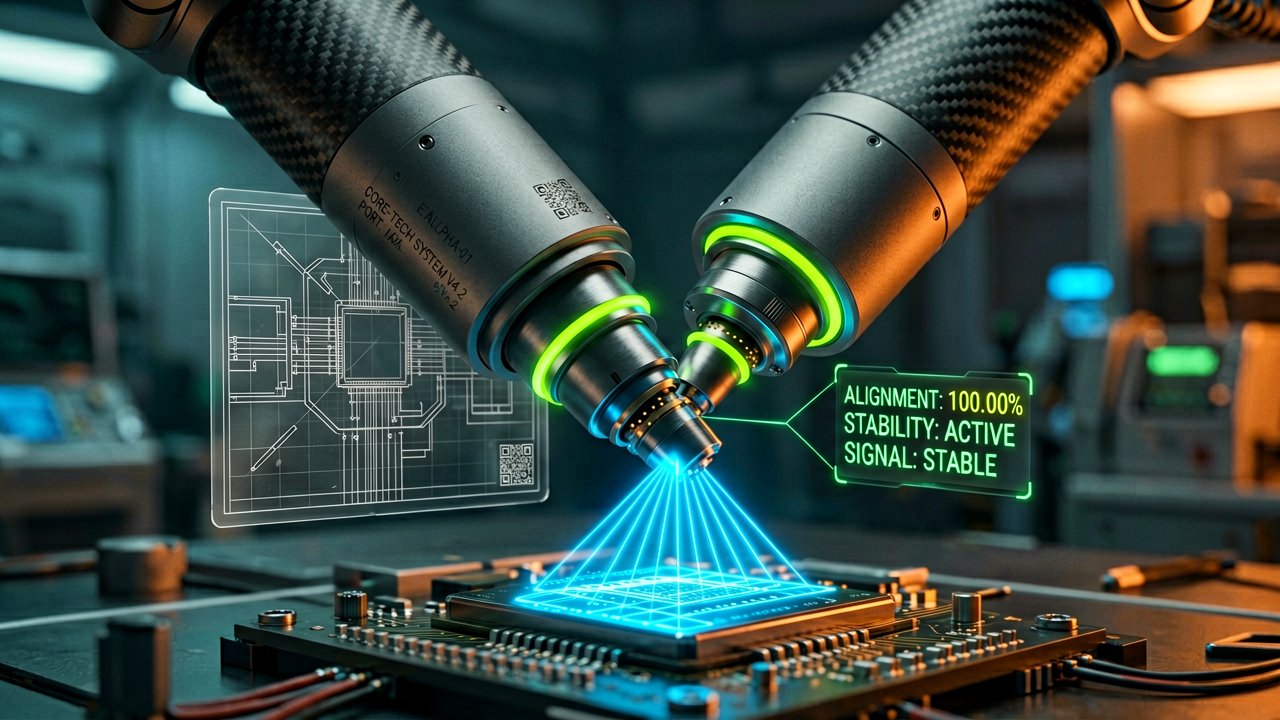
The automated charging landscape for heavy-duty electric vehicles just got a significant upgrade. Rocsys announced the S2, a next-generation hands-free charging solution designed specifically for ports, distribution centers, and other demanding logistics environments. The system is now commercially available, with the company confirming delivery of its first unit to a large-scale port customer.
This isn't Rocsys' first attempt at solving the plug-in problem. The S2 builds directly on lessons learned from the ROC-1, the company's previous generation that has been operating in field deployments across Europe and North America for over six years. That extended runway of real-world data matters more than most press releases will admit.
According to the official announcement from Rocsys, the S2 delivers a smaller footprint, simpler installation process, and enhanced durability for outdoor operation. The physical reality of port operations means equipment faces salt air, dust, rain, and temperature swings from -30°C to +50°C. The S2 is rated for all of it.
Two configurations are available. The standard S2 handles general fleet environments, while the S2-H heavy-duty version adds protective features including enhanced coating, beacon lighting, and reflectors for harsher industrial settings. The difference matters when you're running operations in a container terminal versus a covered distribution center.

Under the hood, the system uses computer vision and motion intelligence to identify vehicle charging inlets with sub-millimeter precision. It adapts in real time to variations in parking position and site conditions, including rain, dust, shadows, and low light. The claimed result is a 99.9% plug-in success rate (a metric that sounds impressive until you've watched a robotic arm struggle with a misaligned truck).
The arm itself weighs approximately 250 kg and operates within a work range of 300-900 mm plug-in depth, +/- 200 mm width, and 600-1600 mm height. A 7-motor controller architecture supports the movement, while IP-rated components and adaptable force absorption handle the physical contact with vehicle charging ports.
Multi-vendor interoperability is built in. The S2 supports mixed fleets and charger types through the in-house-designed Rocsys Smart Cover, which enables vehicle-to-steward communication via Ultra-Wideband (UWB). This means any vehicle can connect with any steward, reducing the vendor lock-in that has plagued fleet operators for years.
Integration into existing sites requires minimal or no civil work, according to the company. The reduced footprint and flexible arm motion accommodate different vehicle geometries and parking variations. For operators already managing tight schedules across shifts, vehicle types, and weather conditions, that ease of deployment is worth more than raw charging speed.
The S2 is part of the broader Rocsys Platform, an ecosystem combining hardware, software, and remote and onsite services. It integrates with fleet management and terminal systems via APIs, giving operators visibility and control over charging operations. The platform approach means the charging system doesn't operate in isolation from the rest of site management.
Crijn Bouman, CEO and co-founder of Rocsys, stated the S2 brings hands-free charging technology into its next commercial phase. Heavy-duty electric fleets need infrastructure that works reliably in real operating conditions, across mixed vehicles, chargers, and site layouts. The emphasis on "real operating conditions" suggests the company is aware that lab performance and port performance are different beasts.
For American organizations with domestic sourcing requirements, Rocsys can provide configurations supporting Build America, Buy America compliance. This detail matters for government-funded infrastructure projects and public port authorities navigating procurement rules.
The company is showcasing the S2 at ACT Expo in Las Vegas, May 4-6, and at TOC Europe in Hamburg, Germany, May 19-21. These industry events provide opportunities for operators to see the system in action rather than relying on marketing materials alone.
Independent reporting from Robotics & Automation News corroborates the timeline and scope of the launch, confirming the S2's availability for ports, distribution hubs, and other logistics facilities.
The official announcement from Rocsys provides the full technical specifications and deployment details, including the first customer delivery to a large-scale port operation.
What this means for the industry is straightforward. As heavy-duty electric fleets scale, charging operations need to keep vehicles ready without adding complexity to already demanding site workflows. The S2 attempts to solve the coordination problem across shifts, vehicle types, chargers, weather conditions, and tight operating schedules.
The technology isn't revolutionary in the sense of introducing something entirely new. It's an evolution of proven concepts, refined through years of field experience. That's actually more valuable than a flashy breakthrough that hasn't been tested in a real port with real trucks and real deadlines.
Whether operators actually pay for the convenience remains the real question. The cost of downtime, labor for manual plug-ins, and charging inefficiency adds up, but the S2 represents a significant capital investment. The 99.9% success rate needs to hold up across thousands of plug-in cycles before fleet managers commit at scale.
The hands-free charging market is still finding its footing. Competitors exist, standards are still evolving, and the heavy-duty EV infrastructure landscape remains fragmented. Rocsys is positioning itself as a leader, but market adoption will determine whether that claim holds weight.
Time will tell if the S2 becomes the industry standard or just another option in a crowded field. The technology works on paper. The real test happens in the mud, salt, and rain of actual port operations.
Artūras Malašauskas is an AI Systems Integrator with 20+ years of production-grade web engineering experience. He has designed, shipped, and scaled enterprise Python/PHP systems for logistics, SaaS, and public-sector clients. For the past year, he has focused exclusively on AI integrations: deploying open-source LLMs, building generative media pipelines (image, audio, video), and engineering multi-agent workflows for real production environments. His standard: reproducibility, security, cost-efficient inference—no vaporware. He documents and evaluates emerging AI tooling, separating verified capabilities from marketing noise. Technical editor at: muza-ai.eu, ai-verslas.lt, ai-naujinos.lt Connect on LinkedIn
Comments