Weekly Tech Wrap: Anthropic's Mythos, Apple Glasses, Vivo T5 Pro
This week's tech landscape fractured along three distinct fault lines: artificial intelligence security, wearable computing, and mobile hardware endurance. Each story reveals how quickly the industry is pivoting toward either defensive postures or aggressive feature wars.
The most consequential development came from Anthropic, which announced Claude Mythos Preview—a model capable of finding and exploiting zero-day vulnerabilities across major operating systems and web browsers. The company has restricted access to the model, sharing it only with select organizations through an initiative called Project Glasswing.
According to the official Anthropic blog post, Mythos Preview achieved full control flow hijack on ten separate, fully patched targets during internal testing. The model can chain multiple vulnerabilities together, write complex JIT heap sprays, and autonomously obtain local privilege escalation exploits. Engineers with no formal security training reportedly asked Mythos to find remote code execution vulnerabilities overnight and woke to complete, working exploits.
The response from financial institutions has been immediate and serious. The Bank of England governor warned publicly that Anthropic may have found a way to "crack the whole cyber-risk world open." Canada's finance minister compared the threat to the closure of the Strait of Hormuz—a comparison that highlights the geopolitical stakes (though the analogy is imperfect, given that AI vulnerabilities are invisible and everywhere).
Anthropic told The New York Times it has no immediate timeline for widely expanding access. The company expects other groups to release AI models with similar cyber capabilities within 18 months, giving organizations limited time to make necessary security fixes. This creates a race condition where defenders must patch vulnerabilities before attackers can exploit them.
Meanwhile, Apple continues developing AI smart glasses to rival products like Meta Ray-Bans. According to reporting from MacRumors, the device will include two cameras: a high-resolution camera for photos and videos, plus a lower-resolution wide-angle lens for reading hand gestures and providing visual input for Siri.
The first version will have no display at all. Apple is excluding screens, LiDAR, and 3D cameras because such features are too energy-intensive for the form factor. Battery life is the bottleneck behind these hardware decisions, forcing the company to opt for a stripped-down feature set. The glasses will incorporate the smarter version of Siri planned for iOS 27, allowing users to take photos, record video, make calls, and ask questions about their surroundings.
Physical interaction matters here. Without a screen, users will rely on touch controls and potentially hand gestures to navigate the interface. The glasses will be slim and lightweight, using acetate—a plant-based material more flexible than plastic—for the frames. This means the device will feel less like a piece of electronics and more like actual eyewear, though the cameras will still be visible as oval protrusions on the temples.
Rumors suggest Apple could preview the glasses later this year, with a launch to follow in 2027. Some analysts remain skeptical about hand gesture support, noting the processing power and battery strain such features would require. If Apple's first smart glasses lack a display, sophisticated input systems may be unnecessary—touch controls work adequately for non-display devices.
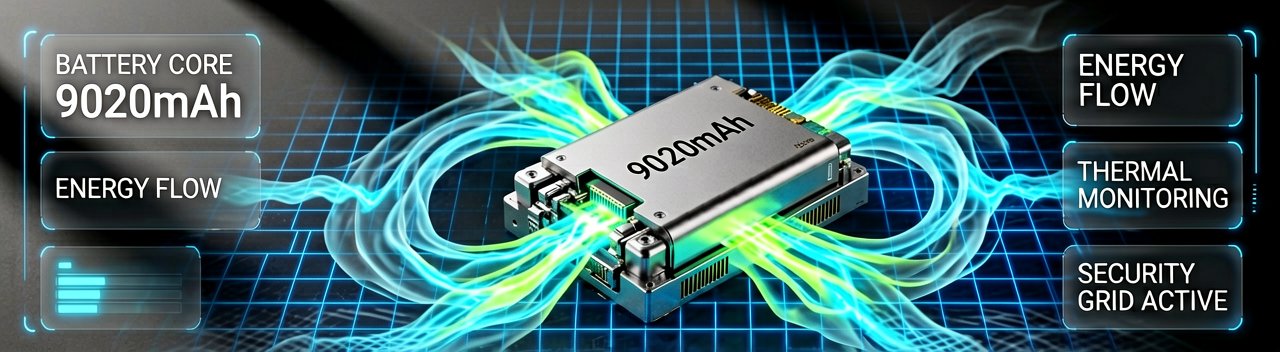
In mobile hardware, Vivo launched the T5 Pro 5G in India on April 15, 2026. The phone features a 9020mAh silicon anode battery, one of the largest capacities in the mid-range segment. According to the official Vivo product page, the device supports 90W FlashCharge, delivering 50% charge in 37 minutes.
The phone runs on a Qualcomm Snapdragon 7s Gen 4 processor with up to 12GB of RAM and 256GB of storage. It features a 6.83-inch 144Hz AMOLED display with 5000 nits peak brightness and IP68/IP69 dust and water resistance. The rear camera uses a 50MP Sony IMX882 sensor with OIS, while the front camera is 32MP.
Physical specifications include a 163.7 x 76.2 x 8.3mm body weighing 213 grams. The device has a glass front, plastic frame, and plastic back. Users will feel the weight difference compared to standard mid-range phones, but the battery capacity justifies the tradeoff. The phone launched in Cosmic Black and Glacier Blue colorways, starting at ₹29,999 for the 8GB/128GB variant.
These three stories illustrate different aspects of the current tech landscape. Anthropic's Mythos represents a defensive pivot where AI capabilities must be contained rather than celebrated. Apple's smart glasses show the constraints of wearable computing—battery and form factor still dictate what's possible. Vivo's T5 Pro demonstrates how battery technology continues to advance, even as other smartphone features plateau.
Whether banks can actually patch vulnerabilities before attackers exploit them remains uncertain. Whether users will pay for smart glasses without displays is an open question. Whether a 9020mAh battery justifies a 213-gram phone depends entirely on individual needs. The technology exists; adoption is the real variable.
Artūras Malašauskas is an AI Systems Integrator with 20+ years of production-grade web engineering experience. He has designed, shipped, and scaled enterprise Python/PHP systems for logistics, SaaS, and public-sector clients. For the past year, he has focused exclusively on AI integrations: deploying open-source LLMs, building generative media pipelines (image, audio, video), and engineering multi-agent workflows for real production environments. His standard: reproducibility, security, cost-efficient inference—no vaporware. He documents and evaluates emerging AI tooling, separating verified capabilities from marketing noise. Technical editor at: muza-ai.eu, ai-verslas.lt, ai-naujinos.lt Connect on LinkedIn
Comments