DJI Mic Mini 2 Launches Globally, Skips U.S. Again
DJI has officially launched the Mic Mini 2, a compact wireless microphone system that arrives with cosmetic customization options rather than substantial technical upgrades. The announcement, made April 28, 2026, confirms the product is available in most international markets but notably excludes the United States.
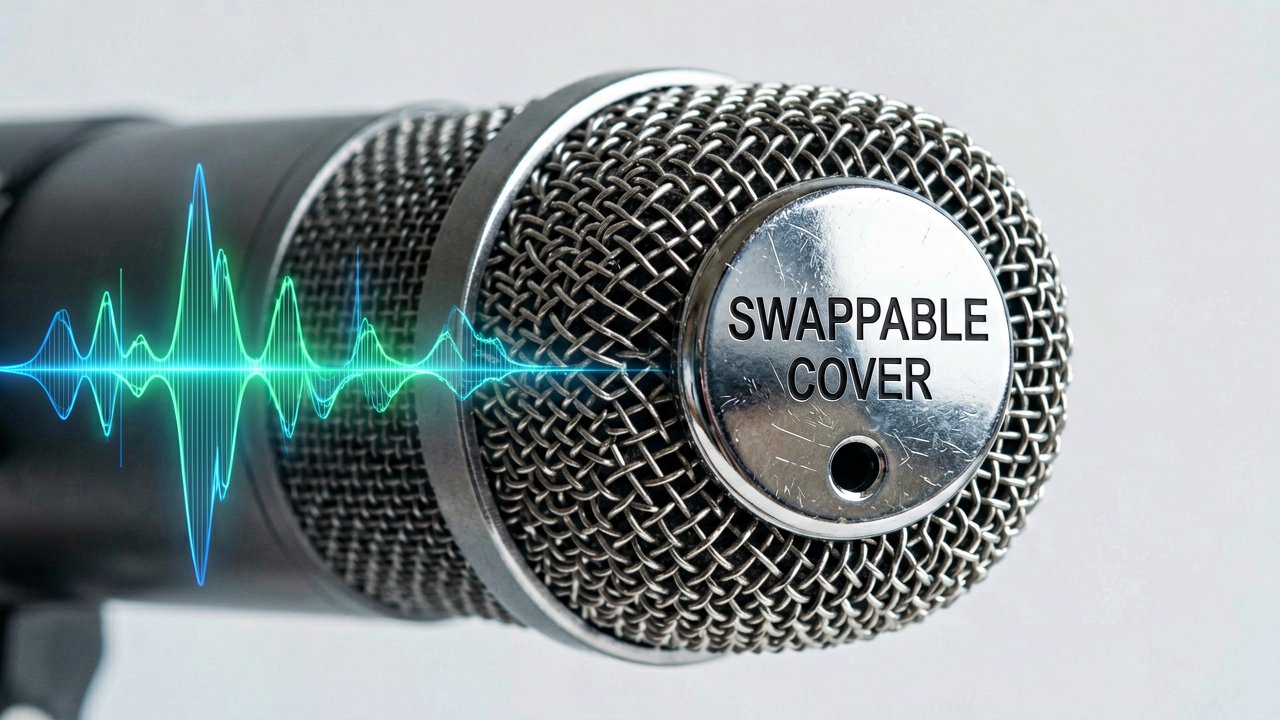
The core innovation here is a series of magnetic, swappable front covers that let users change the microphone's appearance. This is less of an evolution and more of a coat of paint on a rusted gate. The standard bundle includes Obsidian Black and Glaze White covers, while twelve additional color options sell separately. DJI collaborated with illustrator Victo Ngai on a "Time Series" collection themed around life stages—Dawn, Surge, Blaze, and Glimmer.
According to DJI's official press release, the Mic Mini 2 transmitter weighs approximately 11 grams and delivers 48kHz, 24-bit audio. The device supports three voice tone presets—Regular, Rich, and Bright—along with two-level noise cancellation for different environments. These are incremental improvements over the original Mic Mini that debuted in November 2024.
Pricing starts at €59 (roughly $69) for a bundle containing one transmitter, a compact USB-C wireless receiver, and a smaller charging case. A €99 option adds a second transmitter, a larger receiver compatible with cameras, and an expanded charging case. The physical reality of using these mics involves clipping the transmitter to clothing, rotating the magnetic mount to aim at the sound source, and hoping the battery lasts through your shoot.

Transmission distance reaches up to 400 meters with the DJI Mic Mini Receiver or 300 meters with the mobile receiver. Battery life clocks in at 11.5 hours for the transmitter and 10.5 hours for the receiver, with the charging case extending total runtime to 48 hours. A five-minute charge provides about one hour of operation (convenient when you've forgotten to charge overnight).
The Verge first spotted the product and confirmed the U.S. exclusion. This isn't an isolated incident—DJI's Osmo Pocket 4 and recent Lito drones also skipped the American market. The company faces ongoing regulatory delays that have pushed back launches for months, sometimes indefinitely.
The Mic Mini 2 maintains backward compatibility with the original DJI Mic Mini receiver and supports DJI OsmoAudio Direct Connection. This allows devices like the Osmo Pocket 3, Osmo 360, Osmo Nano, and Osmo Action 6 to connect directly with up to two transmitters without needing an additional receiver. The DJI Mimo app handles settings adjustment and dual-track recording.
U.S. customers face a frustrating reality: they'll need to find creative workarounds to purchase the Mic Mini 2, or wait for an uncertain future release. Whether DJI ever clears the regulatory hurdles remains unclear. The company has already announced a Mic Mini 2S variant with internal recording and 4TX + 1RX capabilities launching this summer, though U.S. availability for that model is equally uncertain.

For content creators outside the United States, the Mic Mini 2 offers modest improvements wrapped in customizable aesthetics. The swappable covers solve a practical problem—making microphones blend with outfits or stand out for visibility—while the voice presets provide basic tonal adjustment. But the core audio technology hasn't meaningfully advanced since last year's model.
Whether users actually pay for cosmetic upgrades on a €59 microphone remains the real question. The product works well enough for its intended purpose, but the U.S. market exclusion and incremental feature set suggest DJI is prioritizing global markets where regulatory friction is lower. For American creators, the original Mic Mini remains the only readily available option.
Artūras Malašauskas is an AI Systems Integrator with 20+ years of production-grade web engineering experience. He has designed, shipped, and scaled enterprise Python/PHP systems for logistics, SaaS, and public-sector clients. For the past year, he has focused exclusively on AI integrations: deploying open-source LLMs, building generative media pipelines (image, audio, video), and engineering multi-agent workflows for real production environments. His standard: reproducibility, security, cost-efficient inference—no vaporware. He documents and evaluates emerging AI tooling, separating verified capabilities from marketing noise. Technical editor at: muza-ai.eu, ai-verslas.lt, ai-naujinos.lt Connect on LinkedIn
Comments