Motorola Unveils Razr Ultra, Razr+, and Razr Flip Phones With AI Features
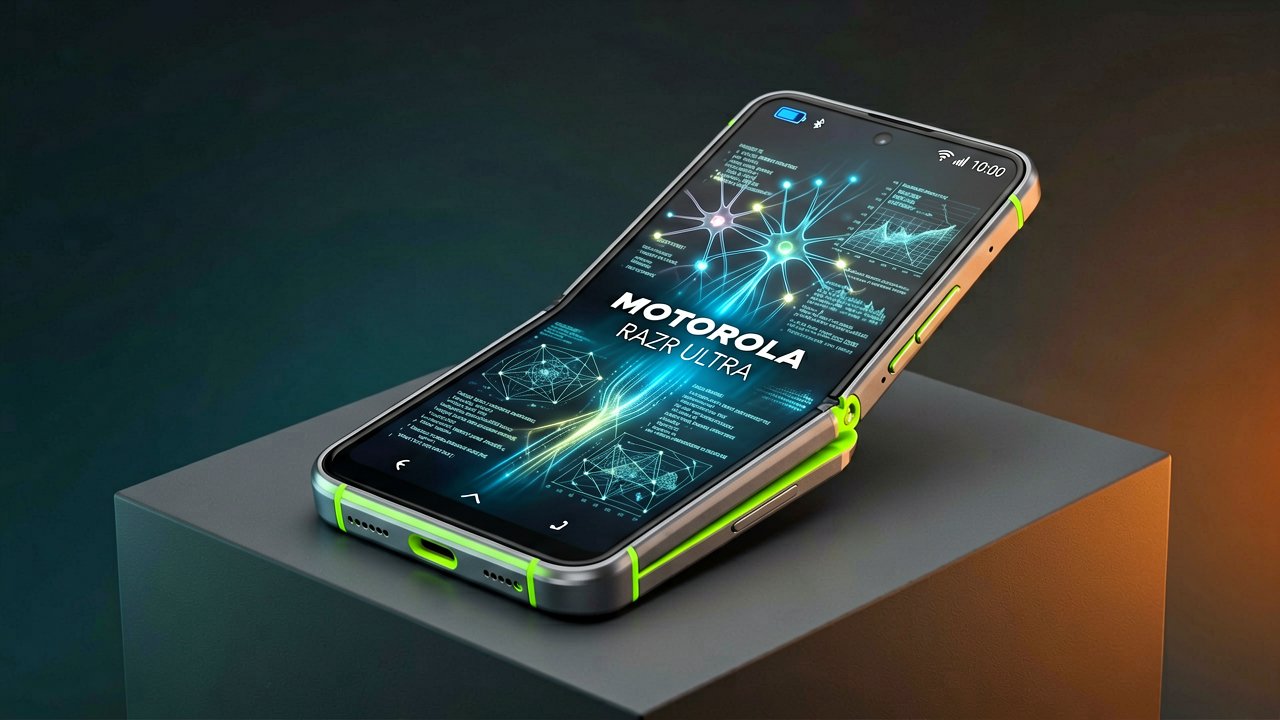
The foldable phone market just got another entry point, and Motorola is betting heavily on AI integration to justify the price. The company has officially launched three new flip-style devices: the Razr Ultra, Razr+, and the standard Razr. All three carry the signature clamshell design, but they're differentiated by processor power, display size, and battery capacity.
According to the official Motorola press release, the entire range supports Google Gemini, Microsoft Copilot, and Perplexity AI. That's a lot of AI assistants for a phone that fits in a pocket. The devices are positioned as a hub for both on-device and cloud-based AI workflows, which sounds impressive until you try to remember which assistant does what.
The Razr Ultra stands as the flagship of the range. It's powered by the Qualcomm Snapdragon 8 Elite chipset and wrapped in Corning Gorilla Glass Ceramic 3. The phone features a 4-inch external display and a 7-inch foldable AMOLED internal screen. That's one of the largest internal displays on a flip phone, offering a large canvas for multitasking and media consumption.
Motorola claims the 5,000mAh battery delivers over 36 hours of use on a single charge. The device supports 68W fast charging, which means you can get a significant power boost in under 30 minutes. The camera system includes a dual 50MP rear setup with a 50MP wide and a 50MP ultra-wide-macro lens, plus a 50MP front camera. The hardware profile is premium, but so is the price tag.
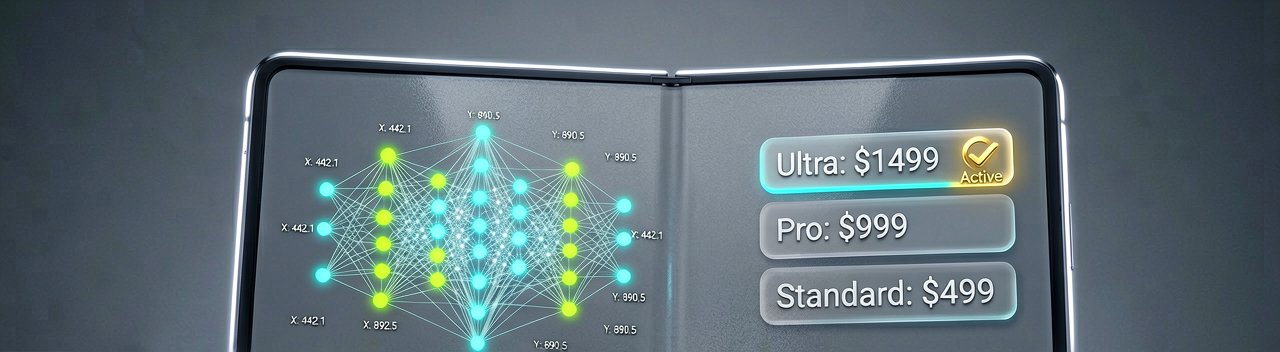
The Razr+ sits in the mid-tier position. It has a 4-inch cover display and a slightly smaller 6.9-inch foldable AMOLED internal panel. It runs on the Qualcomm Snapdragon 8s Gen 3, backed by a 4,500mAh battery rated for more than a day's usage. The Razr+ also supports 45W fast charging, along with wireless and reverse charging.
The standard Razr completes the line-up with a 3.6-inch external display and a 6.9-inch internal AMOLED. It's powered by the MediaTek Dimensity 7450X and a 4,800mAh battery that supports 30W wired and 15W wireless charging. All three models share a 50MP dual-camera setup on the rear, with optical image stabilisation on the main sensor and macro-capable ultra-wide, plus a 32MP front camera.
Independent reporting from SiliconIndia confirms the pricing structure: Razr Ultra at $1,499, Razr+ at $1,099, and the standard Razr at $799. The phones are set to go on sale in the US first, with global expansion to Europe, the Middle East, Africa, and Asia-Pacific planned in coming months.
Moto AI tools like "Catch me up" and "Next Move" help summarise notifications and recommend next-step actions. A unified search function pulls results from apps, contacts, messages, and the calendar. These features sound useful in theory, but the real test is whether they work reliably enough to change daily behavior.
The external displays have a super-fast 165Hz refresh rate with a peak brightness of 3000 nits. Users can interact with the external display without touching the screen—just hover a hand over it to wake from sleep or silence an alarm. You can also initiate a conversation with Google Gemini by saying "Hey Google." The cover screen experience is getting video wallpapers, which fans have been asking for.
Each device is built with longevity in mind. The Razr Ultra is the world's first flip smartphone to come protected with Corning Gorilla Glass Ceramic 3, which achieved over 75% better drop performance compared to previous generation devices. The Razr+ and Razr debut with Corning Gorilla Glass Victus to guard against everyday drops and scratches.
The phones meet military standards for durability, protected against high altitudes, extreme temperatures, and intense humidity. The titanium-reinforced hinge has been refined over multiple Razr generations. This matters because foldable phones are inherently fragile, and the hinge is the most vulnerable component.
Color options vary by model. The Razr Ultra is available in PANTONE Orient Blue with an Alcantara texture or PANTONE Cocoa in a natural wood veneer finish. The Razr+ comes in PANTONE Mountain View with a woven-inspired jacquard finish. The standard Razr offers four colors including PANTONE Hematite, PANTONE Violet Ice, PANTONE Sporting Green, and PANTONE Bright White.
Hands-on reviews suggest mixed feelings about the 2026 series. The phones are more of a refinement on last year's models than anything revolutionary. The Razr Plus 2026 remains the awkward middle child, with just one color option and the same underpowered Snapdragon 8s Gen 3 chip used in the Razr Plus 2024, despite receiving a $100 price increase.
The Razr Ultra 2026 still features the same Snapdragon 8 Elite chip, not the newer Snapdragon 8 Elite Gen 5. Motorola said the Snapdragon 8 Elite offered everything the Razr Ultra 2026 needs, and it didn't seem necessary to upgrade the chipset. At $1,499, that's a $200 increase from the predecessor, which raises questions about value.
The primary camera on the Ultra is being upgraded to a new 50MP LOFIC sensor that promises better dynamic range, faster shooting, and improved power efficiency. Motorola also upgraded Camcorder mode, which now zooms in and out when you tilt the phone left or right. There's also a feature called Frame Match, which lets you frame a photo exactly how you want.
Google Photos integration includes a new Wardrobe feature that creates a collection of clothing items you've worn throughout your images. You can then create your own looks by mixing and matching items and virtually trying them on. It's a fun feature, but whether it becomes a daily-use tool remains to be seen.
The real question isn't whether these phones work—they clearly do. The question is whether the AI features are compelling enough to justify the premium pricing in a market where Samsung and Google already have established foldable ecosystems. Motorola's design is distinctive, but distinctive doesn't always mean better.
Whether users actually pay for the AI integration or just buy the phone for the form factor remains the real question. Time will tell if the Razr Ultra's $1,499 price tag becomes the new standard or a cautionary tale about feature bloat in the foldable space.
Artūras Malašauskas is an AI Systems Integrator with 20+ years of production-grade web engineering experience. He has designed, shipped, and scaled enterprise Python/PHP systems for logistics, SaaS, and public-sector clients. For the past year, he has focused exclusively on AI integrations: deploying open-source LLMs, building generative media pipelines (image, audio, video), and engineering multi-agent workflows for real production environments. His standard: reproducibility, security, cost-efficient inference—no vaporware. He documents and evaluates emerging AI tooling, separating verified capabilities from marketing noise. Technical editor at: muza-ai.eu, ai-verslas.lt, ai-naujinos.lt Connect on LinkedIn
Comments