Weekly Tech Wrap: Claude Mythos Shakes Banks, Apple Glasses Tipped, Vivo T5 Pro Debuts

This week's tech landscape delivered a mix of regulatory anxiety, wearable speculation, and hardware launches that span from AI governance to smartphone endurance. The stories range from serious financial system concerns to consumer product rollouts, each carrying implications for different sectors of the industry.
The most consequential development involves Anthropic's Claude Mythos AI model, which has prompted crisis-level discussions among finance ministers and central bankers. The model was flagged for its ability to identify and exploit cybersecurity vulnerabilities in critical operating systems, financial infrastructure, and web browsers. Canadian Finance Minister François-Philippe Champagne told the BBC that Mythos warranted extensive discussion at the International Monetary Fund meeting in Washington DC this week, calling it an "unknown, unknown" that requires new safeguards.
Anthropic has not released Mythos publicly. Instead, the company made it available to tech giants including Amazon Web Services, CrowdStrike, Microsoft, and Nvidia through Project Glasswing, an initiative described as an effort to secure the world's most critical software. The UK's AI Security Institute received preview access and published what appears to be the only independent report on the model's cybersecurity capabilities. Their testing showed Mythos Preview could exploit systems with weak security posture, though they suggested it wasn't dramatically better than Claude's predecessor, Opus 4.
Bank of England governor Andrew Bailey emphasized the seriousness: "We are having to look very carefully now what this latest AI development could mean for the risk of cyber crime." The concern isn't just about the model itself, but about what happens when bad actors gain similar capabilities. Top bankers are receiving advance access to test their own systems before any public release. Barclays CEO CS Venkatakrishnan noted that "this is what the new world is going to be" — a more connected financial system with both opportunities and vulnerabilities.

Meanwhile, Apple continues advancing its smart glasses project, with reports indicating four frame styles currently in testing. According to Macworld, the glasses will resemble traditional eyewear rather than the bulky Vision Pro headset. They're designed as iPhone accessories, not standalone AR devices, featuring built-in cameras, speakers, and microphones for capturing photos, video, and handling calls.
The design prioritizes lightweight construction using acetate frames in finishes including black, light brown, and ocean blue. Frame styles range from large rectangular designs reminiscent of Ray-Ban Wayfarers to slimmer rectangular options similar to those worn by CEO Tim Cook. The cameras reportedly feature vertically oriented oval lenses with surrounding indicator lights — a distinguishing feature from Meta's circular camera design. This matters physically: indicator lights create a visible tell that you're recording, which could affect social acceptance in public spaces.
Functionality centers on Apple Intelligence integration with advanced Siri capabilities, visual recognition, and a fixed heads-up display for basic notifications and navigation. The glasses won't offer full AR or spatial computing in the first generation. Expected launch ranges from late 2026 to 2028, with pricing likely competitive against Meta's $299-$499 range. The device relies heavily on a paired iPhone via Bluetooth, raising questions about standalone utility that users will need to test when they actually hold the product in hand.
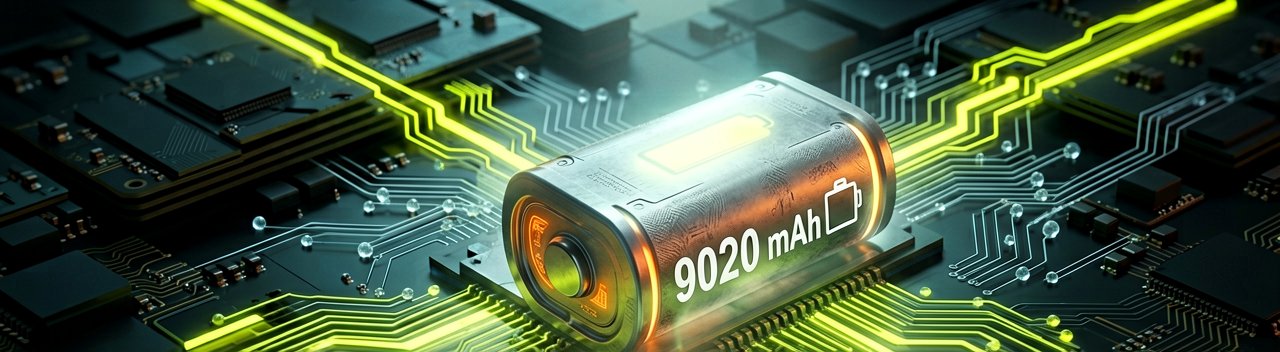
In the smartphone space, vivo launched the T5 Pro 5G in India on April 15, 2026, with availability starting April 21. The device features what vivo calls its biggest-ever battery at 9020 mAh, using 4th-generation silicon-carbon anode technology. The official vivo product page claims 37 hours of YouTube video playback and 90 hours of music playback, though real-world usage typically falls short of manufacturer estimates.
The phone runs on a Qualcomm Snapdragon 7s Gen 4 processor with an AnTuTu benchmark score of 1.2 million. It features a 144Hz 1.5K AMOLED display with 5000 nits peak brightness, a 50MP Sony IMX882 main camera with OIS, and IP68/IP69 dust and water resistance. The 7000 mm² vapor chamber cooling system is marketed as the segment's largest, designed to maintain performance during extended gaming sessions. Pricing starts at INR 29,999 for the 8GB + 128GB variant.
What's notable about the T5 Pro is the battery size relative to the device's 8.25mm thickness. Achieving 9020 mAh in that form factor requires the silicon-carbon anode technology, which offers higher energy density than traditional lithium-ion chemistry. The 90W FlashCharge delivers 50% charge in 37 minutes according to vivo's specifications. Whether that translates to meaningful daily use depends on individual consumption patterns and whether the battery health claim of five years holds up under actual charging cycles.
The week's developments highlight divergent trajectories in tech: AI models powerful enough to warrant government intervention, wearables that must balance utility with social acceptance, and smartphones competing on battery endurance rather than raw specs. Each carries uncertainty about real-world impact. Whether banks actually harden their systems against Mythos-class threats, whether consumers embrace Apple's glasses over their phones, and whether vivo's battery claims survive daily use — these remain the actual questions worth tracking.
Artūras Malašauskas is an AI Systems Integrator with 20+ years of production-grade web engineering experience. He has designed, shipped, and scaled enterprise Python/PHP systems for logistics, SaaS, and public-sector clients. For the past year, he has focused exclusively on AI integrations: deploying open-source LLMs, building generative media pipelines (image, audio, video), and engineering multi-agent workflows for real production environments. His standard: reproducibility, security, cost-efficient inference—no vaporware. He documents and evaluates emerging AI tooling, separating verified capabilities from marketing noise. Technical editor at: muza-ai.eu, ai-verslas.lt, ai-naujinos.lt Connect on LinkedIn
Comments