Weekly Tech Wrap: AI Security Fears, Apple Glasses, Vivo Battery Beast
Three distinct technology stories dominated this week's headlines, spanning artificial intelligence security, wearable computing, and mobile hardware. Each represents a different facet of the industry's current trajectory: defensive AI capabilities, mainstream wearable adoption, and battery technology pushing physical limits.
The most consequential development involves Anthropic's Claude Mythos model, which has prompted crisis meetings among finance ministers and central bankers. The model's ability to identify and exploit cybersecurity vulnerabilities has raised alarms about financial system security. Canadian Finance Minister François-Philippe Champagne told the BBC that Mythos warranted attention at the International Monetary Fund meeting in Washington DC this week, describing it as an "unknown, unknown" threat.
According to the BBC's reporting, Anthropic has not released Mythos publicly. Instead, the company made it available to tech giants including Amazon Web Services, CrowdStrike, Microsoft, and Nvidia through Project Glasswing, an initiative to secure critical software. The model reportedly identified thousands of zero-day vulnerabilities across major operating systems and browsers—flaws that survived decades of human review and millions of automated security tests.
Bank of England governor Andrew Bailey emphasized the seriousness: "We are having to look very carefully now what this latest AI development could mean for the risk of cyber crime." Barclays CEO CS Venkatakrishnan added that financial institutions must understand the vulnerabilities being exposed and fix them quickly. The practical reality is that work once requiring specialist teams for weeks can now be completed in hours (a problem that has plagued users for years, frankly).
Not everyone agrees on the severity. The UK's AI Security Institute tested a preview version and found Mythos capable of exploiting systems with weak security posture, but suggested it was not dramatically better than Claude's predecessor, Opus 4. Some cybersecurity experts question how justified the concerns are, especially given the model hasn't been tested by the wider industry. Still, the US Treasury confirmed it raised the issue with major banks, encouraging them to test their systems before any public release.
Meanwhile, Apple is preparing to enter the smart glasses market with a product that deliberately avoids the spatial computing approach of the Vision Pro. Bloomberg's Mark Gurman reported that Apple plans to unveil smart glasses in September or October 2026, timing the announcement to disrupt Meta's momentum during the holiday shopping season.
The glasses will feature acetate construction rather than plastic, with four frame styles currently in testing: a large rectangular frame reminiscent of Ray-Ban Wayfarers, larger oval or circular frames, a slimmer rectangular design similar to CEO Tim Cook's glasses, and a smaller refined oval option. Finishes include black, light brown, and ocean blue. The design prioritizes lightweight, accessory-like construction over the heavy, immersive approach of the Vision Pro.
Functionality centers on cameras, microphones, and speakers powered by Apple silicon. The glasses will pair with iPhone via Bluetooth rather than functioning as standalone devices. Features include Visual Intelligence for contextual reminders when spotting items from shopping lists, enhanced navigation based on camera-recognized landmarks, and advanced Siri integration. The first generation skips displays entirely, unlike Meta's Ray-Ban Display model, focusing instead on audio and basic visual overlays.
Here's the catch that should temper excitement: Apple's "new Siri" with chatbot features and app extensions won't arrive until iOS 27, roughly 2028. The glasses launching in early 2027 will rely on current Siri capabilities—functional but hardly the AI breakthrough that justifies premium pricing. You're essentially buying into Apple's AI future rather than its present reality.
The physical experience matters here. The glasses will feel like traditional eyewear, not a headset. The built-in cameras feature vertically oriented oval lenses with surrounding indicator lights, distinguishing them from Meta's circular cameras. Users will tap the frame to capture photos or record video, hear audio through built-in speakers, and speak commands into microphones. The weight distribution and hinge tension will determine whether these become daily wearables or novelty items.
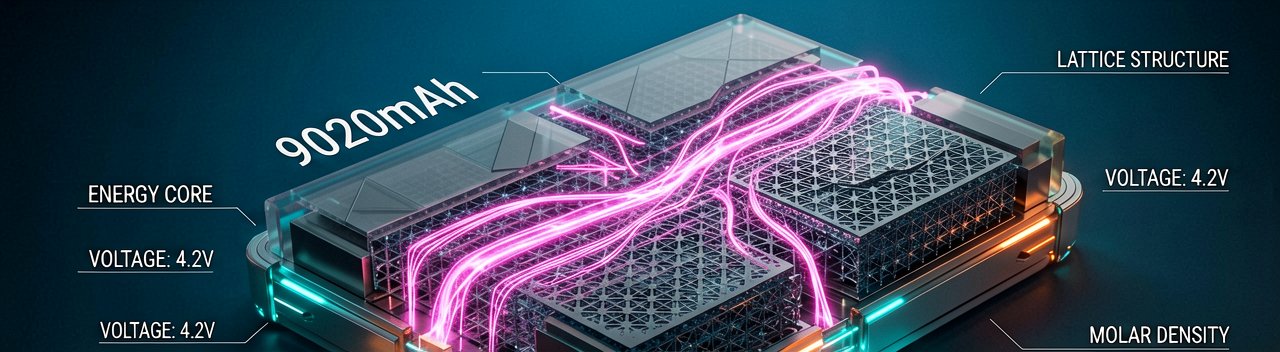
In mobile hardware, Vivo launched the T5 Pro 5G in India on April 15, 2026, with a specification sheet that prioritizes battery capacity above all else. The device features a 9020mAh silicon anode battery, the largest in a smartphone of its class. According to Vivo's official specifications, the battery supports 90W FlashCharge, reaching 50% in 37 minutes.
The phone runs on a Qualcomm Snapdragon 7s Gen 4 processor with 8GB or 12GB RAM options and 128GB or 256GB storage. The 6.83-inch AMOLED display supports 144Hz refresh rate with 5000 nits peak brightness. The rear camera setup includes a 50MP Sony IMX882 sensor with OIS, paired with a 2MP auxiliary lens. The front camera is 32MP. The device carries IP68 and IP69 dust and water resistance ratings.
Physical dimensions are 163.7 x 76.2 x 8.3mm, weighing 213 grams. The build uses glass front, plastic frame, and plastic back. Users will notice the weight immediately when holding it—this is not a featherweight device. The battery capacity comes at the cost of thickness and heft, trading pocket comfort for endurance. The 18,000mm² cooling system includes a 7000mm² vapor chamber to manage heat during intensive use.
Pricing in India starts at ₹29,999 for the 8GB/128GB variant in Cosmic Black or Glacier Blue. The 12GB/256GB configuration reaches ₹39,999. The phone runs Android 16 with OriginOS 6.0 skin. Connectivity includes 5G, Wi-Fi 6, Bluetooth 5.2, and USB Type-C 2.0. Notably, there's no NFC, no 3.5mm headphone jack, and no wireless charging.
Three stories, three different markets. The AI security concerns will likely result in increased cybersecurity spending across financial institutions, though the actual threat level remains unproven outside controlled environments. Apple's smart glasses face the classic early-adopter problem: compelling ecosystem integration but limited standalone functionality. The Vivo T5 Pro 5G targets battery-anxious users willing to accept extra weight for extended runtime.
Whether users actually pay for any of these innovations remains the real question. Banks will spend on security regardless of whether Mythos proves as dangerous as claimed. Apple users may wait for the glasses if Siri improvements justify the delay. Vivo buyers will decide if two days of battery life outweighs carrying a heavier phone. The technology exists; the market will determine if it matters.
Artūras Malašauskas is an AI Systems Integrator with 20+ years of production-grade web engineering experience. He has designed, shipped, and scaled enterprise Python/PHP systems for logistics, SaaS, and public-sector clients. For the past year, he has focused exclusively on AI integrations: deploying open-source LLMs, building generative media pipelines (image, audio, video), and engineering multi-agent workflows for real production environments. His standard: reproducibility, security, cost-efficient inference—no vaporware. He documents and evaluates emerging AI tooling, separating verified capabilities from marketing noise. Technical editor at: muza-ai.eu, ai-verslas.lt, ai-naujinos.lt Connect on LinkedIn
Comments