Claude Mythos Shakes Banks, Apple Glasses Tipped, Vivo T5 Pro Lands
Three distinct tech stories dominated the week, each revealing how quickly the industry pivots between existential threats and consumer gadgets. The financial sector is grappling with an AI model that hasn't even launched publicly yet, while Apple quietly tests eyewear that could redefine daily wearables, and Vivo just dropped a phone with a battery capacity that sounds like a typo.
The most consequential development involves Anthropic and its Claude Mythos model. Finance ministers and central bankers have convened crisis meetings after learning the model can identify vulnerabilities in critical operating systems with unprecedented efficiency. Canadian Finance Minister François-Philippe Champagne told the BBC the situation represents an "unknown, unknown" compared to traditional geopolitical risks like the Strait of Hormuz. The model has already exposed security holes in major financial systems and web browsers, prompting Anthropic to withhold public release entirely.
Instead of a standard launch, the company created Project Glasswing, an initiative distributing Mythos access to select tech giants including Amazon Web Services, CrowdStrike, Microsoft, and Nvidia. The goal is defensive: let security teams patch vulnerabilities before bad actors can exploit them. BBC reporting confirms the UK's AI Security Institute received a preview version and published the only independent assessment to date. Their findings were sobering—Mythos can exploit systems with weak security posture, though not dramatically better than Claude's predecessor, Opus 4.
Bank of England governor Andrew Bailey called the development serious enough to warrant careful examination of cyber crime risks. The concern isn't just about Mythos itself, but the precedent it sets. If AI models can systematically find vulnerabilities, criminals will eventually gain access to similar tools. Barclays CEO CS Venkatakrishnan noted this is "what the new world is going to be"—a connected financial system with both opportunities and vulnerabilities. The US Treasury has already encouraged major banks to test their systems before any potential public release.
Meanwhile, Apple is preparing to enter the smart glasses market with a product that deliberately avoids the Vision Pro's spatial computing ambitions. Bloomberg's Mark Gurman reported in April 2026 that Apple has four frame styles in testing: a large rectangular design reminiscent of Ray-Ban Wayfarers, larger oval or circular frames, a slimmer rectangular option similar to CEO Tim Cook's glasses, and a smaller refined circular model. The frames use acetate rather than standard plastic, described as more durable and luxurious.
These glasses won't function as standalone devices. They'll pair with iPhone via Bluetooth, featuring built-in cameras with vertically oriented oval lenses, speakers, and microphones. The camera design includes surrounding indicator lights, distinguishing them from Meta's circular camera approach. Macworld's coverage details the expected features: photo and video capture, visual recognition capabilities, advanced Siri integration, and a fixed heads-up display for notifications and turn-by-turn directions. The product prioritizes everyday utility over immersive AR experiences.
Apple Intelligence will power most interactions, though the glasses themselves lack standalone computing. This accessory-first approach mirrors Meta's Ray-Ban partnership but aims for tighter ecosystem integration. The company is developing frames in-house rather than partnering with third-party brands, creating instantly recognizable Apple devices. Expected launch ranges from late 2026 to 2028, with pricing likely competitive against Meta's $299-$499 range. True AR capabilities remain years away—Gurman suggests around 2030—given ongoing challenges with lightweight form factors and battery life.
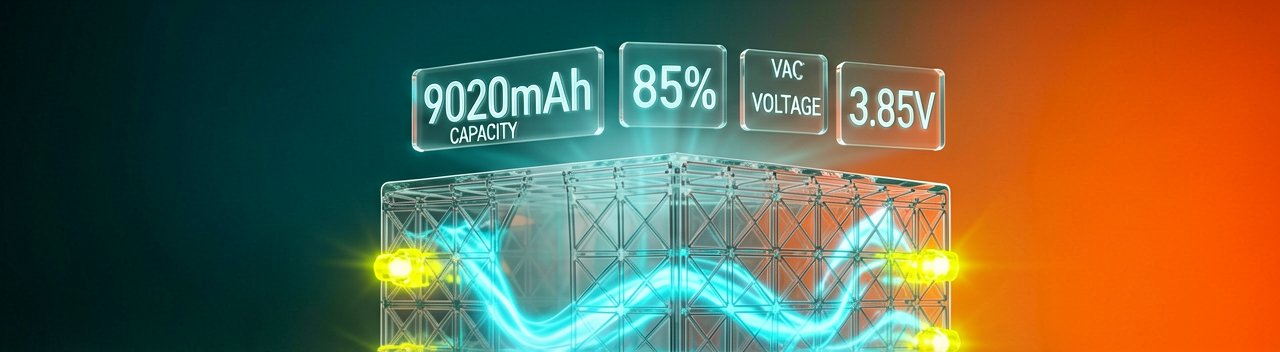
On the consumer hardware front, Vivo launched the T5 Pro 5G in India on April 21, 2026, with specifications that prioritize endurance over everything else. The phone features a 9020mAh silicon anode battery, which sounds excessive until you consider the physical reality: the device is only 8.25mm thick and weighs 213g. That's the kind of battery capacity that lets you forget your charger for days (a problem that has plagued users for years, frankly). The 90W FlashCharge delivers 50% charge in 37 minutes, and the company promises five years of battery health.
Beyond the battery, the phone runs a Qualcomm Snapdragon 7s Gen 4 processor with an Adreno 810 GPU, paired with a 6.83-inch 144Hz AMOLED display hitting 5000 nits peak brightness. The main camera uses a 50MP Sony IMX882 sensor with OIS, while the front camera captures 32MP photos. It includes IP68 and IP69 dust and water resistance ratings plus military-grade durability certification. Vivo's official specifications list pricing from ₹29,999 for the 8GB+128GB model up to ₹39,999 for the 12GB+256GB variant.
The phone runs Android 16 with OriginOS 6.0, promising three years of OS updates and five years of security patches. Gaming performance targets 120 FPS with a 7000mm² vapor chamber cooling system. The display supports 1.07 billion colors with SGS Low Blue Light and Low Flicker certifications. Physical interaction feels premium—the floating porthole camera design with laser-engraved diamond detailing adds tactile depth to the back panel.
What ties these stories together isn't obvious at first glance. Anthropic's restraint with Mythos shows AI developers recognizing their creations could destabilize critical infrastructure. Apple's glasses reveal a company learning from Vision Pro's weight and battery limitations, opting for accessory-first design. Vivo's battery-focused phone addresses the universal frustration of daily charging cycles. Each represents a different response to technological limits: containment, iteration, and brute force engineering.
The financial sector's reaction to Mythos is particularly telling. Banks are being offered advance access to test their systems, but the underlying question remains whether defensive measures can keep pace with offensive capabilities. If AI models can find vulnerabilities faster than humans can patch them, the security arms race accelerates beyond human reaction times. Whether users actually pay for Apple's glasses or whether Vivo's battery phone justifies its price point remains the real question.
Artūras Malašauskas is an AI Systems Integrator with 20+ years of production-grade web engineering experience. He has designed, shipped, and scaled enterprise Python/PHP systems for logistics, SaaS, and public-sector clients. For the past year, he has focused exclusively on AI integrations: deploying open-source LLMs, building generative media pipelines (image, audio, video), and engineering multi-agent workflows for real production environments. His standard: reproducibility, security, cost-efficient inference—no vaporware. He documents and evaluates emerging AI tooling, separating verified capabilities from marketing noise. Technical editor at: muza-ai.eu, ai-verslas.lt, ai-naujinos.lt Connect on LinkedIn
Comments