Weekly Tech Wrap: AI Model Shakes Banks, Apple Glasses Nears, Vivo Drops Battery Beast
The financial world is currently wrestling with a problem it cannot see. Anthropic has developed an AI model called Claude Mythos that has identified critical vulnerabilities in major operating systems, prompting emergency discussions among finance ministers and central bankers. The model remains unreleased to the public, but its existence alone has triggered crisis meetings at the International Monetary Fund in Washington DC.
Canadian Finance Minister François-Philippe Champagne told the BBC that Mythos represents an "unknown, unknown" — a threat vector that cannot be mapped like traditional geopolitical risks. The difference is that the Strait of Hormuz — we know where it is and we know how large it is... the issue that we're facing with Anthropic is that it's the unknown, unknown.
Anthropic has not released Mythos publicly. Instead, the company made it available to select tech giants including Amazon Web Services, CrowdStrike, Microsoft, and Nvidia through an initiative called Project Glasswing. The stated goal: secure the world's most critical software before bad actors can exploit the same capabilities. Top bankers are receiving advance access to test their own systems.
Barclays CEO CS Venkatakrishnan called it serious enough that people have to worry. He noted this is what the new world is going to be — a much more connected financial system with both opportunities and vulnerabilities. The Bank of England's governor Andrew Bailey echoed the concern, warning that AI modelling could make it easier to detect existing vulnerabilities in core IT systems, which cyber criminals would then seek to exploit.
The UK's AI Security Institute conducted the only independent testing of Mythos Preview. Their report found the model could exploit systems with weak security posture, though they suggested it was not dramatically better than Claude's predecessor, Opus 4. Some cybersecurity experts question how justified the panic is — especially given the model has not been tested by the wider industry to see how capable it actually is.
Meanwhile, Apple is preparing to enter a market where Meta has already established dominance. According to Bloomberg, Apple is aiming to release smart glasses at the end of 2026 as part of its AI-enhanced gadget push. The company has shelved plans for a smartwatch with a built-in camera, focusing resources on the glasses instead.
Company engineers are ramping up work on the glasses — code-named N50 — in a bid to meet the year-end 2026 target. Apple will start producing large quantities of prototypes at the end of this year with overseas suppliers. The glasses will not be a headset or offer AR or spatial computing. They aren't going to be a computing device in any way.
Instead, they will function as an iPhone accessory with built-in cameras, speakers, and microphones. The frames are being tested in four styles: a large rectangular frame reminiscent of Ray-Ban Wayfarers, larger oval or circular frames, a slimmer rectangular design similar to glasses worn by Apple CEO Tim Cook, and a smaller, more refined oval option. The frames use acetate — more durable and luxurious than standard plastic.
Apple is developing the frames in-house rather than partnering with third-party brands like Meta does with Ray-Ban. The goal is to create a product that is instantly recognizable as an Apple device. The glasses will rely heavily on a paired iPhone via Bluetooth. How much functionality will be available without an iPhone remains unclear.
Expected features include a camera for video and photos, visual intelligence for real-time object recognition, built-in speakers for audio from the iPhone, a microphone for calls and voice commands, advanced Siri integration, and a fixed heads-up display for simple overlays like notifications and turn-by-turn directions. The built-in cameras are rumored to feature vertically oriented oval lenses with surrounding indicator lights.
Apple's true AR smart glasses are still years away. According to Bloomberg's Mark Gurman, Apple will only be able to achieve the category's true potential around 2030. The company still struggles with bringing high-quality augmented reality in a lightweight form and usable battery life. Even the Apple Vision Pro, after the M5 revision last year, is still very heavy, and its battery pack can only handle a couple of hours of usage.
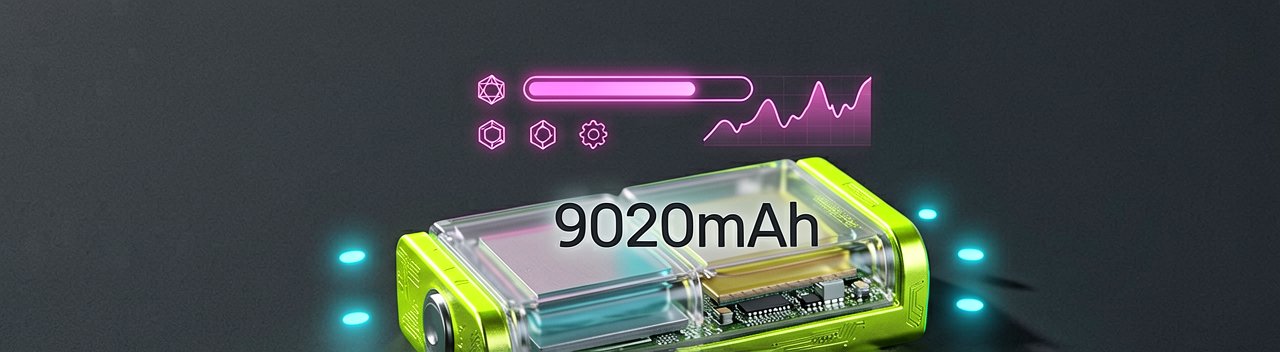
In the smartphone arena, Vivo launched the T5 Pro 5G in India on April 15, 2026. The device is available now, released April 21. It features a 9020 mAh Silicon Anode battery with 90W FlashCharge, a Snapdragon 7s Gen 4 processor, and a 144Hz 1.5K AMOLED display. The phone carries an IP68 and IP69 rating for dust and water resistance.
The rear camera packs a 50 MP Sony IMX882 sensor with OIS, paired with a 2-megapixel auxiliary lens. The front camera is a 32 MP sensor. The phone runs Android 16 with OriginOS 6.0. It comes in Cosmic Black and Glacier Blue colorways. The body is polycarbonate, measuring 163.7 x 76.2 x 8.3 mm and weighing 213 grams.
Pricing in India starts at ₹29,999 for the 8GB RAM, 128GB storage variant. The 256GB version with 8GB RAM costs ₹33,999, while the 12GB RAM, 256GB model runs ₹39,999. The phone supports 5G across multiple bands including 1, 3, 5, 8, 28, 38, 40, 41, 77, 78 SA/NSA. It includes Wi-Fi 6, Bluetooth 5.2, GPS with L1+L5 support, and USB Type-C 2.0.
One thing to note: the T5 Pro dropped the telephoto lens that made the T4 Pro stand out. Vivo has really downgraded it, according to early reviewers. The T5 Pro is the successor of T4 not T4 Pro. The battery is the headline feature — 37 hours of YouTube video playback, 90 hours of music playback, 15 days of standby time. The 90W charging gets you to 50% in 37 minutes.
The display reaches 5000 nits peak brightness, with 2000 nits HBM brightness for outdoor visibility. It has SGS Low Blue Light and Low Flicker certifications. The phone includes an under-display optical fingerprint sensor, accelerometer, gyro, proximity, and compass. Stereo speakers are present, but there's no 3.5mm jack and no NFC.
Three stories, three different industries, all grappling with the same fundamental tension: capability versus control. Anthropic is holding back a powerful tool because it might break things. Apple is delaying AR glasses because the technology isn't ready. Vivo is shipping a phone with a massive battery because users actually want that over camera versatility.
Whether users actually pay for Apple's glasses remains the real question. Meta's Ray-Ban smart glasses have been around for years, and adoption has been... modest. The Apple brand carries weight, but people still have to wear these things all day. The physical reality matters: weight distribution, hinge durability, how the cameras look from the outside, whether the indicator lights are visible in photos. These are the details that determine success or failure.
For the banking sector, the Mythos situation is different. The threat is invisible, the timeline uncertain, and the stakes involve trillions of dollars in digital transactions. Whether Anthropic's restraint actually prevents harm or just delays an inevitable arms race is impossible to know. The model exists. Someone will eventually get their hands on it.
The Vivo T5 Pro is the most straightforward of the three. It's a phone with a big battery, decent specs, and a clear price point. People who want battery life will buy it. People who want a telephoto lens will look elsewhere. No existential risk, no market disruption, just another option in a crowded mid-range segment.
Time will tell if any of these developments actually change anything. More likely, they'll just become part of the background noise of another week in tech.
Artūras Malašauskas is an AI Systems Integrator with 20+ years of production-grade web engineering experience. He has designed, shipped, and scaled enterprise Python/PHP systems for logistics, SaaS, and public-sector clients. For the past year, he has focused exclusively on AI integrations: deploying open-source LLMs, building generative media pipelines (image, audio, video), and engineering multi-agent workflows for real production environments. His standard: reproducibility, security, cost-efficient inference—no vaporware. He documents and evaluates emerging AI tooling, separating verified capabilities from marketing noise. Technical editor at: muza-ai.eu, ai-verslas.lt, ai-naujinos.lt Connect on LinkedIn
Comments