Geely Unveils Eva Cab Robotaxi Prototype at Auto China 2026
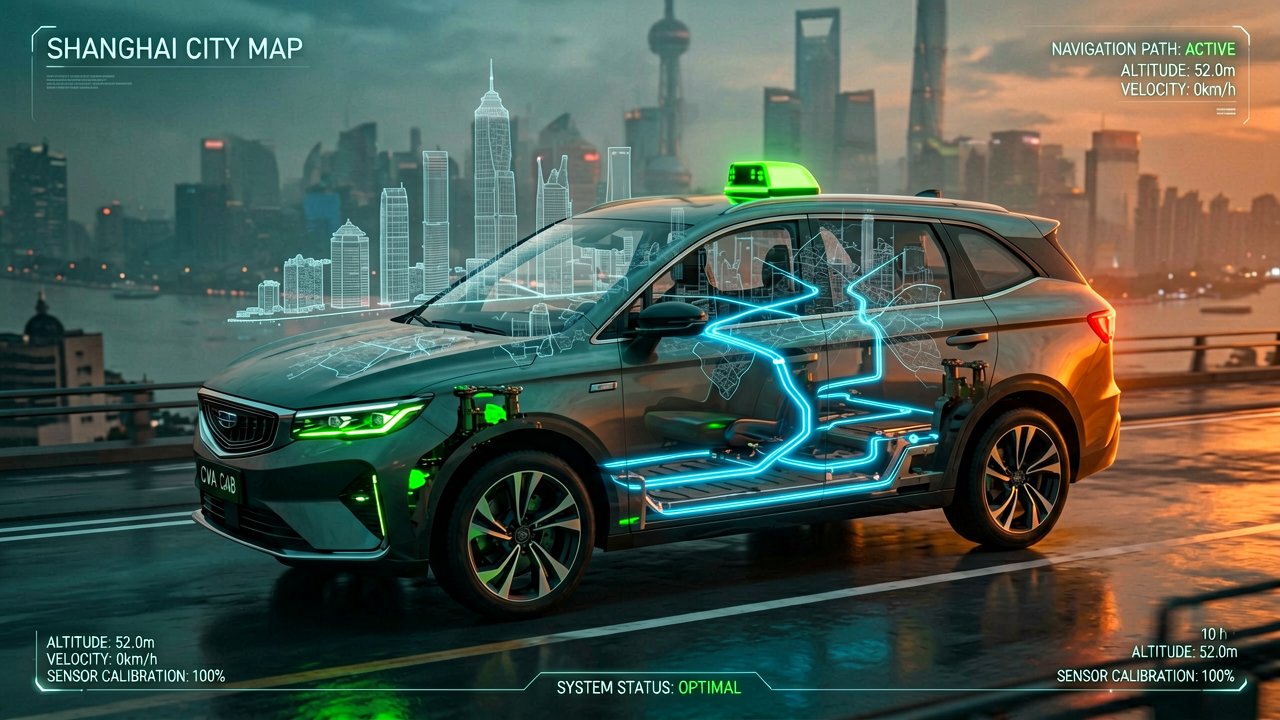
At the 2026 Beijing Auto Show, Geely Auto Group made a direct debut as an exhibitor, jointly unveiling what it calls China's first purpose-built robotaxi prototype alongside AFARI Technology and CaoCao Mobility. The vehicle, named Eva Cab, represents a significant departure from the industry norm of retrofitting existing passenger vehicles with autonomous hardware. Instead, the platform was engineered from the ground up around artificial intelligence, integrating a 196-billion-parameter Step 3.5 model with Geely's H9 high-level autonomous driving system.
The announcement came via official press release on the opening day of Auto China 2026, positioning the Eva Cab as a demonstrator of Geely's "Full-Domain AI 2.0" framework. The Globe Newswire filing details the company's full technology ecosystem display, which included AI embodied bipedal robots, 900V electric architecture, and solid-state batteries alongside the robotaxi prototype.
Under the hood, the computing specifications are aggressive. Documentation indicates the platform delivers up to 1,400 TOPS of computing power, though some reports cite a combined figure exceeding 3,000 TOPS when accounting for all integrated chips. The system reportedly reaches inference speeds of 350 TPS and claims to react up to three times faster than a human driver. For visual hardware, the Eva Cab features what Geely describes as the world's first 2,160-line digital LiDAR system, paired with 43 perception components that create a triple-layered 360-degree field of view.
Driving the decision-making is Geely's World Action Model (WAM), which reimagines the conventional perception-to-decision pipeline as a continuous closed-loop architecture. By layering macro-level route planning with micro-level real-time reasoning, the platform enables the vehicle to interpret and respond to dynamic environments with greater nuance. The result is behavior that more closely mirrors that of an experienced human driver, particularly in ambiguous situations such as unstructured roads or complex traffic interactions where negotiation and anticipation are critical.
Inside the cabin, the physical experience diverges sharply from traditional sedan layouts. Wide-opening electric sliding doors provide access to a face-to-face seating arrangement, maximizing interior space while creating a social environment. Details like the "Galaxy Skyroof" panoramic glass ceiling and "Orchid Pavilion and Meandering Streams" armrests attempt to infuse the future of mobility with a sense of warmth and human connection. (It's worth noting that wood trim in an autonomous vehicle feels like a strange throwback, but apparently some passengers still want to feel something tactile.)
Security architecture receives significant emphasis in the official documentation. The Eva Cab comes equipped with what Geely calls the world's first "Quantum-Level AI Electronic and Electrical Architecture" (EEA 4.0). Leveraging quantum encryption technology, EEA 4.0 establishes end-to-end, quantum-grade security protection across both vehicle and cloud platforms, covering high-frequency application scenarios such as Bluetooth keys, remote vehicle control, OTA updates, and data privacy. The company also claims to be the first global automaker to obtain the ISO 8800 AI Safety certification.
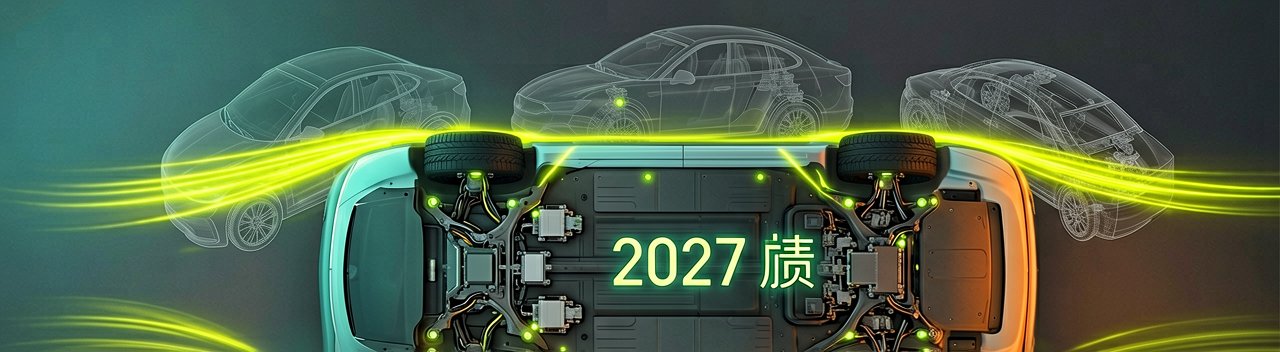
Commercial deployment timelines remain ambitious. Geely plans to launch the Eva Cab CaoCao Mobility Customized Edition in 2027, accelerating large-scale commercial deployment of robotaxi services. The rollout is expected to mark a gradual transition from testing environments to real-world deployment of fully unmanned driving systems. This timeline suggests the company intends to move from prototype demonstration to actual revenue-generating operations within eighteen months.
Earlier signals pointed to a potential collaboration between Geely's premium EV brand Zeekr and Waymo, centered on a robotaxi platform built around the Zeekr Mix. However, the trajectory of that effort now appears uncertain. Public updates have been limited, suggesting the partnership has faced technical, operational, or strategic friction. The commercial performance of the Zeekr Mix in China has been notably weak, with sales effectively stalling this year. All of this raises questions about whether Geely's newly unveiled in-house robotaxi direction represents a shift away from earlier external collaborations toward tighter vertical integration of its autonomous driving stack.
Independent reporting from Interesting Engineering corroborates the technical specifications and timeline, noting that the company claims the Eva Cab is capable of handling 99% of everyday driving scenarios, including more unpredictable environments like manual toll booths and unmarked rural roads. In internal testing, Geely says the platform performs reliably in demanding urban scenarios, including complex multi-turn U-turn maneuvers, where it achieved a reported 95% success rate.
The sensor suite creates a physical reality that passengers will experience differently than current ride-hailing services. The 43 perception components continuously map nearby activity, detecting pedestrians, vehicles, and unexpected obstacles in real-time. When the vehicle encounters an obstacle, the digital chassis responds in as little as 4 milliseconds. This ultra-fast reaction time supports what the company describes as automatic risk avoidance in extreme driving conditions, helping the vehicle maintain stability and control when it matters most.
Whether this technology translates to reliable, profitable operations remains an open question. The gap between prototype demonstration and mass production in the autonomous vehicle sector has historically been wide, with many companies struggling to scale beyond controlled test environments. Geely's vertical integration approach may provide advantages in cost control and development speed, but the regulatory landscape for fully unmanned vehicles in China remains complex and evolving.
The real test will come in 2027 when the customized edition launches commercially. Until then, the Eva Cab serves as a technology showcase rather than a proven product. Whether users actually pay for it, and whether regulators approve widespread deployment, remains the real question.
Artūras Malašauskas is an AI Systems Integrator with 20+ years of production-grade web engineering experience. He has designed, shipped, and scaled enterprise Python/PHP systems for logistics, SaaS, and public-sector clients. For the past year, he has focused exclusively on AI integrations: deploying open-source LLMs, building generative media pipelines (image, audio, video), and engineering multi-agent workflows for real production environments. His standard: reproducibility, security, cost-efficient inference—no vaporware. He documents and evaluates emerging AI tooling, separating verified capabilities from marketing noise. Technical editor at: muza-ai.eu, ai-verslas.lt, ai-naujinos.lt Connect on LinkedIn
Comments