Google's 2026 AI Glasses Challenge Meta's Wearable Lead
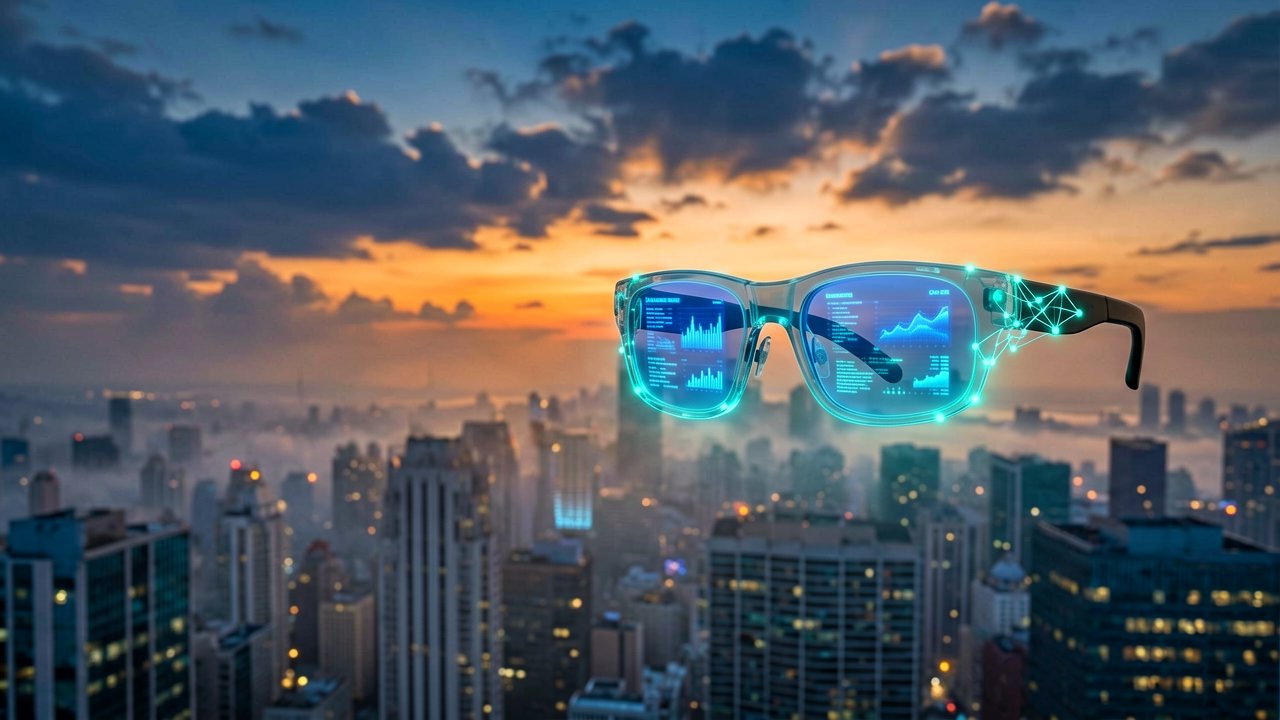
The wearable technology landscape is shifting again. Google announced plans to launch AI-powered smart glasses in 2026, marking the company's second attempt at the category after the infamous Google Glass failure of 2013-2015. This time, the search giant is entering a market where Meta has already established significant momentum through its Ray-Ban partnership.
According to CNBC reporting, Google is collaborating with Samsung, Gentle Monster, and Warby Parker on hardware design. The company made a $150 million commitment to Warby Parker in May 2025, signaling serious intent to compete in the consumer market. Google co-founder Sergey Brin acknowledged past mistakes, citing less advanced AI and supply chain issues that led to expensive price points in the original Google Glass attempt.
The new glasses will be built on Android XR, Google's operating system for headsets. Two varieties are planned: audio-only glasses for hands-free interaction with the Gemini AI assistant, and display-equipped models showing navigation directions and language translations. The first models arrive in 2026, though Google hasn't specified which styles will launch initially.
Meta's position in this space is already formidable. The social media company's Ray-Ban Meta glasses have sold two million pairs as of February 2025, according to BBC coverage. Market research firm Counterpoint Research reported that AI glasses sales grew more than 250% in the first half of 2025 compared to the previous year, driven primarily by Meta's devices.

Meta also released display-equipped glasses in September 2025, allowing users to see messages, photo previews, and live captions through a small display built into one lens. The company's partnership with eyewear giant EssilorLuxottica has made smart glasses accessible and stylish, according to WIRED analysis. Meta sold more than 7 million pairs in 2025 alone.
The physical experience of these devices matters more than specs on paper. Meta's Ray-Ban Wayfarer Gen 2 glasses weigh roughly the same as regular sunglasses, with discreet open-ear speakers and a 12-MP camera. Battery life reaches eight hours with additional capacity from a charging case. Users can trigger voice commands, but the social friction is real—friends and spouses have reportedly recoiled when seeing someone wear them, with one person noting they have apps to warn them away from people wearing the glasses.
Google's approach appears more productivity-focused than Meta's socially-oriented strategy. The search giant is emphasizing utility and enterprise applications, positioning the glasses for professionals rather than casual consumers. This distinction could be crucial in a market where privacy concerns remain significant. People genuinely dislike the idea of being recorded at any moment, and the "pervert glasses" reputation that Meta's devices carry in some circles is not something Google wants to inherit.
Privacy features will differentiate the products. Google has indicated LED activity indicators for active cameras and microphones, plus sound leakage minimization. These aren't just marketing checkboxes—they address genuine user concerns about being perceived as surveillance devices in public spaces. The physical reality of wearing recording equipment on your face creates social friction that no amount of AI capability can fully resolve.

The competitive dynamics are interesting. Apple is also recalibrating its face-wearable strategy after the Apple Vision Pro reception, moving toward simpler, display-less glasses. Snap and Alibaba have entered the space as well, making this a crowded but still emerging market. The question isn't whether the technology works—it does. The question is whether people will actually wear these devices regularly.
Google Glass failed because it was ahead of its time, poorly conceived, and executed. Technology analyst Paolo Pescatore told the BBC that the current moment is opportune thanks to Gemini's success, but Google must avoid the same pitfalls. The device needs to be both attractive to wear and so easy to use that you forget you have it on.
Whether Google can overcome Meta's first-mover advantage remains uncertain. Meta has already built supply chains, fashion partnerships, and consumer habits around its glasses. Google is entering a market where the social contract around wearable cameras is still being negotiated. The technology is ready (a problem that has plagued users for years, frankly), but the cultural acceptance is not.
Whether users actually pay for Google's vision remains the real question.
Artūras Malašauskas is an AI Systems Integrator with 20+ years of production-grade web engineering experience. He has designed, shipped, and scaled enterprise Python/PHP systems for logistics, SaaS, and public-sector clients. For the past year, he has focused exclusively on AI integrations: deploying open-source LLMs, building generative media pipelines (image, audio, video), and engineering multi-agent workflows for real production environments. His standard: reproducibility, security, cost-efficient inference—no vaporware. He documents and evaluates emerging AI tooling, separating verified capabilities from marketing noise. Technical editor at: muza-ai.eu, ai-verslas.lt, ai-naujinos.lt Connect on LinkedIn
Comments