Binance Wallet Launches Keyless Agentic Wallet for AI Agents
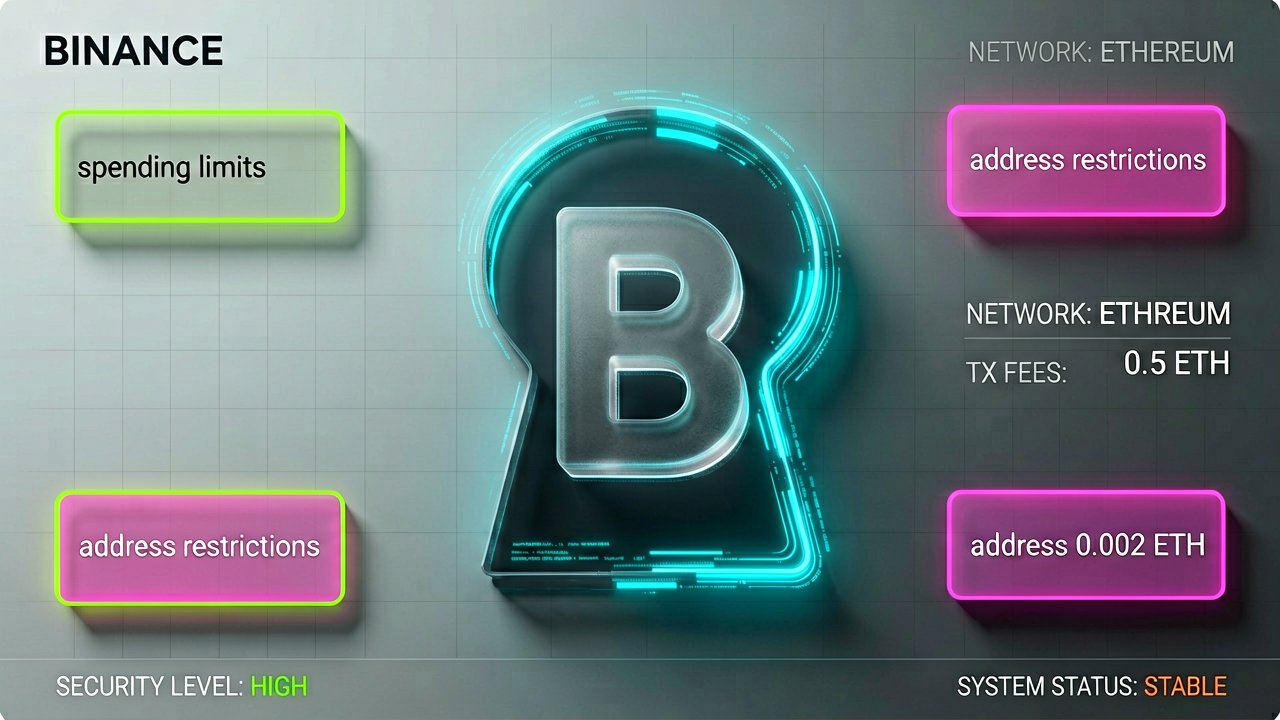
Binance has launched Agentic Wallet, a dedicated keyless wallet designed to let AI agents execute on-chain transactions on behalf of users. Announced on April 24, 2026, the product creates an isolated balance under a user's main Binance Wallet, layering configurable permissions and real-time monitoring around agent-driven activity. The move extends Binance's AI infrastructure beyond exchange-based tools into self-custody Web3 operations.
According to the official Binance announcement, Agentic Wallet operates as a sub-wallet with its own balance, keeping day-to-day funds ring-fenced from agent activity. Users can set spending caps, define which tokens an agent may hold, restrict tradable-token boundaries, and block higher-risk transactions. Outbound transfers are locked to destinations saved in the user's address book, and all activity routes through a dedicated monitoring dashboard.
The physical experience of using this system differs from traditional self-custody wallets. Instead of managing seed phrases or private keys, users interact with a permission-based interface where they approve agent actions through the Binance app. The setup involves scanning a QR code generated by the agent, confirming a pairing code matches, and enabling Secure Auto Sign. This removes the friction of repeated transaction confirmations while maintaining oversight (a problem that has plagued users for years, frankly).
At launch, Agentic Wallet supports four major blockchain networks: BNB Smart Chain, Solana, Base, and Ethereum. Each user can create one Agentic Wallet, and the product is compatible with AI agent frameworks that support MCP or tool-use protocols, including OpenClaw, Claude Code, and Cursor. For Binance Ai Pro users, Agentic Wallet Skills are built in by default, making activation immediate without manual setup.

Winson Liu, Global Head of Binance Wallet, positioned the product as a bridge between AI automation and on-chain activity. "At Binance, we see AI as key to making digital asset opportunities more accessible," Liu said. "Agentic Wallet is designed to give users and developers a secure, practical way to let AI agents take action on-chain." He added that the product extends Binance's AI ecosystem beyond the exchange, bringing the agent, wallet, and exchange experience together in one app.
Independent reporting from FinanceFeeds corroborates the launch timeline and technical specifications. The outlet notes that the wallet supports balance checks, transfers, spot market and limit orders, order management, and transaction history visibility, with further operations planned for future updates. Standard Binance Wallet service fees apply to on-chain transactions executed by the agent, though a promotional campaign temporarily waives these costs.
To encourage adoption, Binance is running a 15-day promotional campaign from April 24 to May 9, 2026. Each wallet address receives up to 20 sponsored transactions covering approvals, bridging, transfers, and swaps, with a global cap of 200,000 transactions on a first-come, first-served basis. Trades completed via Agentic Wallet are also free of service fees during the promotion period. First-time Binance Ai Pro activators can enjoy a 7-day free trial with no charges if the service is disabled during the trial.
The architecture addresses a specific friction point in crypto automation. Traditional self-custody wallets require users to manage private keys directly, creating security risks and usability barriers. Agentic Wallet uses enterprise-grade keyless technology that eliminates direct private-key management from the flow. Instead, it relies on Binance's infrastructure combined with Secure Auto Sign, which allows pre-approved transactions to execute without repeated confirmations.
For developers building AI-native financial applications, the product offers integration flexibility. Agentic Wallet integrates seamlessly with CLI, MCP, Skills, and OpenAPI workflows, giving power users full control while keeping the experience simple for retail users. The setup process for third-party agents involves sending the agent a GitHub link to install Binance Wallet Skills, then pairing through the Binance app.
The product's positioning reflects broader industry trends toward AI-driven financial automation. By isolating balances and allowing configurable permissions, Binance aims to give users oversight while still benefiting from automation. This approach differs from fully autonomous wallets that grant agents unrestricted access to funds. The address book restriction on transfers adds another layer of security, preventing agents from sending assets to arbitrary destinations.
Whether users actually pay for this remains the real question. The promotional incentives are generous, but long-term adoption depends on whether the permission-based model feels restrictive enough to be secure yet flexible enough to be useful. The 200,000 transaction cap on gas sponsorship suggests Binance expects significant uptake, but the first-come, first-served structure means early adopters get the benefit while later users face standard fees.
More chains are planned for future support, though no timeline has been provided. The current four-chain coverage covers major ecosystems but excludes some emerging networks where AI agents might operate. Developers should note that each user is limited to one Agentic Wallet, which could constrain multi-agent workflows for power users.
The launch represents a significant step in merging AI with decentralized finance infrastructure. However, the real test comes when users encounter edge cases: what happens when an agent makes a suboptimal trade within approved parameters? What recourse exists if the monitoring dashboard misses suspicious activity? These questions will only surface after widespread adoption, if it happens at all.
Artūras Malašauskas is an AI Systems Integrator with 20+ years of production-grade web engineering experience. He has designed, shipped, and scaled enterprise Python/PHP systems for logistics, SaaS, and public-sector clients. For the past year, he has focused exclusively on AI integrations: deploying open-source LLMs, building generative media pipelines (image, audio, video), and engineering multi-agent workflows for real production environments. His standard: reproducibility, security, cost-efficient inference—no vaporware. He documents and evaluates emerging AI tooling, separating verified capabilities from marketing noise. Technical editor at: muza-ai.eu, ai-verslas.lt, ai-naujinos.lt Connect on LinkedIn
Comments