Beyond Keywords: How 3SS Reengineers TV Discovery Through Intent-Driven AI

We have all been there, trapped in the infinite scroll of modern streaming UIs, aggressively clicking through rows of identical tiles while the clock ticks away. Traditional content discovery is fundamentally broken because it relies entirely on static metadata and strict keyword matches. If you do not know the exact title of a show, the platform treats you like a stranger. German software innovator 3SS wants to shatter this paradigm by shifting the burden of discovery from the viewer back to the software itself.
The company recently took a massive leap forward by expanding its 3Ready platform with a highly sophisticated, intent-driven AI architecture. Instead of expecting users to guess the right phrases, their new intelligence layer uses advanced natural language understanding to figure out the actual meaning behind vague human requests. It represents a fundamental redesign of how video platforms, telcos, and automotive manufacturers handle user engagement. By acting as a dynamic UX layer rather than just another search plugin, the system converts unpredictable human intent into highly targeted, real-time interface adaptations.
Decoding the Core Intelligence Layer
At the center of this tech overhaul is 3Ready Hero Search, a semantic discovery system that moves past old-school keyword logic. Traditional systems index text fields like titles and actor names, but 3SS feeds unstructured data into large language models to decipher context, tone, and abstract phrasing. If a user asks for "something to watch before traveling to Japan," the algorithm maps the subtextual intent. It scans across fragmented internal catalogs and deep-linked third-party streaming apps to bundle relevant documentaries, travel shows, and regional films effortlessly.
Crucially, 3SS did not just build a neat feature for consumers; they engineered a modular, LLM-agnostic framework. This means operators are not locked into a single AI provider and can seamlessly swap between models like OpenAI or Google Gemini. By processing queries through a privacy-first middleware, the platform applies strict guardrails that control data leakage. It also features native token-management algorithms, allowing pay-TV operators to scale these heavy computational queries without facing unpredictable, runaway cloud hosting bills.
Empowering the Back-End Editorial Console
AI-driven user experiences often terrify entertainment operators because they usually mean giving up editorial control to a black-box algorithm. 3SS systematically resolves this tension by connecting its customer-facing AI directly with 3Ready Hero for Editors. This back-end management console lets product teams supervise the automation. AI handles the time-consuming tasks of data normalization and heavy lifting, but human curators use an intuitive, no-code dashboard to maintain final authority over how content is weighted and presented.
This hybrid approach ensures that business logic remains completely intact. An operator can instantly pin sponsored content, prioritize specific streaming partners, or tweak regional compliance rules without breaking the semantic search model. The system essentially transforms traditional, rigid programming grids into fluid, reactive digital workspaces. As a result, internal product teams can roll out new curation themes and marketing campaigns in minutes rather than waiting weeks for manual engineering sprints.
Translating Architecture Into Performance
The architectural sophistication of this platform yields massive operational dividends. According to tracking data published by 4RFV, the overarching 3Ready ecosystem already powers more than 30 major service providers globally, reaching a massive footprint of over 70 million active users. Operators deploying these tools include Tier-1 telecom giants like Vodafone Group, Next-Gen aggregators like Allente, and major European groups like A1 Telekom Austria. This widespread commercial footprint means the layout is stress-tested against incredibly high volumes of real-world metadata fragmentation.
By moving to a semantic model, operators see a drastic reduction in search abandonment rates because the path from initial thought to playback is cut down to just a few seconds. The platform also expands its utility far beyond standard living room set-top boxes. Major automotive OEMs like Škoda Auto and Geely Tech EU are actively integrating the 3Ready Automotive framework directly into their next-generation vehicle infotainment hubs. This deployment velocity proves that true intent-driven UX architecture is no longer a futuristic laboratory concept, but an absolute necessity for any business trying to capture human attention across modern screens.

Behind the Scenes: Architectural Optimizations for Ultra-Low Latency
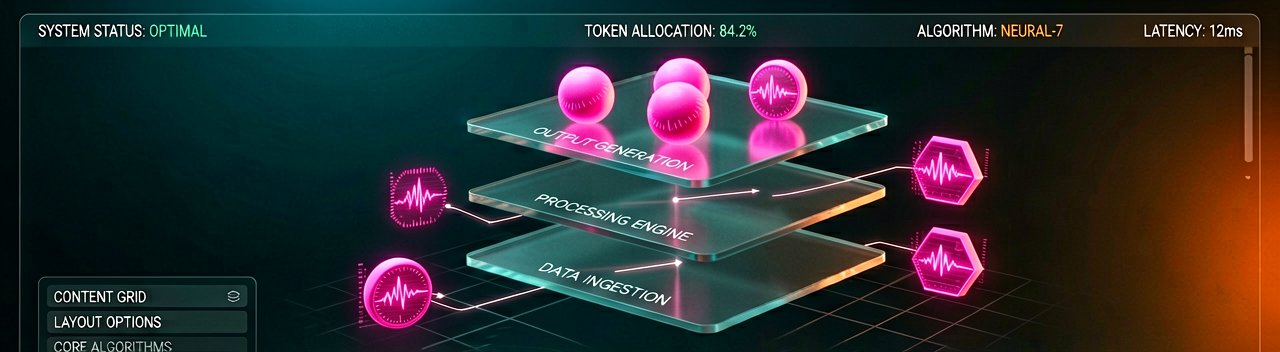
Engineering a real-time, intent-driven user interface requires solving a massive computational paradox. Operators must parse complex semantic queries, execute vector similarity searches, and dynamically reconstruct the frontend UI layout all within a strict 200-millisecond latency budget. To prevent the notorious spinning-wheel delay that destroys user retention, 3SS relies heavily on asynchronous backend workflows and multi-layered caching strategies. High-overhead operations, such as calling external large language model APIs, are isolated from the critical rendering path to keep the user experience incredibly snappy.
At the database layer, the architecture leverages high-performance vector databases optimized for massive scale. Traditional content catalogs rely on relational databases with strict text matching, but the 3Ready framework converts entire content portfolios into high-dimensional mathematical embeddings. When a user issues a vague conversational request, the system runs a fast cosine-similarity calculation against these pre-computed vectors. This process instantly narrows down millions of possible titles to the most contextually relevant results, eliminating the need to execute slow, resource-heavy SQL joins over fragmented tables during live traffic spikes.
To keep API bills predictable and slash network round-trip times, the platform utilizes an intelligent orchestration layer acting as a traffic cop. The middleware maintains a highly optimized local semantic cache of common queries and localized intent patterns. If a request matches a previously interpreted concept, the system bypasses the third-party LLM entirely and serves the structural layout directly from memory. When an external LLM call is mandatory, the system uses aggressive token-stripping algorithms to trim unnecessary metadata from the prompt payload, ensuring that payload delivery costs and processing times remain tightly controlled.
The final architectural pillar centers on how these predictive results actually reach the viewer's screen. Rather than pushing raw, unformatted text data to the client application, the backend outputs structured JSON components that adhere to a declarative UI schema. The client-side application—whether running on a low-powered Linux set-top box, an Android TV television, or an automotive infotainment dashboard—simply interprets this lightweight payload to redraw the rows on the fly. This decoupling of data processing from visual layout generation protects device memory and guarantees consistent 60-frames-per-second scrolling performance across all hardware tiers.
Reading Between the Lines: The Friction in Seamless Discovery
While the promise of an interface that effortlessly adapts to human whim sounds like a triumph of engineering, the reality of implementing intent-driven architecture exposes an ongoing tug-of-war between technology and business logic. The streaming industry's core issue has rarely been a lack of smart algorithms; it is a fundamental misalignment of incentives. Entertainment platforms do not actually want you to find just anything; they want you to find the specific, high-margin original series they poured hundreds of millions into producing. When an LLM interprets a vague user request and honestly surfaces a competitor's cheaper license, it creates a direct clash with traditional monetization strategies.
Furthermore, trusting data normalization and semantic mapping entirely to automated backend models introduces an element of systemic unpredictability that pay-TV operators despise. Content metadata is notoriously messy, filled with regional licensing contradictions, strict age-rating compliance laws, and varying regional censorship mandates. If a semantic algorithm hallucinates or misinterprets an abstract cultural phrase, it risks serving inappropriate content to a restricted profile or violating localized broadcasting laws. Building the programmatic safety nets and no-code overrides required to cage these models often reintroduces the exact operational overhead that the automation was designed to eliminate in the first place.
The transition from predictable, rule-based systems to fluid, generative environments also presents an ongoing puzzle for hardware deployment. It is one thing to run a complex vector search layout across state-of-the-art cloud instances, but it is another entirely to execute it smoothly on an old, low-spec set-top box sitting in a consumer's living room. Even with server-side rendering and declarative UI payloads, the constant redrawing of customized interfaces based on shifting real-time intent risks overwhelming the local cache of older devices. Until operators can ensure that every subscriber—regardless of their tier or hardware age—experiences the same smooth transition, true intent-driven discovery will remain a premium feature masquerading as a universal standard.
"Ultimately, the television industry's holy grail remains a machine that accurately predicts exactly what a household wants to watch. But as any engineer will tell you, even the most sophisticated neural network will inevitably struggle to calculate the chaotic social physics of a couple spending forty-five minutes agreeing on a movie, only to fall asleep during the opening credits."
Artūras Malašauskas is an AI Systems Integrator with 20+ years of production-grade web engineering experience. He has designed, shipped, and scaled enterprise Python/PHP systems for logistics, SaaS, and public-sector clients. For the past year, he has focused exclusively on AI integrations: deploying open-source LLMs, building generative media pipelines (image, audio, video), and engineering multi-agent workflows for real production environments. His standard: reproducibility, security, cost-efficient inference—no vaporware. He documents and evaluates emerging AI tooling, separating verified capabilities from marketing noise. Technical editor at: muza-ai.eu, ai-verslas.lt, ai-naujinos.lt Connect on LinkedIn
Comments