Adtech Breaks Its Silos: Nexxen Open-Sources the Campaign Trail with New AI Agent Protocols
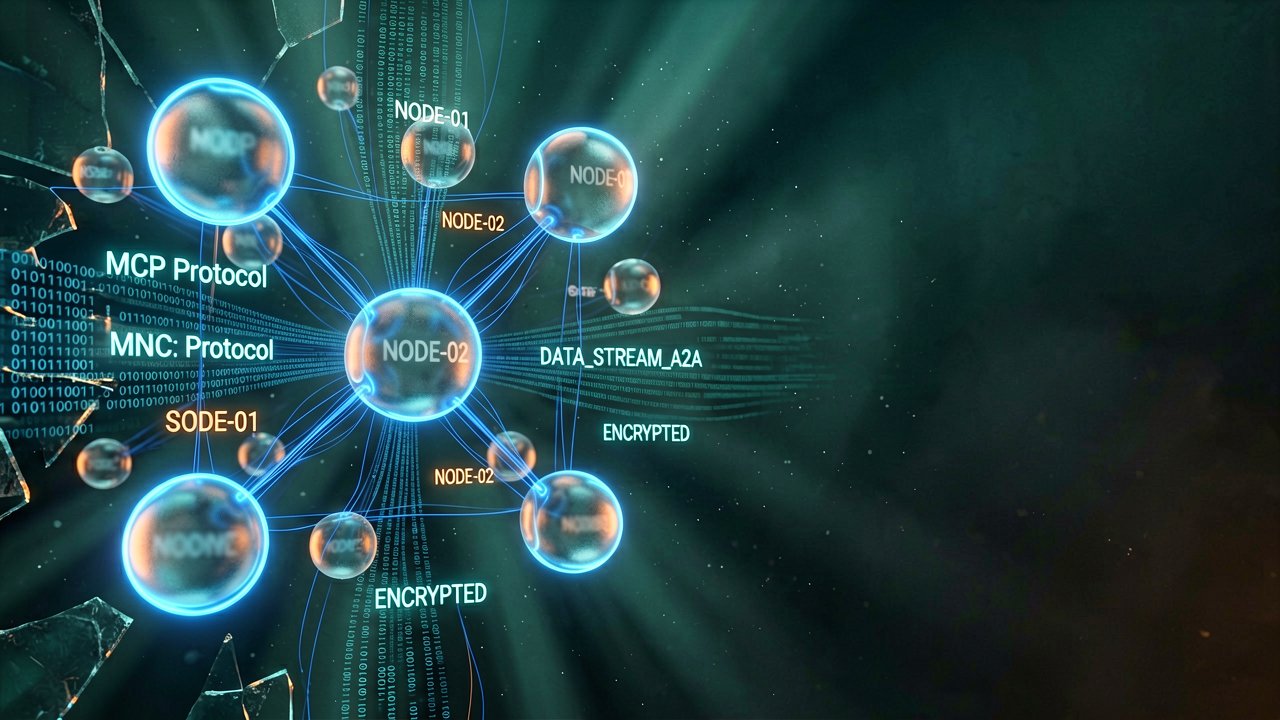
The walls surrounding adtech platforms are starting to crumble, and we have the open-source community to thank for it. In a bid to rescue agency media buyers from the exhausting loop of jumping between fragmented dash boards, advertising technology provider Nexxen rolled out an integration upgrade on June 16, 2026, introducing Anthropic's Model Context Protocol (MCP) and Google's Agent-to-Agent (A2A) standard straight into its nexAI core layer. It's a calculated bet that being "connectable" is a far more lucrative long-term play than maintaining a traditional walled garden.
Instead of logging into isolated environments to manually configure creative variables or pull overlapping performance sheets, agencies can now point their own in-house artificial intelligence assistants directly at Nexxen’s demand, data, and supply infrastructure. According to reporting from trade outlets like Adweek, this setup addresses a massive pressure point for modern media shops that are racing to consolidate workflows and prove operational efficiency to clients without drowning in manual labor. The platform essentially shifts from a rigid destination software to an open, agentic operating system where external machines can seamlessly converse with native ones.
The Architecture of Autonomous Media Buying
By implementing a dual-path architecture, the system simultaneously accommodates users who prefer the native, in-platform dashboard experience alongside external agents poking around via protocol endpoints. The underlying mechanics lean heavily on standardizing how distinct AI systems interact; while MCP handles the heavy lifting of connecting an intelligence model to specialized databases and API tools, the A2A layer establishes the communication framework necessary for multi-agent negotiation, automated campaign troubleshooting, and complex overnight reporting. It gives brand assistants a universal plug to execute cross-funnel operations from planning down to final publisher monetization.
This industry transition arrives right as automated internet traffic climbs at an unprecedented rate, leaving legacy platforms struggling to separate genuine tool-based interactions from malicious bot noise. To keep the machines in check, Nexxen’s updated engine emphasizes an auditable trail with strict, human-defined guardrails. Agencies retain complete structural visibility into every programmatic bid or target adjustment their software initiates, proving that while autonomous collaboration handles the mundane legwork, human oversight remains the ultimate compliance anchor.

The Hidden Friction of Agency-Tech Orchestration
What Most Reports Miss about this paradigm shift is the immense friction it removes from the actual agency boardroom. For the past decade, media agencies have built their competitive moats around proprietary software layers designed to sit on top of scattered DSPs and SSPs, trying desperately to unify mismatched data streams. Every time a major platform tweaked its interface or API, those fragile internal layers broke down, requiring millions of dollars in engineering maintenance. By adopting standardized open protocols like Anthropic's Model Context Protocol, the integration burden flips from an expensive engineering hurdle into a lightweight prompt engineering task.
From an agency perspective, the value isn't just about faster execution; it is about reclaiming strategic data sovereignty. When media planners must log into isolated vendor interfaces, their internal operational data becomes fragmented and prone to manual transcription errors. Under an agentic collaboration model, an agency's customized internal model can query inventory availability, optimize a programmatic bidding strategy, and generate a client-facing performance slide deck simultaneously. This internal consolidation alters the cost dynamics of running a media campaign, making nimbler boutique shops capable of executing at the scale of holding companies.
The tech industry's legacy of closed ecosystems makes this particular move highly symbolic of broader structural changes. Historically, adtech giants protected their margins by locking data tightly within their own walls, forcing buyers to use specialized, platform-specific tools that increased dependency. By opening the pipeline to Google's Agent-to-Agent standard, the approach acknowledges that the future of enterprise software is not a destination website, but a background utility. Success will no longer be measured by daily active users on a dashboard, but by the volume of automated API requests processed through autonomous network pipelines.
However, this transition introduces a completely new set of operational variables regarding optimization ethics and algorithm bias. When autonomous agents negotiate with other autonomous agents to buy ad placements across the web, the decision-making loop becomes a black box operating at microsecond speeds. Industry analysts point out that without aggressive telemetry monitoring, external agents could inadvertently create localized feedback loops, inflating ad inventory pricing or prioritizing cheap, low-quality traffic simply to satisfy raw quantitative metrics. The true engineering challenge over the next year will shift away from basic connectivity toward building highly sophisticated guardrails that prevent autonomous negotiation from spiraling out of programmatic control.

Ultimately, this architectural overhaul serves as an early blueprint for the next generation of B2B enterprise software across all verticals, not just digital advertising. The moment platforms stop forcing human operators to act as structural glue between different software tools, productivity stops being limited by human clicking speeds. By treating autonomous models as first-class citizens in the programmatic ecosystem, the industry is stepping into a hyper-automated phase where enterprise systems are purposefully built to be read, manipulated, and scaled primarily by other machines.
The Practical Paradox of Automated Interoperability
Reading Between the Lines: The adtech industry’s newfound enthusiasm for open-source AI collaboration protocols ignores a fundamental truth about enterprise software monetization. For years, the sector thrived on engineered complexity, intentionally obscuring data transparency behind proprietary metrics to capture a healthy premium. Proclaiming a sudden devotion to open, frictionless agent communication sounds remarkably noble, yet it directly contradicts the profit-maximizing impulses that historically built these platforms. The skepticism lies in whether dominant players will actually allow autonomous external agents to unearth the cheapest, most efficient paths across the open web, or if they will quietly design digital velvet ropes to steer these agents toward high-margin inventory.
There is also a glaring technical vulnerability in assuming that distinct machine-learning models will instantly collaborate without introducing systemic chaos. In a traditional programmatic setup, human operators act as structural dampeners, absorbing the shocks of sudden market fluctuations or corrupted campaign parameters. When agency AI models start negotiating directly with platform-side supply engines at machine speeds, the risk of a digital feedback loop multiplies exponentially. An unvetted prompt optimization or a minor algorithmic misinterpretation could trigger an autonomous bidding war, draining an entire quarterly enterprise media budget in the time it takes a human supervisor to refresh a browser tab.
Furthermore, this architectural evolution shifts the competitive battleground from software features straight back to raw computing capital. While open protocols like Anthropic's Model Context Protocol theoretically democratize access for smaller media boutique shops, the actual operational cost of running continuous, multi-agent AI loops is staggering. The massive holding companies with deep pockets can easily afford the cloud infrastructure necessary to keep their autonomous agents querying and optimizing twenty-four hours a day. Smaller agencies may soon find that replacing manual dashboard labor with heavy computational overhead changes the line items on their balance sheets without actually lowering the overall barrier to entry.
This dynamic ultimately reveals that the promise of a completely decentralized, collaborative AI ecosystem is largely a marketing narrative designed to soften the blow of vendor lock-in. Even with universal standards like Google's Agent-to-Agent protocol, the entities that control the foundational models and the primary data storage will always hold the true leverage. The industry is not breaking down its walled gardens; it is merely shifting the gate from a colorful user interface to a tightly regulated API access point. Tech providers are simply swapping out human-facing enticements for machine-targeted hooks, ensuring that no matter how autonomous the agents claim to be, they remain entirely dependent on the platform's proprietary infrastructure to execute their commands.
Adtech’s grand evolution means we are finally moving away from a world where humans spend all day clicking buttons to fix broken software. Instead, we are entering a brave new era where we can sit back and watch two highly sophisticated, multi-million-dollar AI models confidently misunderstand each other at the speed of light.
Artūras Malašauskas is an AI Systems Integrator with 20+ years of production-grade web engineering experience. He has designed, shipped, and scaled enterprise Python/PHP systems for logistics, SaaS, and public-sector clients. For the past year, he has focused exclusively on AI integrations: deploying open-source LLMs, building generative media pipelines (image, audio, video), and engineering multi-agent workflows for real production environments. His standard: reproducibility, security, cost-efficient inference—no vaporware. He documents and evaluates emerging AI tooling, separating verified capabilities from marketing noise. Technical editor at: muza-ai.eu, ai-verslas.lt, ai-naujinos.lt Connect on LinkedIn
Comments