Succinct Launches ZCAM App to Verify Photo Authenticity
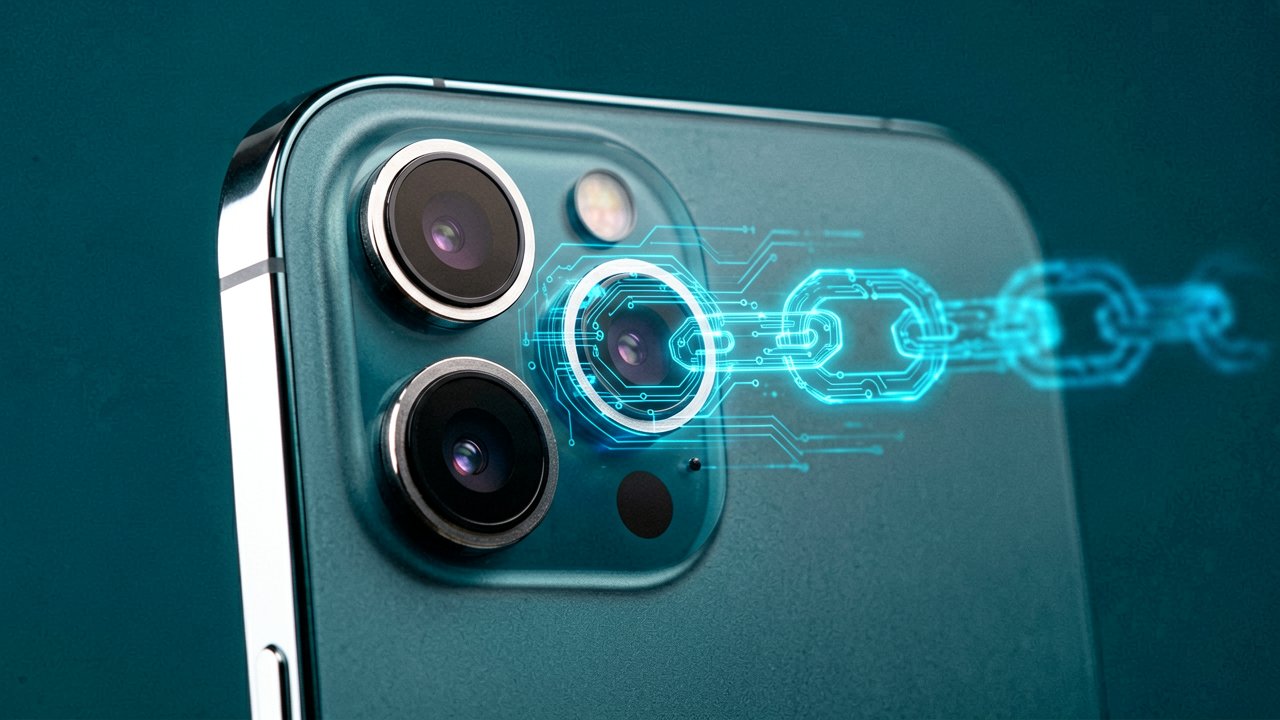
The crypto infrastructure startup Succinct Labs launched ZCAM on April 23, 2026, an iPhone camera application designed to cryptographically verify the authenticity of photos and videos. The release represents a strategic pivot from detecting AI-generated content to proving provenance at the moment of capture.
According to ForkLog, ZCAM signs media files immediately when a user takes a photo or video. This creates a tamper-proof record linking the content to the specific device that captured it. Anyone can independently verify the file came from a real device and hasn't been altered or AI-generated.
The technical implementation leverages the iPhone's tamper-resistant Secure Enclave chip. A private key stored in the hardware never leaves the device, signing a hash of the image pixels. The signature data embeds into the media file as a C2PA manifest—an open standard led by Adobe and Microsoft.
Succinct's developers claim this approach outperforms commercial AI detectors, which they found unreliable. Research conducted by the project showed detectors perform adequately with unmodified images. However, simple edits like blurring and compression reduced their effectiveness by 96% (a problem that has plagued users for years, frankly).

This finding drove the company to abandon detection-centric thinking entirely. Instead, cryptography guarantees content provenance from the source. The physical reality matters here—users tap a button, the camera captures pixels, and the cryptographic signature happens before the file even saves to storage.
The timing reflects growing risks from generative artificial intelligence. The team cited forecasts from Deloitte, predicting that losses from AI-driven fraud in the US could rise from $12.3 billion in 2023 to $40 billion by 2027. That's more than triple the current losses in just four years.
Succinct Labs is best known for developing SP1, a zero-knowledge virtual machine that protects over $4 billion in digital assets. In March 2024, the company raised $55 million in a funding round led by crypto-focused venture capital firm Paradigm. The round included participation from the founders of Polygon and EigenLayer.
In August 2025, the startup launched the mainnet of the Succinct Prover Network and the PROVE token. The project's blockchain operates as a decentralized marketplace on Ethereum. Applications send requests for zero-knowledge proofs, and independent participants compete to fulfill them.

ZCAM targets adoption by businesses and professionals who need verifiable digital evidence. Journalists and legal experts represent the primary use case. However, a major barrier to widespread adoption will be whether average users will develop the habit of shooting photos with ZCAM instead of their standard camera app.
Other projects are also using blockchain and cryptography to tackle AI-related trust issues. World, a project backed by OpenAI CEO Sam Altman, uses human-verification models to identify whether online accounts belong to real people. ZCAM differentiates itself by focusing specifically on proving the source of media files.
Competition and differentiation matter in this space. The launch of ZCAM marks a significant step toward building a more trustworthy internet where the origin and edit history of digital content are natively embedded. Whether users actually pay for it remains the real question.
App Store and Google Play blocked dozens of AI applications for "undressing" people in January. This regulatory action underscores the urgency of ensuring media reliability. The industry is scrambling to catch up with technology that outpaces policy.
How to mainstream the new category of "cryptographically signed media" remains a key focus for Succinct Labs. The technology works. The market question is whether anyone will use it consistently enough to matter.
Artūras Malašauskas is an AI Systems Integrator with 20+ years of production-grade web engineering experience. He has designed, shipped, and scaled enterprise Python/PHP systems for logistics, SaaS, and public-sector clients. For the past year, he has focused exclusively on AI integrations: deploying open-source LLMs, building generative media pipelines (image, audio, video), and engineering multi-agent workflows for real production environments. His standard: reproducibility, security, cost-efficient inference—no vaporware. He documents and evaluates emerging AI tooling, separating verified capabilities from marketing noise. Technical editor at: muza-ai.eu, ai-verslas.lt, ai-naujinos.lt Connect on LinkedIn
Comments