BAND Raises $17M to Build AI Agent Communication Infrastructure
BAND has emerged from stealth mode with $17 million in seed funding to tackle one of enterprise AI's most persistent infrastructure problems: getting autonomous agents to actually talk to each other. The company announced the round on April 23, 2026, with backing from Sierra Ventures, Hetz Ventures, and Team8.
The funding announcement comes as organizations increasingly deploy dozens or hundreds of AI agents across engineering, security, and operations workflows. The problem isn't building agents anymore—it's coordinating them. According to the company's official press release, current deployments often require teams to manually pass context between agents, maintain fragile coordination layers, and stitch together workflows that were never designed to function as unified systems.
Arick Goomanovsky, CEO and co-founder of BAND, frames this as mission-critical infrastructure rather than a nice-to-have feature. "We're entering the agentic economy, where millions of agents will need to collaborate across companies, platforms, and environments," Goomanovsky said. "The challenge isn't only building more agents, but getting them to work together in real time."
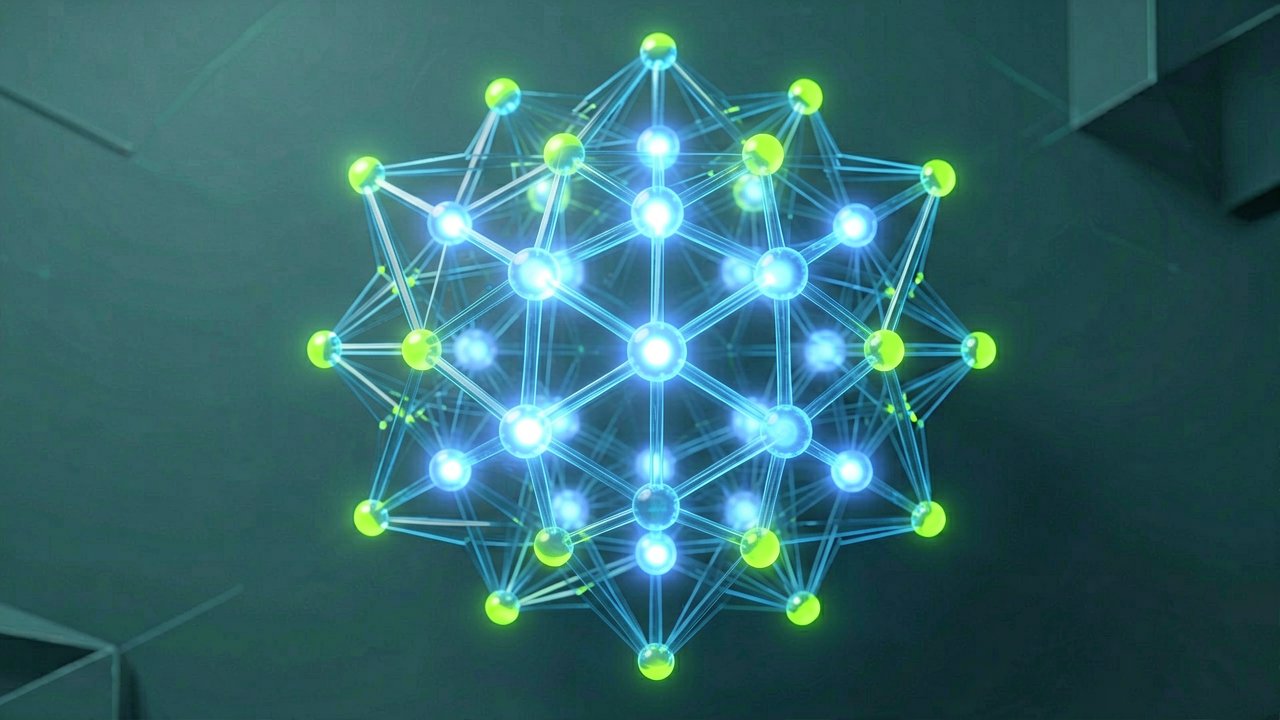
The platform itself functions as an interaction layer for multi-agent systems. It allows agents to discover one another, exchange context, delegate tasks, and collaborate in real time. This matters because most developers today are building agents that operate in isolation—like trying to run a symphony where every musician plays in a different room.

BAND's system is designed to work across custom agents built with frameworks such as LangChain and CrewAI, third-party software-as-a-service agents, coding agents like Claude Code and Codex, and personal AI assistants including OpenClaw. The cross-framework interoperability means developers don't need to rewrite existing agents to integrate them into coordinated workflows.
Key capabilities include a shared infrastructure layer for multi-agent systems, structured communication and delegation that preserves workflow context, human-in-the-loop oversight for inspection and approval, and agent discovery across internal and external environments. Built-in governance tools provide visibility into agent interactions and enforce authority boundaries.
The physical reality of this problem becomes apparent when you consider what developers currently face. Instead of seamless automation, teams manually pass information between agents, maintain context across tools, and build coordination layers that break under production-scale loads. It's like trying to parallel park a freight train—technically possible, but nobody wants to do it repeatedly.
Early adopters are using BAND to develop multi-agent systems across software development, enterprise automation, and advanced research and development use cases. The company is positioning itself as foundational infrastructure for what it describes as an emerging "internet of agents," where autonomous systems collaborate across organizations and environments in real time.

Tim Guleri, Managing Director at Sierra Ventures, noted that multi-agent systems are quickly becoming the foundation of modern software. "Without a reliable and efficient way for agents to communicate, their potential is limited," Guleri said. "BAND is building the missing layer that makes large-scale agent collaboration practical in all environments, in the enterprise and beyond."
The funding will be used to expand the company's engineering team, accelerate product development, and grow its ecosystem of early design partners. This is a crowded space—infrastructure for AI coordination has attracted significant investor interest as the technology matures from experimental to production-ready.
What makes BAND's approach different from existing solutions is the emphasis on production-ready systems rather than isolated tools. The platform enables developers to move from manually coordinating coding agents to running continuous, multi-agent interactions where planning, coding, testing, and monitoring agents operate together with shared context. R&D teams can build modular multi-agent architectures across different cloud and on-premises environments instead of relying on brittle, monolithic systems.
Enterprises can connect internal agents with those embedded in SaaS platforms and partner environments, creating cross-functional automation that was previously impossible. At the same time, personal agents can begin to interact with business agents or other users' agents, pointing toward a future where individuals participate in a broader network of autonomous systems.
Whether this infrastructure actually solves the coordination problem at scale remains to be seen. The technology works in theory, but enterprise deployments will reveal whether the promised interoperability holds up under real-world conditions (where things rarely go according to plan).
The $17 million seed round positions BAND to compete in an increasingly crowded AI infrastructure market. Success will depend on adoption rates, technical reliability, and whether enterprises are willing to rearchitect their agent deployments around a new coordination layer. For now, the company has the capital and the vision. Execution is what matters next.
Artūras Malašauskas is an AI Systems Integrator with 20+ years of production-grade web engineering experience. He has designed, shipped, and scaled enterprise Python/PHP systems for logistics, SaaS, and public-sector clients. For the past year, he has focused exclusively on AI integrations: deploying open-source LLMs, building generative media pipelines (image, audio, video), and engineering multi-agent workflows for real production environments. His standard: reproducibility, security, cost-efficient inference—no vaporware. He documents and evaluates emerging AI tooling, separating verified capabilities from marketing noise. Technical editor at: muza-ai.eu, ai-verslas.lt, ai-naujinos.lt Connect on LinkedIn
Comments