xAI Launches Grok Voice Think Fast 1.0 for Enterprise Voice Agents

xAI has officially released Grok Voice Think Fast 1.0, positioning it as a flagship voice model for developers building real-time voice agents across customer support, sales, bookings, and enterprise workflows. The model is now available through the xAI API and can be tested in the company's voice playground. This isn't just another chatbot with a voice layer. It's designed for the messy reality of phone calls where people interrupt, speak with heavy accents, change their minds mid-sentence, or need the system to juggle multiple tools in the background.
The core promise here is operational capability rather than conversational novelty. xAI frames the release as a move from simple voice chat toward operational voice agents that can complete real business workflows. The company says Grok Voice Think Fast 1.0 ranks first on the τ-voice Bench leaderboard, a benchmark for full-duplex voice agents tested under realistic conditions such as background noise, accents, interruptions, and turn-taking. That benchmark matters because most voice demos work in quiet rooms with perfect audio. Real telephony audio is different. It's compressed, noisy, and full of disfluencies.
Independent reporting from TestingCatalog corroborates the scope and deployment details. The new model is aimed at businesses that want to replace or augment phone-based workflows with AI agents capable of handling noisy calls, accents, interruptions, and turn-taking. xAI says Grok Voice Think Fast 1.0 supports more than 25 languages and is designed for use cases such as customer support, phone sales, appointment booking, restaurant reservations, order handling, returns, billing disputes, telecom troubleshooting, and airline itinerary changes.
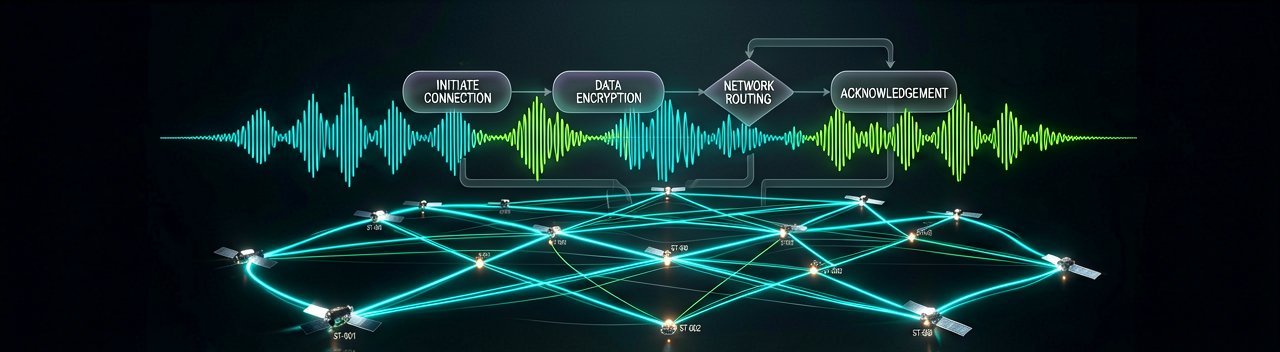
A key part of the release is real-time reasoning. xAI says the model can reason in the background while keeping response latency unchanged, allowing it to handle harder requests without making the conversation feel slower. This is a technical constraint that has plagued voice AI for years (frankly, nobody wants to hear an AI say "let me think about that" during a support call). The model handles the spoken corrections and extracts the intended address. It invokes the address lookup tool with the corrected query parameter. It reads back the normalized address with location for user confirmation. All of this happens without the awkward pauses that make voice interactions feel robotic.
Voice models often default to confident, plausible-sounding answers, despite being completely wrong. xAI has built grok-voice-think-fast-1.0 to reason through edge cases before responding, catching obvious mistakes that other models get wrong. The company demonstrates this with a simple example: asking which months are spelled with the letter X. Other models confidently blurt out wrong answers. Grok Voice reasons through it first. Only one month is spelled with the letter X. It's February. Wait, no. None of the months are spelled with the letter X. You can check them all, but X doesn't appear in any month name. The model catches this before speaking.
The physical reality of using this technology matters. When a customer calls a support line, they're often frustrated. They might be on a mobile connection with background noise. They might speak quickly or with a strong accent. They might interrupt the agent. They might give information, then correct it mid-sentence. Grok Voice is able to seamlessly collect email addresses, physical street addresses, phone numbers, full names, account numbers, and other structured data—even when information is spoken quickly or with a strong accent. It gracefully handles speech disfluencies and accepts natural corrections as a human would.
The model is already powering Starlink's phone sales and customer support experience at +1 (888) GO STARLINK. According to xAI, the Starlink deployment uses 28 tools across hundreds of sales and support workflows, reaches a 20% sales conversion rate from inquiries, and resolves 70% of customer support inquiries autonomously without a human in the loop. The agent can also perform hardware troubleshooting, issue hardware replacements, and grant service credits. This is not a demo. This is a live, high-volume deployment handling real customer interactions.
For xAI, this expands Grok beyond consumer chat and into enterprise automation through API-based voice infrastructure. The company is tying the model to practical deployments rather than just demos, with Starlink serving as the main proof point for high-volume customer interactions. The model prioritizes snappy responses and unparalleled cost effectiveness without compromising on accuracy or tool orchestration. The result is a model that lets teams confidently deploy complex, multi-turn voice experiences across almost any conceivable use case.

Industry context matters here. Voice AI has been promised for years. Most implementations have been limited to simple Q&A or scripted flows. This release targets the harder problem: multi-step workflows where the system needs to collect information, call tools, confirm details, and continue the conversation with low latency. The τ-voice Bench leaderboard positions Grok Voice Think Fast 1.0 against competitors like Gemini 3.1 Flash Live and GPT Realtime 1.5. xAI claims it outperforms them under realistic conditions.
Whether users actually pay for it remains the real question. The technology exists. The deployment exists. The benchmark claims exist. But enterprise adoption depends on reliability at scale, cost per interaction, and integration complexity. xAI has shown it can work in one high-profile deployment. The broader market will judge whether it works everywhere else. Time will tell if this works is too optimistic. The better question is whether businesses will trust it with their customer relationships.
Artūras Malašauskas is an AI Systems Integrator with 20+ years of production-grade web engineering experience. He has designed, shipped, and scaled enterprise Python/PHP systems for logistics, SaaS, and public-sector clients. For the past year, he has focused exclusively on AI integrations: deploying open-source LLMs, building generative media pipelines (image, audio, video), and engineering multi-agent workflows for real production environments. His standard: reproducibility, security, cost-efficient inference—no vaporware. He documents and evaluates emerging AI tooling, separating verified capabilities from marketing noise. Technical editor at: muza-ai.eu, ai-verslas.lt, ai-naujinos.lt Connect on LinkedIn
Comments