BYD's Denza Unveils AI-Powered Electric Supercar at Auto China 2026
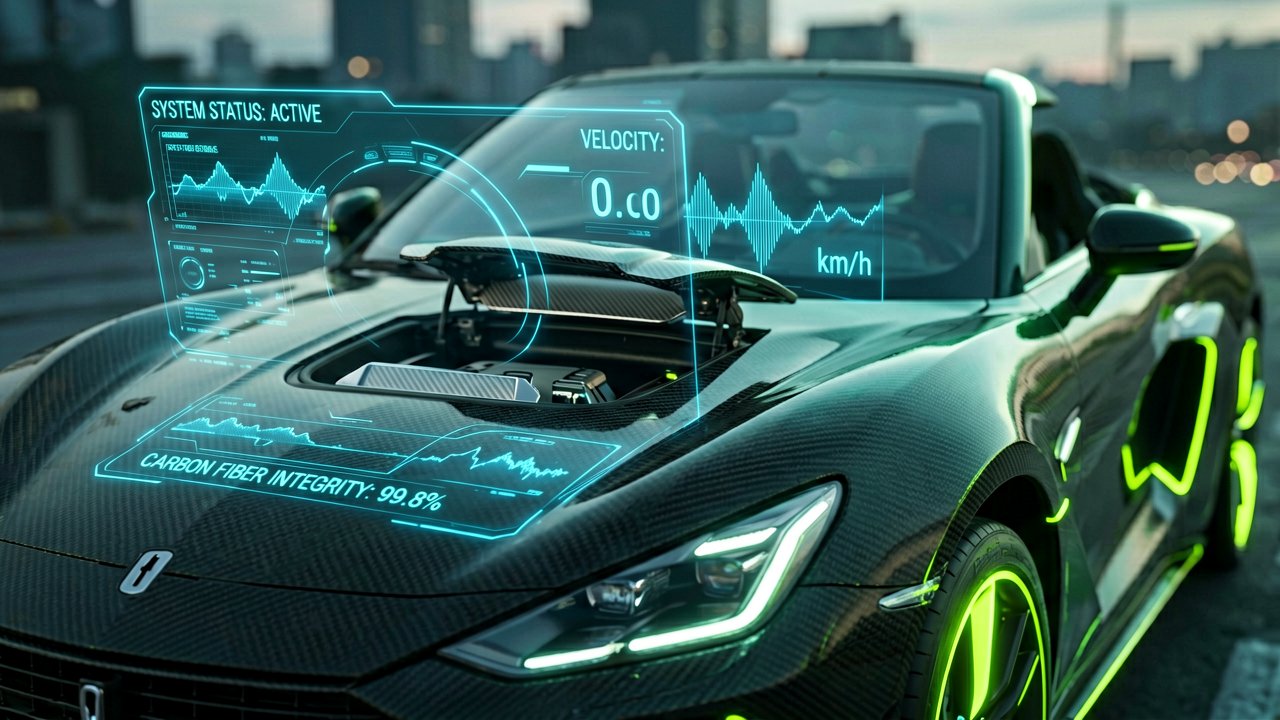
The Beijing auto show floor erupted with camera flashes on April 24, 2026, as BYD's premium brand Denza pulled back a black veil to reveal the Z Convertible. General manager Li Hui shouted "Niubuniu" (Isn't it cool?) to the packed pavilion, prompting cheers from hundreds of visitors and reporters. The vehicle delivers 1,000 horsepower, accelerates from zero to 62 mph in under 2 seconds, and claims the title of the world's first "smart electric supercar."
According to the CHOSUNBIZ report, the Denza Z Convertible comes fully equipped with the integrated control platform (Yisanfang), magnetorheological suspension (Yun Nian-M), and advanced Autonomous Driving features branded as Tianshenzhiyan (God's Eye). Local media noted the supercar race has shifted from a power output race to a control-and-intelligence race.
This unveiling marks a strategic inflection point for Chinese automakers. After years of competing on price in an oversaturated domestic market, companies are now pivoting toward high-performance, AI-powered premium vehicles. Industry profit margins have hit record lows, forcing manufacturers away from price wars and toward technology differentiation. The Denza Z Convertible completes the brand's lineup from MPVs to supercars, raising its profile in the premium EV segment.
Denza was launched in 2010 as a joint venture between BYD and Mercedes-Benz Group, though BYD now holds an overwhelming equity stake. While BYD's Dynasty and Ocean series target mass-market buyers, Denza alongside Yangwang handles the premium lineup. The 4,200-square-meter BYD pavilion at Auto China 2026 displayed all in-house brands in full force, drawing significant interest beyond just the supercar debut.
The broader industry context reveals a coordinated push toward AI integration across Chinese EV manufacturers. Xpeng demonstrated AI models allowing natural language commands like "park near the entrance to the shopping center" rather than map-based spot designation. Xiaomi released an updated AI model enabling its HyperOS to handle complex tasks including restaurant reservations and stress detection that adjusts cabin lighting and music. (The idea that your car knows you're stressed before you do is either brilliant or deeply unsettling.)
Hardware development is equally aggressive. Horizon Robotics launched its Starry 6 processor capable of handling up to 12 screen displays in a vehicle. Multiple Chinese EV companies including Li Auto, Geely, and Leapmotor are designing their own chips to reduce reliance on Nvidia. NIO CEO William Li told Reuters the company sees developing in-house semiconductors as a way to reduce costs and boost earnings.
Other premium debuts at Auto China 2026 reinforce this trend. The Li L9 Livis flagship SUV features a five-screen, 3D interactive setup with two in-house 5nm "Mach 100" chips and four LiDAR units for Level 3 autonomous driving capability. The AITO M9 introduces a six-LiDAR driver assistance system with fully active suspension. WEY's V9X flagship SUV features a dual VLA large-model intelligent driving system for navigation-on-autopilot across urban and highway scenarios.
The physical experience of these vehicles differs markedly from traditional luxury cars. The Li L9's 21.4-inch 3K rear entertainment screen paired with a 2,160-watt immersive audio system creates a cabin environment more reminiscent of a home theater than a vehicle interior. The AITO M9's illuminated "starlight" door handles and mesh-style chrome grille add visual theater that matters in showrooms and on social media feeds.
Market dynamics support this premium pivot. Mercedes-Benz, BMW, Porsche, and Audi all posted first-quarter sales declines in China. Meanwhile, Chinese automakers are increasingly looking abroad, maintaining prices below comparable European rivals even with European tariffs on Chinese-made EVs. Geely's premium Zeekr brand offers its 8X plug-in hybrid SUV starting under $53,000, loaded with theatrical technology including collision-avoidance lift systems and gesture-controlled parking assistance.
Analysts quoted by Reuters note Chinese consumers, especially younger buyers, are increasingly drawn to domestic EV makers' future-facing technology and care less about the legacy that once gave German marques their top position. The domestic market is crowded, sales have weakened, and automakers need new ways to stand out. One answer is to go upscale.
At the BYD pavilion, the display drew big interest not only for the Denza Z Convertible but also for new models from Fangchengbao, which mainly focuses on large off-road sport utility vehicles. The company's in-house brands including Dynasty, Ocean, Denza, Yangwang, and Fangchengbao gathered in full force, filling the massive exhibition space.
Whether European and American luxury brands can respond to this challenge remains uncertain. The old luxury hierarchy is being challenged by companies that have learned how to combine speed, technology, and aggressive pricing in ways that seemed unthinkable five years ago. Heritage has less force when buyers prioritize software, screen quality, driver-assistance systems, and charging convenience over decades of badge power.
Whether users actually pay for these AI features beyond the initial showroom wow factor remains the real question. The technology exists, the hardware is in place, but sustained premium pricing depends on whether consumers find daily value in cars that can make restaurant reservations and detect stress levels. Time will tell if this works, but the race has clearly shifted from who can build the cheapest EV to who can build the smartest one.
Artūras Malašauskas is an AI Systems Integrator with 20+ years of production-grade web engineering experience. He has designed, shipped, and scaled enterprise Python/PHP systems for logistics, SaaS, and public-sector clients. For the past year, he has focused exclusively on AI integrations: deploying open-source LLMs, building generative media pipelines (image, audio, video), and engineering multi-agent workflows for real production environments. His standard: reproducibility, security, cost-efficient inference—no vaporware. He documents and evaluates emerging AI tooling, separating verified capabilities from marketing noise. Technical editor at: muza-ai.eu, ai-verslas.lt, ai-naujinos.lt Connect on LinkedIn
Comments