Dell PowerMaxOS 10.4 Brings Ransomware Defense and Speed Boosts

Dell Technologies has released PowerMaxOS 10.4, a software update for its high-end enterprise storage arrays that targets performance, security, and application modernization. The update is available for shipment as of April 23, 2026, according to Dell's official announcement.
Version 10.4 focuses on three core areas: faster read response times for protected workloads, enhanced cyber resilience features, and deeper integration with container and virtualization platforms. For organizations running large-scale Oracle, SAP, Salesforce, or Epic deployments, the performance gains matter when milliseconds translate to transaction throughput.
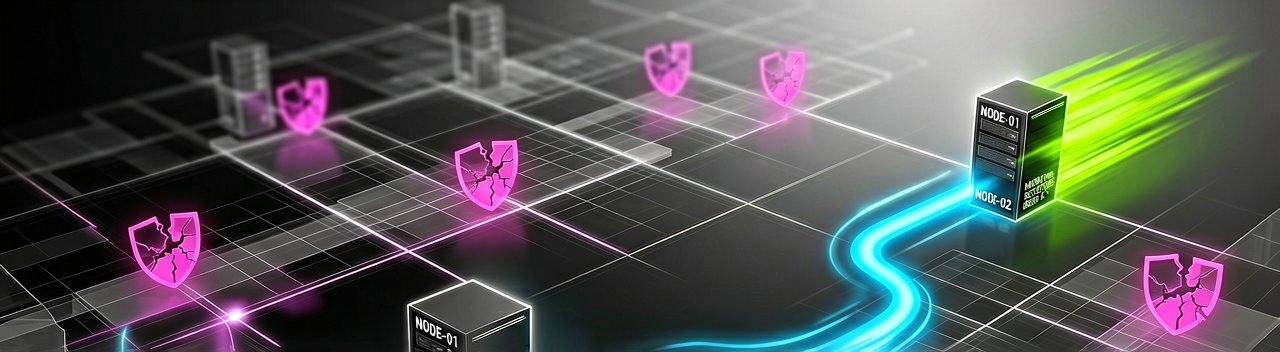
SRDF-protected workloads now see up to 25% faster read response times. That's the Symmetrix Remote Data Facility, Dell's replication technology that maintains real-time or near real-time copies of data across production and remote storage arrays. The improvement applies when workloads are actively protected by SRDF, which is standard practice for mission-critical environments where downtime costs money.
Security enhancements include Advanced Ransomware Detection designed to identify risks before attacks occur. Single Sign-On support now extends to Okta, Ping Identity's PingFederate, and Microsoft's Entra ID. Private-key support for SSO OIDC strengthens authentication protocols. These features help accelerate Zero Trust deployments without disrupting operational productivity (which is the whole point, honestly).
The 4-site SRDF dual-region replication solution combines SRDF/Metro for active-active metro replication within a region, SRDF/S for synchronous replication within a region, and SRDF/A for cross-region failover. It ensures availability and data consistency across four sites with automated failover, load balancing, and full-scale recovery. Optional white-glove professional service from Dell offers end-to-end site planning and workflow orchestration.
Application modernization support addresses the shift from virtual machines to container platforms. Customers can migrate VMware virtual machines up to 10 times faster through array-based XCOPY and the Red Hat Migration Toolkit for Virtualization. Enhanced REST API support enables up to 7 times faster storage cluster provisioning for OpenShift Container Platforms.
Connectrix 128 Gb Fibre Channel SAN technology support brings always-on AES-256 encryption, advanced cryptographic capabilities, and AI-driven autonomy to mission-critical environments. TLC flash drives in PowerMax now receive FIPS 140-3 Level 2 certification, aiding use in regulated industries with compliance standards.
Efficiency improvements lower total cost of ownership for the new PowerMax 2500 and 8500 arrays through a new node-pair configuration. Organizations achieve higher input-output operations per second performance with reduced infrastructure costs. The efficiency gains allow IT teams to balance innovation requirements with budget constraints without sacrificing application responsiveness.

Independent reporting from Blocks and Files corroborates the performance metrics and feature set. Brian Henderson, Dell's Director of Primary Storage and ISG Portfolio Product Marketeer, stated the release introduces faster performance, enhanced cyber resilience and deeper ecosystem integration.
PowerMax competes with similar mission-critical data arrays from IBM DS8000, Hitachi Vantara VSP One, and Lenovo Infinidat InfiniBox. These arrays are not in the front row of AI data serving to GPU servers where mid-range arrays from DDN, NetApp, Pure Storage, VAST Data, and WEKA feature strongly. But AI data serving is surely coming for them as well.
Ali Rey, Group Head of Technology Platforms at Emirates NBD, noted that the bank's critical workloads and applications run on PowerMax due to its performance, reliability and flexibility. The quote appears in multiple sources covering the announcement.
Physical reality check: administrators will still need to navigate Dell's management interface, configure replication policies, and monitor array health dashboards. The software improvements don't eliminate the need for skilled storage engineers who understand Fibre Channel zoning, LUN masking, and replication lag thresholds. Faster provisioning doesn't mean zero-touch deployment.
Whether enterprises actually adopt these features depends on existing infrastructure investments and migration timelines. The 10x VMware migration speedup sounds impressive until you realize most organizations have years of technical debt to untangle first. Security features matter, but ransomware protection is only as good as the backup strategy behind it.
PowerMaxOS 10.4 represents incremental improvement rather than architectural overhaul. The storage industry has been promising faster performance and better security for decades. Whether this release moves the needle enough to justify upgrade costs remains the real question for IT budgets in 2026.
Artūras Malašauskas is an AI Systems Integrator with 20+ years of production-grade web engineering experience. He has designed, shipped, and scaled enterprise Python/PHP systems for logistics, SaaS, and public-sector clients. For the past year, he has focused exclusively on AI integrations: deploying open-source LLMs, building generative media pipelines (image, audio, video), and engineering multi-agent workflows for real production environments. His standard: reproducibility, security, cost-efficient inference—no vaporware. He documents and evaluates emerging AI tooling, separating verified capabilities from marketing noise. Technical editor at: muza-ai.eu, ai-verslas.lt, ai-naujinos.lt Connect on LinkedIn
Comments