NVIDIA Launches Europe's First Industrial AI Cloud for Manufacturing
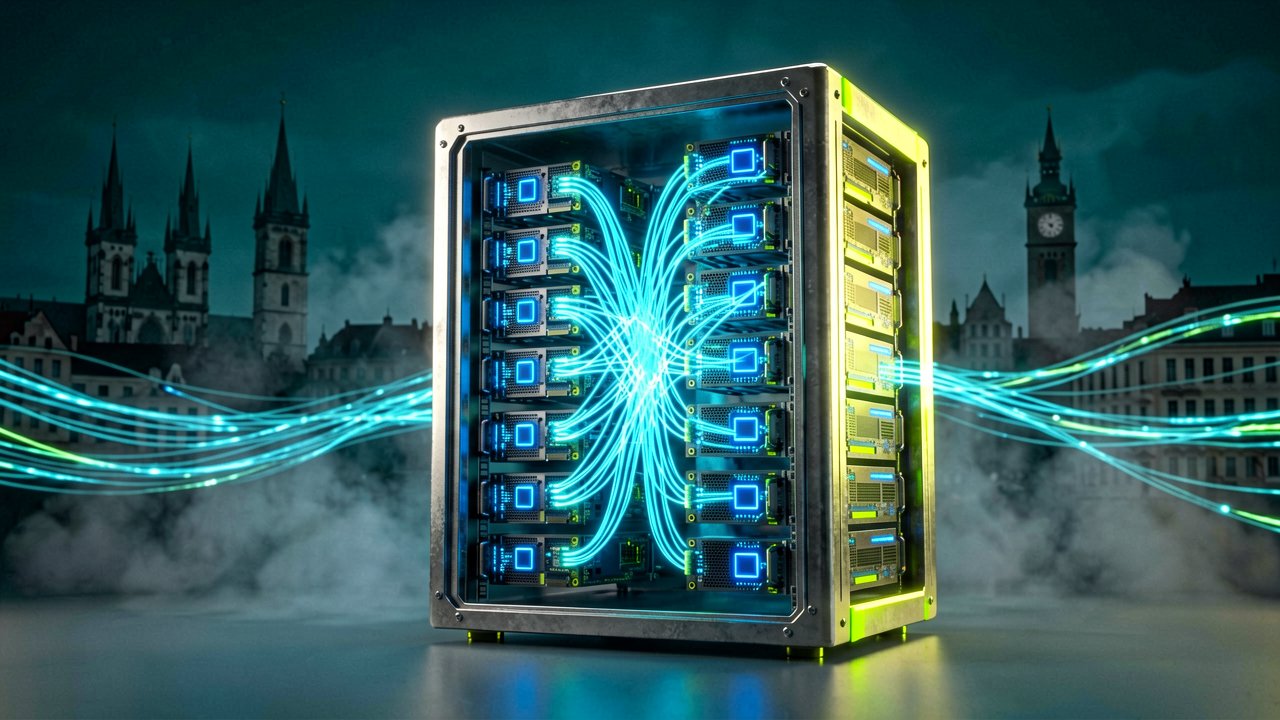
NVIDIA announced the world’s first industrial AI cloud for European manufacturers at GTC Paris, featuring a Germany-based AI factory with 10,000 GPUs powered by NVIDIA DGX B200 systems and RTX PRO Servers. The infrastructure will accelerate manufacturing applications from design and simulation to digital twins and robotics, with European industrial leaders including BMW Group, Mercedes-Benz, and Schaeffler adopting NVIDIA-accelerated workflows from software partners like Siemens, Ansys, and Cadence.
“In the era of AI, every manufacturer needs two factories: one for making things, and one for creating the intelligence that powers them,” said NVIDIA CEO Jensen Huang. NVIDIA's official announcement details the infrastructure, which will run NVIDIA CUDA-X libraries and Omniverse-accelerated workloads, enabling secure, sovereign AI adoption across European manufacturing while adhering to European data protection standards.
Deutsche Telekom will provide the secure, sovereign infrastructure for the AI factory, including data centers, operations, and security solutions, ensuring compliance with European data regulations. The project, part of the broader Industrial AI Cloud initiative backed by SAP and the German Federal Ministry for Digital Affairs, aims to position Germany as Europe’s AI manufacturing hub by 2026. Phase one involves expanding Deutsche Telekom’s Munich data center with NVIDIA GPUs to deliver high-performance AI services to companies across Germany and Europe.
Industrial software vendors are already integrating NVIDIA technologies to accelerate AI-driven workflows. Siemens is expanding its partnership with NVIDIA to enable AI-powered factory operations, while Ansys reported a 2.5x speedup in fluid simulations using NVIDIA Blackwell GPUs. These advancements, combined with Cadence’s Reality Digital Twin Platform for virtual factory optimization, demonstrate how the AI cloud will transform end-to-end manufacturing processes from design to logistics.
The initiative addresses Europe’s need for digital sovereignty amid global AI competition, with SAP CEO Christian Klein emphasizing that “digital sovereignty is not about isolation but bringing the best technologies to Europe together with strong partners.” The project aligns with Germany’s “Made 4 Germany” initiative, aiming to strengthen the country’s position as a leader in industrial AI while leveraging European data reserves responsibly.
Manufacturing is at an inflection point, with AI becoming foundational to how products, processes, and facilities are designed and optimized. The Industrial AI Cloud provides a unified, sovereign foundation for accelerating AI and robotics across Europe’s industries, addressing the fragmentation that has long limited Europe’s AI landscape. By building Europe’s first industrial AI infrastructure, NVIDIA and its partners are enabling the region’s leading industrial companies to advance simulation-first, AI-driven manufacturing at scale.
Artūras Malašauskas is an AI Systems Integrator with 20+ years of production-grade web engineering experience. He has designed, shipped, and scaled enterprise Python/PHP systems for logistics, SaaS, and public-sector clients. For the past year, he has focused exclusively on AI integrations: deploying open-source LLMs, building generative media pipelines (image, audio, video), and engineering multi-agent workflows for real production environments. His standard: reproducibility, security, cost-efficient inference—no vaporware. He documents and evaluates emerging AI tooling, separating verified capabilities from marketing noise. Technical editor at: muza-ai.eu, ai-verslas.lt, ai-naujinos.lt Connect on LinkedIn
Comments