ASUS Prime RTX 5080 Drops Under MSRP at Newegg With Free 007 First Light Bundle
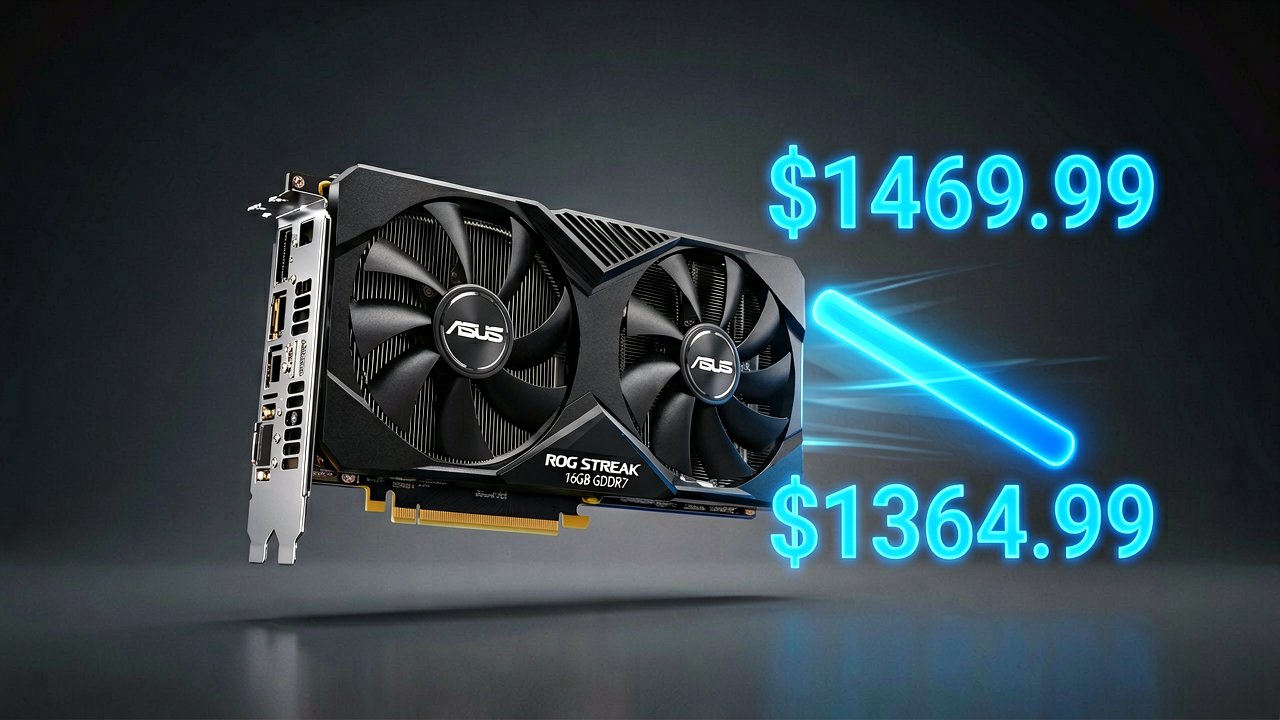
Finding a discount on a current-generation flagship graphics card usually requires a lot of patience, but today brings an unexpected break for PC builders. Retail giant Newegg has slashed the price of the ASUS Prime GeForce RTX 5080 16GB by $105, bringing it down from its original $1,469.99 MSRP to a much more palatable $1,364.99. It is rare to see this level of performance drop below retail pricing, especially considering how fiercely competitive the high-end GPU market remains.
To sweeten the deal, the purchase automatically includes a free digital copy of the highly anticipated espionage title 007 First Light, a standalone value of $69.99. This means buyers are effectively walking away with over $170 in total added value. NVIDIA is heavily leveraging this specific game to show off its hardware, as the title features demanding path-traced environments and advanced AI neural rendering that will push any modern machine to its absolute limits.
A High-End Powerhouse Built for Modern Workflows
The card itself is an absolute unit under the hood. Equipped with 10,752 CUDA cores and 16GB of ultra-fast GDDR7 VRAM on a 256-bit interface, the ASUS Prime variant balances a more minimalist aesthetic with heavy-duty performance. According to benchmarks tracked by PC Guide, the card excels not just at pushing triple-digit frame rates in 4K gaming, but also at accelerating resource-heavy creative tasks like local AI model training, 3D rendering, and complex video editing workflows.
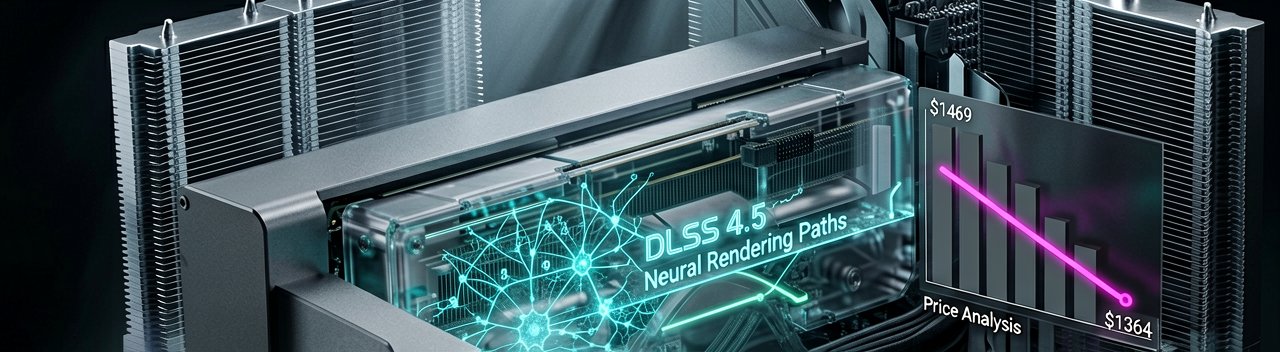
Architecturally, the 50-series hardware features exclusive access to DLSS 4.5, which introduces Dynamic Multi Frame Generation. When coupled with the card's native ray-reconstruction capabilities, the tech allows the GPU to bypass traditional rendering bottlenecks and deliver fluid, physically accurate reflections and shadows. Given that promotions on premium hardware of this caliber tend to sell out rapidly once stock thins, interested buyers will want to lock in the discount before the pricing reverts.
What Most Reports Miss: The Market Friction Behind the Price Cut
Behind the MSRP correction: While a hundred-dollar price drop on a current-generation flagship looks like a simple retail promotion on the surface, it actually signals a deeper shift in consumer sentiment. When NVIDIA launched the RTX 5080, its steep premium over the preceding generation raised eyebrows among PC enthusiasts who felt the performance-per-dollar ratio was stretching thin. By undercutting the official sticker price so early in the card's lifecycles, retailers are quietly acknowledging that the initial wave of early-adopter demand has leveled off, forcing a tactical adjustment to keep inventory moving.
This specific markdown highlights the delicate balancing act ASUS faces with its Prime lineup. The Prime branding was introduced to offer a sleeker, more compact alternative to the gargantuan ROG Strix and TUF gaming models, targeting builders who want top-tier performance without sacrificing valuable chassis real estate. However, positioned right in the crosshairs of premium triple-fan competitors, the dual-slot or thinner-profile designs often require aggressive pricing to lure buyers away from more familiar, over-engineered cooling shrouds.
Industry insiders suggest that bundling high-profile software like 007 First Light is a coordinated effort between NVIDIA and its board partners to mask the deflation of hardware margins. Instead of slashing the GPU's wholesale price further—which damages the perceived premium status of the architecture—subsidizing a major game launch allows publishers and hardware vendors to share the financial burden. It keeps the perceived value high while giving gamers a tangible excuse to justify the four-figure investment.
Historically, when the second-tier flagship of a generation starts dropping below its introductory MSRP, it sets off a chain reaction across the rest of the market. Competitors are forced to re-evaluate their own pricing structures, and older stock from the previous generation must be cleared out even faster. For consumers who have spent the last few years dealing with inflated hardware costs, this market friction represents the first real sign of leverage returning to the buyer's side of the counter.

Reading Between the Lines: The Reality of the "Premium" Discount
The illusion of a bargain: Celebrating a hundred-dollar discount on a hardware component that still demands a massive four-figure investment requires a healthy dose of perspective. While a price cut on cutting-edge silicon is always welcome news for the DIY PC community, this markdown does not suddenly transform the RTX 5080 into an accessible piece of consumer tech. Instead, it highlights the normalization of hyper-inflated GPU tiers, where a minor single-digit percentage drop is treated as a major victory rather than a minor correction of a heavily marked-up product line.
There is a distinct contradiction in how these hardware lifecycles are being managed by manufacturers and retailers alike. We are repeatedly told that advanced architectural nodes and soaring foundry costs make cheaper graphics cards impossible to produce, yet room is somehow found for immediate price cuts and seventy-dollar software bundles when inventory begins to sit on shelves. It suggests that the initial pricing strategies are designed to test the absolute limits of consumer tolerance, with these early discounts serving as a safety valve to catch the demographic that balked at the launch day announcement.
Furthermore, relying on software bundles like 007 First Light to justify the premium tier exposes a systemic flaw in the modern PC gaming ecosystem. Hardware capabilities are outpacing mainstream software development so rapidly that manufacturers must actively fund and distribute tailor-made graphical showcases just to give consumers a reason to utilize their new purchases. Buying a monstrous piece of silicon primarily to run a single, heavily subsidized title that is optimized specifically for that vendor's proprietary feature set is a cyclical trend that benefits corporate ecosystem lock-in far more than the broader gaming landscape.
Looking ahead, this dynamic will likely solidify a permanent shift in how hardware generations mature. We are moving away from the era where mid-generation refreshes or natural manufacturing efficiencies brought permanent, sweeping price drops across an entire product stack. Instead, the market is settling into a pattern of highly targeted, temporary promotional windows orchestrated by retailers to manipulate artificial demand curves, meaning consumers must now become tactical shoppers just to acquire hardware at what should have been its standard baseline value.
It turns out that the most advanced feature on modern graphics cards isn't real-time path tracing or AI-generated frames, but rather the magical ability to make a thirteen-hundred-dollar receipt look like a stunning financial victory to an enthusiastic gamer.
Artūras Malašauskas is an AI Systems Integrator with 20+ years of production-grade web engineering experience. He has designed, shipped, and scaled enterprise Python/PHP systems for logistics, SaaS, and public-sector clients. For the past year, he has focused exclusively on AI integrations: deploying open-source LLMs, building generative media pipelines (image, audio, video), and engineering multi-agent workflows for real production environments. His standard: reproducibility, security, cost-efficient inference—no vaporware. He documents and evaluates emerging AI tooling, separating verified capabilities from marketing noise. Technical editor at: muza-ai.eu, ai-verslas.lt, ai-naujinos.lt Connect on LinkedIn
Comments