NVIDIA’s RTX Spark: The Silicon Shakeup That Changes the Windows PC Game
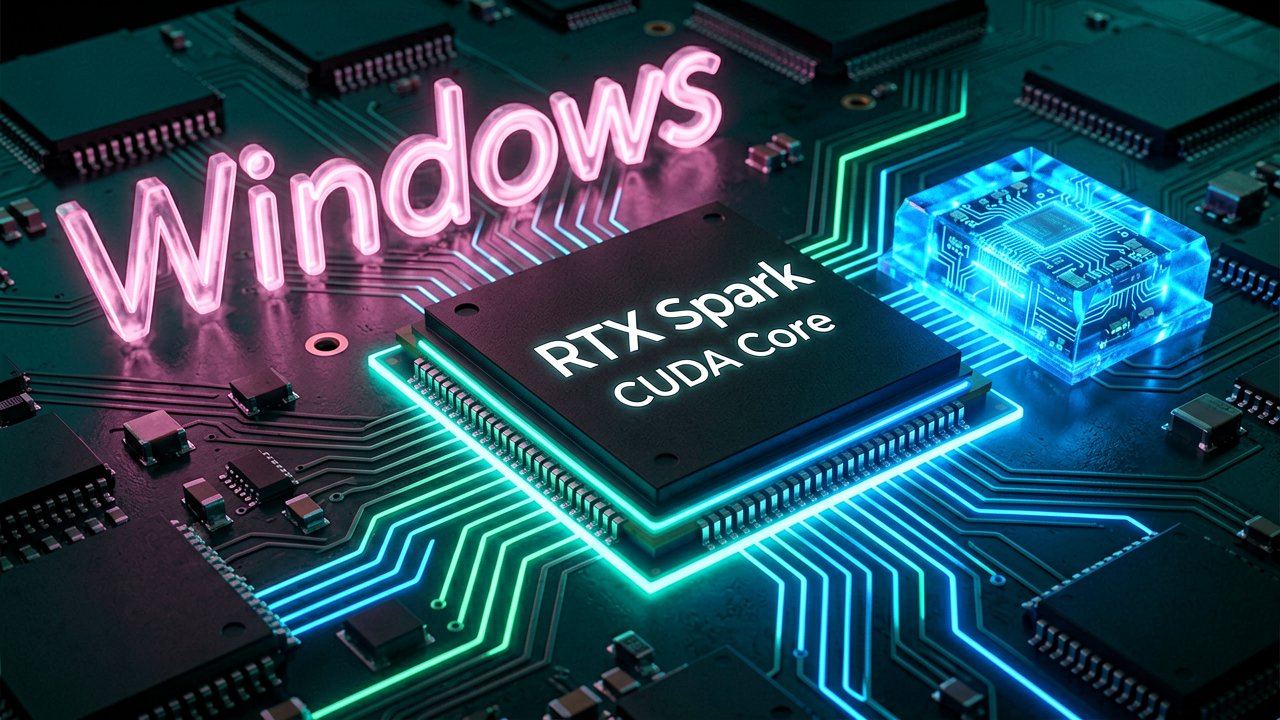
For years, NVIDIA has been content to act as the heavy-duty engine inside your PC, supplying monstrous graphics cards while leaving the actual brain surgery of the computer to Intel and AMD. That era officially ended this week at Computex 2026. CEO Jensen Huang took the stage in Taipei to unveil the NVIDIA RTX Spark, a powerhouse consumer superchip designed from the ground up to fundamentally alter what we expect from a Windows laptop or desktop. By integrating its own elite processing architectures into a singular system-on-a-chip, the tech giant is making a historic leap into mainstream consumer computing, declaring that our PCs are transitioning from standard productivity tools into fully autonomous digital teammates.
We are not just talking about another incremental spec bump here. The engineering team has pulled off something of a masterclass by fusing a 20-core ARM-based CPU—co-developed with the mobile silicon experts over at MediaTek—with a high-powered graphics engine built on the latest Blackwell architecture. This unified package boasts up to 6,144 CUDA cores and bridges the components together using high-speed NVLink interconnects, cramming up to 128GB of ultra-fast unified memory onto the silicon. The result is a chip that pumps out an astonishing 1 petaflop of local AI compute. According to technical breakdowns highlighted by Engineering.com, this layout allows thin-and-light laptops to comfortably crunch through complex 120-billion-parameter language models and massive 3D rendering tasks entirely on-device, bypassing cloud data centers completely.
The Local Agent Revolution
The primary driver behind this silicon architecture is Microsoft’s and NVIDIA’s shared obsession with "agentic AI." While current consumer laptops rely heavily on internet connections and subscription fees to handle advanced workflows, devices powered by this new superchip are built to run continuous, deep-level digital assistants right on the hardware. Microsoft has spent substantial engineering resources optimizing the Windows core to align with the processor's low-power neural processing units, creating new secure execution layers like NVIDIA OpenShell to keep local user data safely isolated from web threats.
This deep platform integration promises a noticeable performance dividend across standard applications. Heavyweight software suites from companies like Adobe are already being rearchitected from scratch, promising to double their traditional graphics and rendering speeds on the new silicon. For creative professionals, this means rendering ultra-large 90GB+ 3D scenes or editing 12K video files becomes feasible on a device that can fit into a backpack. For PC gamers, the integrated Blackwell GPU brings full hardware ray tracing and upcoming DLSS iterations, pushing demanding AAA titles past 100 frames per second at 1440p resolution.
A Crowded Horizon for the PC Market
By shifting to an ARM architecture and designing its own system-on-a-chip, NVIDIA is effectively throwing down a gauntlet to long-time market leaders like Intel and Qualcomm. This is a direct challenge for control over the premium Windows ecosystem. Industry analysts from Morgan Stanley have already noted that this level of performance won't come cheap, projecting premium variants of these laptops to start around $2,899, while entry-tier systems will hover closer to the $1,799 mark.
Hardware heavyweights are already lining up to support the new standard. Buyers can expect the first wave of retail hardware to drop this autumn, with major OEMs including Dell, HP, Lenovo, ASUS, MSI, and Microsoft's own Surface division scheduled to release ultra-slim, all-day battery laptops and compact mini-desktops utilizing the new superchip.
Behind the Silicon Curtain: Why the Spark Represents a Historic Gamble
What most reports miss is that NVIDIA’s sudden pivot into the consumer CPU space is less about graphics dominance and more about a desperate race for platform survival. For decades, the company has operated at the mercy of OS architects like Microsoft and silicon gatekeepers like Intel. Every time a user boots up a PC, NVIDIA's hardware is merely a guest in someone else's ecosystem. By forging a proprietary system-on-a-chip, CEO Jensen Huang is attempting to break free of this dependency, establishing a hardware perimeter where NVIDIA sets the rules, dictates the memory architecture, and controls the software stack from the metal up.
This structural shift has ignited an intense, quiet panic across the legacy semiconductor landscape. Industry insiders report that Intel and AMD are rapidly reallocating engineering resources to bolster their own integrated x86 architectures, terrified that the Windows ecosystem might experience an Apple-style migration toward ARM silicon. Qualcomm, which recently carved out its own niche in the Windows-on-ARM market, now finds itself sandwiched between Intel's established enterprise dominance and NVIDIA’s unmatched developer mindshare. The stakes extend far beyond consumer laptops; whoever wins this design cycle controls the underlying developer workstations that will build the next decade of software.
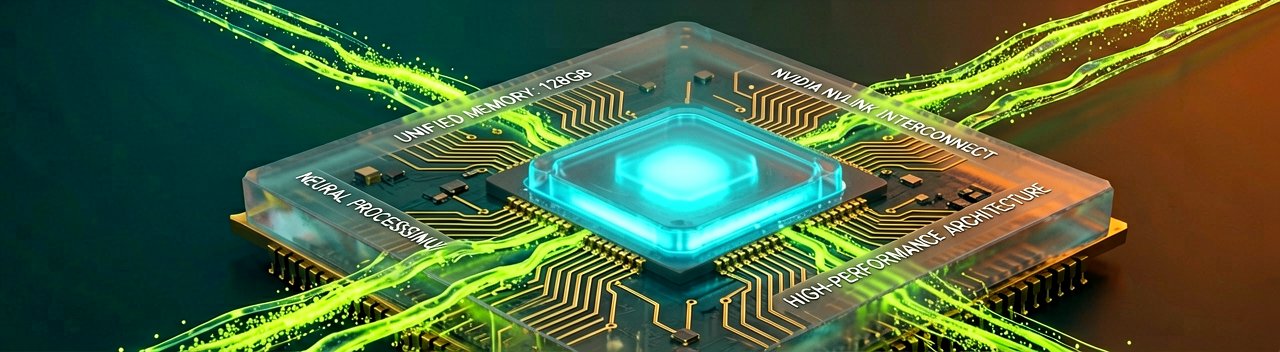
The engineering compromise required to achieve this performance benchmark cannot be overstated. Merging a heavy-duty Blackwell graphics cluster with a 20-core CPU onto a single piece of silicon creates a thermal profile that defies traditional laptop design. To keep these upcoming machines from melting under load, hardware manufacturers are abandoning standard copper heat pipes in favor of advanced vapor chambers and phase-change thermal materials. Early testing data circulating among Taiwanese supply chain partners suggests that while battery life remains exceptional during standard office productivity tasks, heavy AI or gaming workloads will drain the cells at a rate that will force users to stay close to a wall outlet.
Enterprise buyers and IT administrators are approaching this revolution with a mixture of awe and deep skepticism. While the prospect of processing sensitive corporate data entirely on-device via 120-billion-parameter local models solves massive compliance and security headaches, deploying an entirely new silicon architecture across thousands of corporate workstations is a logistical nightmare. Software compatibility remains the ultimate gatekeeper, and corporate IT departments are notoriously slow to adopt hardware that requires emulation layers for legacy win32 applications, regardless of how many raw teraflops the marketing material promises.
Ultimately, the success of this superchip relies entirely on Microsoft’s willingness to treat NVIDIA as an equal partner rather than a vendor. Redmond has historically resisted letting any single hardware manufacturer dictate the direction of the Windows operating system. However, with the race for sovereign, localized digital agents reaching a critical tipping point, Microsoft needs NVIDIA’s unmatched AI compute capacity just as much as NVIDIA needs Microsoft’s massive install base. This uneasy alliance of convenience will shape the trajectory of personal computing for the next generation, transforming our machines from passive digital filing cabinets into active, predictive partners.
Reading Between the Lines: The Friction in the Flops
The tech industry’s collective infatuation with "local AI compute" ignores a glaring commercial contradiction. NVIDIA’s entire corporate valuation is built on selling massively profitable data center hardware to cloud providers. By encouraging consumers and enterprises to process heavy 120-billion-parameter models entirely on local PCs, NVIDIA is effectively advocating for a decentralized architecture that could undermine the explosive demand for its own cloud-based H100 and Blackwell server clusters. This delicate balancing act suggests that the local superchip strategy is less about a philosophical shift toward decentralization and more about an aggressive defensive maneuver to lock developers into the proprietary CUDA and OpenShell ecosystems before open-source alternatives can catch up.
Furthermore, the promised democratization of AI through this hardware overlooks a fundamental economic reality of the PC market. A laptop carrying a $2,899 price tag is not a mainstream consumer device; it is a luxury tool for a niche class of creative executives and specialized developers. By pegging the true, uncompromised "agentic Windows experience" to premium silicon, Microsoft and NVIDIA risk fracturing the Windows user base into a multi-tiered hierarchy. The vast majority of global PC users will remain dependent on cloud-tethered, subscription-based digital assistants, rendering the utopian vision of universal, private, on-device intelligence a privilege reserved strictly for those with enterprise-backed expense accounts.
There is also the unresolved question of software optimization versus raw silicon brawn. Silicon history is littered with technically superior architectures that failed simply because developers refused to rewrite their code. While Adobe and Microsoft are leading the charge for native optimization, thousands of vertical market applications, engineering tools, and proprietary corporate databases still struggle to run smoothly on ARM-based Windows systems without taking a severe performance hit through emulation layers. Forcing an entire industry to re-architect its software catalog for a first-generation superchip is an immense ask, especially when legacy x86 processors continue to offer plug-and-play stability for enterprise environments.
Finally, the environmental and infrastructural narrative surrounding these high-performance chips requires a healthy dose of skepticism. The promise of all-day battery life inevitably clashes with the law of thermodynamics when local AI workloads are continuously running in the background. If every premium Windows laptop begins pulling hundreds of watts to constantly index user behavior, manage local language models, and render proactive interfaces, the aggregate power consumption across corporate offices will spike dramatically. The tech sector frequently champions local processing as a green alternative to energy-hungry data centers, yet it merely shifts the carbon footprint and thermal load from centralized, optimized server farms directly onto the user's desk.
"We are being told that the future of computing requires a machine capable of navigating complex matrix mathematics at a trillion operations per second, all so a digital assistant can automatically decline calendar invites we didn't want to attend in the first place."
Artūras Malašauskas is an AI Systems Integrator with 20+ years of production-grade web engineering experience. He has designed, shipped, and scaled enterprise Python/PHP systems for logistics, SaaS, and public-sector clients. For the past year, he has focused exclusively on AI integrations: deploying open-source LLMs, building generative media pipelines (image, audio, video), and engineering multi-agent workflows for real production environments. His standard: reproducibility, security, cost-efficient inference—no vaporware. He documents and evaluates emerging AI tooling, separating verified capabilities from marketing noise. Technical editor at: muza-ai.eu, ai-verslas.lt, ai-naujinos.lt Connect on LinkedIn
Comments