Silicon vs. Quantum: The Great Hardware Divergence of 2026
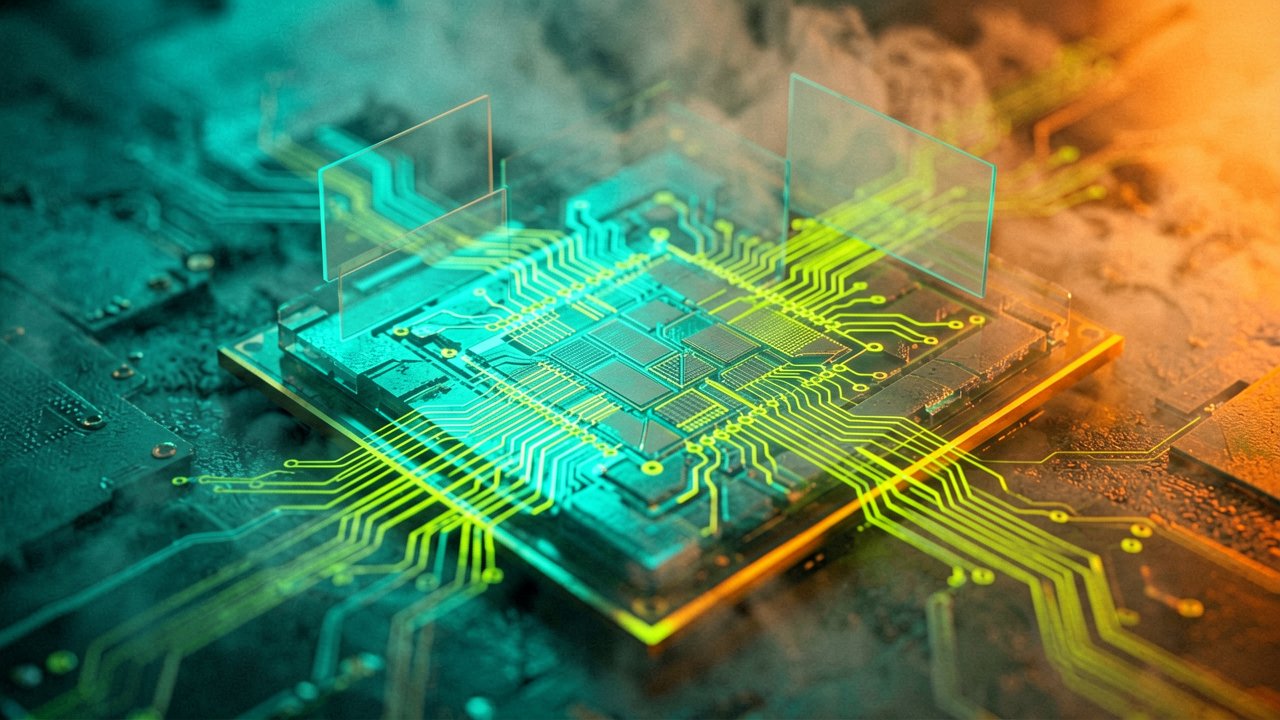
The financial landscape of high-performance computing in 2026 highlights a profound structural split between established artificial intelligence silicon and emerging quantum infrastructure. For years, investors treated advanced hardware as a monolithic bet on the future of computation. However, recent earnings and corporate performance reveal that the market is now separating immediate, cash-generating enterprise AI deployments from highly speculative, deep-tech quantum horizons. This structural divergence is best reflected in the financial performance of legacy chipmaker Intel and quantum pure-play IonQ.
As enterprise spending concentrates on training and inferencing generative models, traditional silicon manufacturers are reaping tangible, near-term revenue rewards. According to official performance figures posted via Intel Investor Relations, Intel achieved second-quarter 2026 revenue of $16.1 billion, representing a 25% year-over-year increase that marks its strongest quarterly growth in over fifteen years. This turnaround was driven by its Data Center and AI segment, which jumped 59% year-over-year to $6.3 billion, demonstrating how legacy architectures modified for physical AI and advanced packaging are capturing massive liquidity in the current capital expenditure cycle.
Conversely, quantum infrastructure is navigating a difficult transition from experimental validation to commercial scaling, where dramatic triple-digit revenue growth is often accompanied by steep operational losses. In its initial 2026 financial summaries published through IonQ Newsroom, the trapped-ion quantum pioneer posted a massive 755% year-over-year revenue increase to $64.7 million for the first quarter, while lifting its full-year guidance to between $260 million and $270 million. Yet, as noted in expert market reviews by Aktiencheck, IonQ simultaneously projected an adjusted EBITDA loss between $310 million and $330 million for the year. This widening gap between top-line expansion and operational profitability underlines the financial realities facing alternative computing architectures.
Capitalizing on immediate enterprise AI workloads
Intel's market position underscores how legacy foundry infrastructure and traditional x86 architecture are being re-engineered to capture immediate enterprise AI budgets. The company's massive investments in its domestic wafer foundry network, including the rollout of its 18A process technology, have allowed it to secure crucial contract manufacturing design wins for custom enterprise silicon and physical AI hardware. By supplying high-yield, advanced packaging options alongside its CPU and ASIC lines, the company has transformed a historical structural liability—its expensive in-house fabs—into a vital supply chain buffer for an industry constrained by components. This strategy has successfully anchored the chipmaker within the current wave of enterprise software integration, transforming raw AI computational demand directly into predictable, balance-sheet cash flows.
Financing the long-term deep tech horizon
IonQ represents the opposite end of the strategic continuum, where market capitalization is tied to the long-term structural transformation of enterprise computation rather than immediate margins. While the company has secured historic benchmarks, including a record $470 million in remaining performance obligations and 99.99% two-qubit gate fidelity, its business model remains heavily reliant on consultative sales, hybrid cloud partnerships, and national laboratory initiatives. The high capital expenditure required to scale fault-tolerant manufacturing facilities means that positive free cash flow is unlikely before the end of the decade. Consequently, its equity trades on technical milestones rather than immediate multiples, leaving it vulnerable to shifts in macroeconomic liquidity and investor patience.
Balancing commercial cycles against structural transformation
The financial split between these two companies illustrates a broader market maturation regarding advanced hardware assets. Investors are no longer evaluating hardware purely on raw computational theoretical limits, but on the immediacy of their integration into software workflows. Silicon providers are evaluated on operational execution, factory utilization rates, and near-term quarterly guidance. Meanwhile, quantum infrastructure developers are judged on their ability to build practical error-corrected machines before running through their cash reserves. This fundamental divergence ensures that while traditional chipmakers fuel the current generative AI software expansion, quantum computing platforms will remain a distinct, highly speculative asset class focused on cryptography, material sciences, and complex optimization models.
The Hidden Fault Lines of Advanced Compute Investments
Reading Between the Lines: The skyrocketing valuations of traditional AI hardware manufacturers and the triple-digit revenue growth of quantum startups mask a deeper structural instability within the high-performance computing market. While enterprise buyers eagerly deploy billions into classic silicon today, they are doing so under the assumption that these architectures will remain the gold standard for the foreseeable future. Yet, this capital rush has created an AI infrastructure bubble that risks oversupply if generative software utilities fail to monetize at scale. The market is aggressively rewarding near-term cash flows while largely ignoring how quickly these heavily subsidized legacy foundries could face underutilization if enterprise software margins compress.
At the same time, the euphoric top-line expansion reported by quantum infrastructure developers presents an outright contradiction when contrasted with their actual operational realities. A massive surge in contract value often reflects multi-year, non-binding government memorandums or public-sector research grants rather than recurring corporate software subscriptions. These foundational milestones are essential for validation, but they frequently obscure a stark lack of commercial integration. Corporate technology officers are hedging their bets by purchasing cloud-based quantum access as a research and development line item, but very few are rearchitecting their core enterprise databases to rely on hardware that still struggles with environmental decoherence and error correction.

This creates a complex dilemma for institutional capital allocators attempting to balance these two computational paradigms. If quantum computing achieves true fault-tolerant utility sooner than the consensus timeline of the late 2030s, a massive portion of the custom AI silicon currently being manufactured could find itself prematurely obsolete for specialized optimization and cryptographic workloads. Conversely, if the quantum timeline stalls due to persistent engineering bottlenecks, the startups burning through hundreds of millions in operational cash will face a brutal consolidation wave. The tech sector is essentially funding two parallel, competing futures, ensuring that the winners of the classic AI era are paradoxically financing the very quantum technologies designed to rewrite the rules of their sandbox.
“The tech sector spends billions buying the fastest silicon available today, while simultaneously funding the quantum machines that will render it entirely obsolete tomorrow—proving that in high-tech finance, the only thing more terrifying than missing the future is being stuck with the present on your balance sheet.”
Artūras Malašauskas is an AI Systems Integrator with 20+ years of production-grade web engineering experience. He has designed, shipped, and scaled enterprise Python/PHP systems for logistics, SaaS, and public-sector clients. For the past year, he has focused exclusively on AI integrations: deploying open-source LLMs, building generative media pipelines (image, audio, video), and engineering multi-agent workflows for real production environments. His standard: reproducibility, security, cost-efficient inference—no vaporware. He documents and evaluates emerging AI tooling, separating verified capabilities from marketing noise. Technical editor at: muza-ai.eu, ai-verslas.lt, ai-naujinos.lt Connect on LinkedIn
Comments