Beyond the Ban Hammer: Vitalik’s Aztec Experiment and the Shift in Digital Moderation
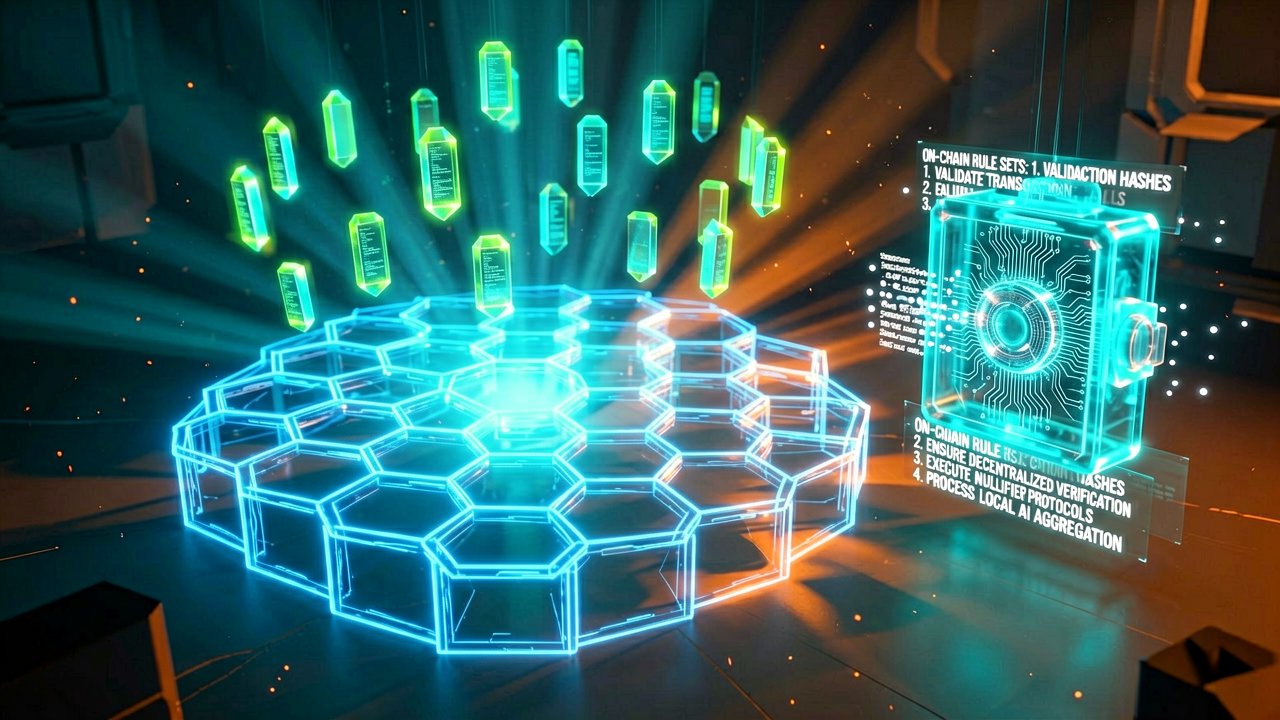
Ethereum co-founder Vitalik Buterin introduced a brand new, experimental anonymous message board built directly on the privacy-centric Aztec layer-two network. Announced via his social channels, the prototype serves as a real-time sandbox exploring how decentralized platforms can offer total identity protection while simultaneously curbing spam and toxic content. Rather than relying on a centralized corporate entity or a team of human moderators to police behavior, this "vibe-coded" billboard leverages a local artificial intelligence daemon alongside zero-knowledge cryptography to dictate what stays and what goes.
The core technology hinges on balancing user anonymity with on-chain accountability. To post on the forum, users make a fully refundable Layer 1 Ethereum deposit, which grants them entry while implementing strict rate limits through cryptographic nullifiers to prevent Sybil attacks and double-posting. Once inside, the actual moderation is offloaded to a local AI assistant that filters messages based on predefined rules stored directly on-chain, eliminating the need for an all-powerful platform administrator. It is a stark departure from how traditional digital town squares operate, introducing an architecture where code and automated reasoning act as the ultimate arbiters.
The Architecture of Trustless Moderation
To appreciate what Buterin has put forward, you have to look at the baseline differences separating this concept from legacy web structures. Traditional human-moderated platforms depend entirely on subjective, top-down governance where a central authority holds the exclusive right to ban users or remove text. Even early-generation decentralized networks often struggle with a binary dilemma: they either lapse into completely unmoderated, chaotic echo chambers, or they rely on community-elected moderators who carry their own inherent biases. By offloading content evaluation to an automated local daemon, the Aztec prototype seeks a neutral middle ground where moderation policies are public, transparent, and predictably executed by machines rather than humans.
This approach addresses one of the oldest paradoxes in the blockchain space. Public ledgers are notoriously transparent by default, making true privacy incredibly difficult to achieve without inviting rampant malicious activity. The project, as documented in Buterin's experimental repository on GitHub, proves that zero-knowledge proofs can successfully obscure a poster's identity from public call data while still verifying that the individual has followed community rules. Instead of forcing communities to choose between absolute surveillance and total lawlessness, the experiment paves the way for an ecosystem where privacy and structural order coexist through code.

Editorial Pros & Cons
| Governance Model | Operational Advantages | Operational Disadvantages |
|---|---|---|
| Aztec AI-Driven Board | Absolute cryptographic privacy; verifiable, unbiased rule enforcement; zero central censorship risk. | Noticeable publishing delays; high local computational friction; risk of AI hallucination or rule circumvention. |
| Legacy Decentralized (Nostr/Farcaster) | High resilience to platform-wide deplatforming; rapid message propagation; complete user control over client interfaces. | Severe vulnerability to sybil attacks and spam; fragmentation of communities; steep technical learning curve for casual users. |
| Centralized Platforms (X/Bluesky) | Frictionless, instant user onboarding; highly efficient threat detection; polished, universally familiar user experience. | Opaque algorithms optimized for engagement; absolute corporate surveillance; sudden, unilateral policy changes. |
The Friction of True Freedom
Reading Between the Lines: The transition from corporate-owned digital town squares to trustless cryptographic ecosystems is fundamentally an exchange of convenience for sovereignty. In the centralized paradigm, users willingly surrender their data and attention in exchange for an entirely frictionless experience where infrastructure costs are subsidized by advertising algorithms. The platform takes care of everything from server upkeep to toxic waste disposal, leaving users with a slick interface that responds in milliseconds. However, this comfort leaves communities entirely vulnerable to the whims of a single boardroom, where a sudden algorithm tweak can wipe out an organic network overnight.
By forcing the user's local machine to serve as both the gatekeeper and the cryptographer, the Aztec framework exposes the underlying friction required to maintain true digital autonomy. Local AI inference means a smartphone must actively expend battery power and processing cycles simply to evaluate whether an incoming post adheres to community standards. Zero-knowledge proof generation adds another layer of computation, intentionally slowing down the publication pipeline to verify integrity without compromising identity. This introduction of intentional, systemic delay turns the traditional engagement model on its head, deliberately prioritizing quality and privacy over the addictive, dopamine-fueled speed of legacy feeds.
This systemic shift forces a critical re-evaluation of how online communities value algorithmic neutrality. When a localized LLM enforces the boundaries of discourse based on public on-chain rules, it removes human emotional volatility and hidden corporate directives from the equation. Yet, it introduces an entirely new set of technical challenges, such as the inevitable adversarial prompt-injection attacks where clever phrasing might dupe a local model into allowing malicious content past the gates. Navigating this uncharted territory requires a highly realistic understanding that perfect moderation is an illusion, whether it is managed by a silicon valley committee or an open-source daemon running in a browser tab.
"We have spent two decades building digital networks designed to deliver absolute convenience at the cost of our privacy, only to discover that regaining our anonymity requires us to turn our smartphones into miniature heaters that process cryptography just so we can read a text post. It turns out that freedom of speech isn't free; it is paid for in local compute cycles and the patience to wait for a layer-two block confirmation."

Artūras Malašauskas is an AI Systems Integrator with 20+ years of production-grade web engineering experience. He has designed, shipped, and scaled enterprise Python/PHP systems for logistics, SaaS, and public-sector clients. For the past year, he has focused exclusively on AI integrations: deploying open-source LLMs, building generative media pipelines (image, audio, video), and engineering multi-agent workflows for real production environments. His standard: reproducibility, security, cost-efficient inference—no vaporware. He documents and evaluates emerging AI tooling, separating verified capabilities from marketing noise. Technical editor at: muza-ai.eu, ai-verslas.lt, ai-naujinos.lt Connect on LinkedIn
Comments