Beyond Pixels: Black Forest Labs Demolishes the Digital Divide with FLUX 3
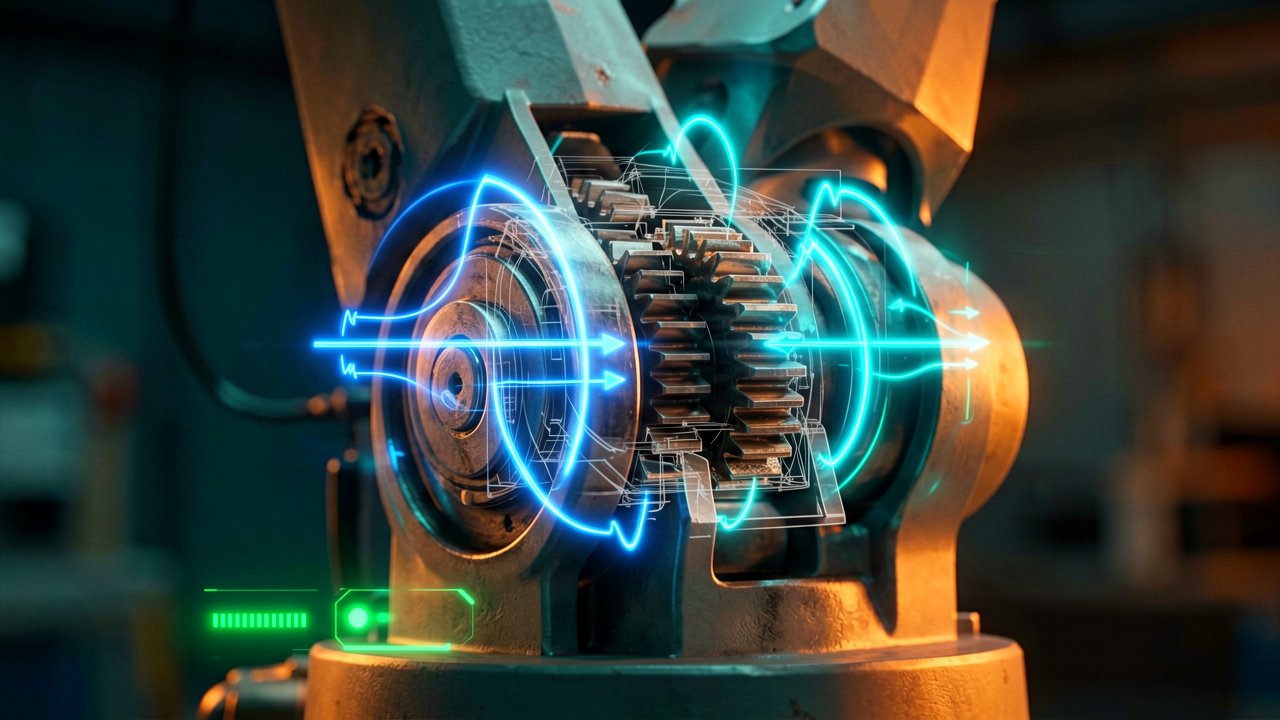
For a while now, the tech industry treated generative media and physical robotics as entirely distinct disciplines. You had frontier models focusing purely on the virtual world—churning out gorgeous but static images or hyper-stylized clips—while robotics labs separately built narrow, task-specific systems requiring hundreds of hours of raw demonstration data to learn how to pick up a simple plastic part. However, a major paradigm shift occurred on July 23, 2026, when Black Forest Labs officially unveiled FLUX 3. This breakthrough unified multimodal model shatters the traditional division between digital synthesis and physical actuation, seamlessly combining high-fidelity image, video, and audio generation with real-time robotic action prediction within a singular, cohesive architecture.
What makes this release exceptionally compelling isn't just that it creates 20-second video clips with perfectly synchronized native audio, though that alone pushes the envelope for creative tooling. The real magic lies under the hood in how the model understands the mechanics of reality. Built upon the company’s specialized Self-Flow research, FLUX 3 proves that generative video training and physical action prediction don't actually require separate foundational structures. By learning how objects move, bend, and react across millions of video frames, the model naturally gains an intuitive understanding of spatial dynamics and causal relationships. It turns out that teaching an AI to realistically simulate the world is the ultimate shortcut to teaching a robot how to manipulate it.
Challenging the Frontier and Redefining the Baseline
To truly grasp how disruptive this is, you have to look at the current competition. Existing text-to-video titans excel at cinematic aesthetics, yet they remain trapped behind digital screens, possessing no inherent concept of force, physical resistance, or real-world feedback loops. They generate pixels, not actions. FLUX 3 completely alters this baseline by scaling up joint training across multiple sensory modalities simultaneously. When an AI understands that a dropped glass object makes a distinct sound and shatters in a specific geometric pattern, it develops a robust framework of visual intelligence that translates directly to real-world utility.
The practical implications are already spilling onto the factory floor. Through a strategic partnership with Mimic Robotics, Black Forest Labs introduced FLUX-mimic, a direct derivation of the core architecture designed for complex industrial manufacturing. While older reinforcement learning and imitation frameworks notoriously demanded 30 or more hours of precise task data just to automate a new motion, FLUX-mimic can adapt to complex factory work—such as inserting intricate components or manipulating flexible seals and cables—using as little as 30 minutes of robot data. According to early integration details reported by VentureBeat, the system is already undergoing active testing and deployment at Audi, operating with a blazing-fast reaction time of 101 milliseconds and demonstrating an unprecedented ability to autonomously recover from physical failures.
A Staged Rollout with Open-Weight Ambitions
The company is managing the deployment of this powerhouse through a carefully tiered release schedule. Currently, early access is live for FLUX 3 Video and FLUX 3 Action, allowing enterprise partners and developers to tap into its capabilities via APIs. A standalone image editing and generation tier, FLUX 3 Image, is slated to follow in the coming weeks. For the open-source community, the ultimate prize is FLUX 3 Dev—an open-weight version designed for local deployment. Black Forest Labs plans to launch this open-weight backbone later in the year, providing a rare opportunity for smaller teams to securely run a model that bridges the gap between creative content production and advanced machinery right on their own hardware.
Technical Specifications Matrix
| Specification Metric | FLUX 3 Video / Action | Traditional Cinematic Models | Legacy Robotics Frameworks |
|---|---|---|---|
| Speed / Latency | 101 ms real-time actuation inference | Multi-second or minute-level rendering | Variable (20 ms to 50 ms loop rates) |
| Model Size / Parameters | Dense multimodal foundation weights | Massive isolated diffusion backbones | Ultra-compact narrow neural policies |
| Hardware Requirements | Enterprise clusters / High-VRAM edge nodes | Cloud-based data center GPU infrastructure | Industrial PCs / Lightweight edge accelerators |
Decoding the Hardware and Latency Divide
The stark differences outlined in the matrix reflect fundamentally opposing engineering philosophies. Traditional cinematic models operate entirely in a non-interactive vacuum where execution speed is routinely traded for pixel perfection. Because their primary output is passive entertainment, they can afford to take seconds, or even minutes, to diffuse a single video frame. They depend on massive, centralized cloud infrastructure that handles parallel floating-point operations but lacks the deterministic reliability required to interact with physical objects moving through space.
When you pivot to the physical realm, milliseconds dictate the boundary between success and catastrophe. Legacy robotics frameworks achieved their blistering loop rates by stripping models down to the absolute bare essentials. These systems utilize highly compressed, lightweight neural networks trained to do exactly one thing, such as guiding a specific mechanical arm to grab a specific bolt on a conveyor belt. They require very little computational overhead and run comfortably on standard industrial PCs, but they break down completely the moment a single variable in their environment changes or an unexpected obstacle appears.
This is precisely why the architecture behind FLUX 3 represents such a massive leap forward. Achieving an actuation latency of just 101 milliseconds while carrying the computational weight of a rich multimodal foundation model requires a radical approach to local hardware utilization. Instead of relying purely on heavy cloud infrastructure, which introduces unacceptable network lag, the architecture utilizes highly optimized attention mechanisms designed to execute locally on dense enterprise clusters or specialized edge nodes equipped with next-generation unified memory architectures.
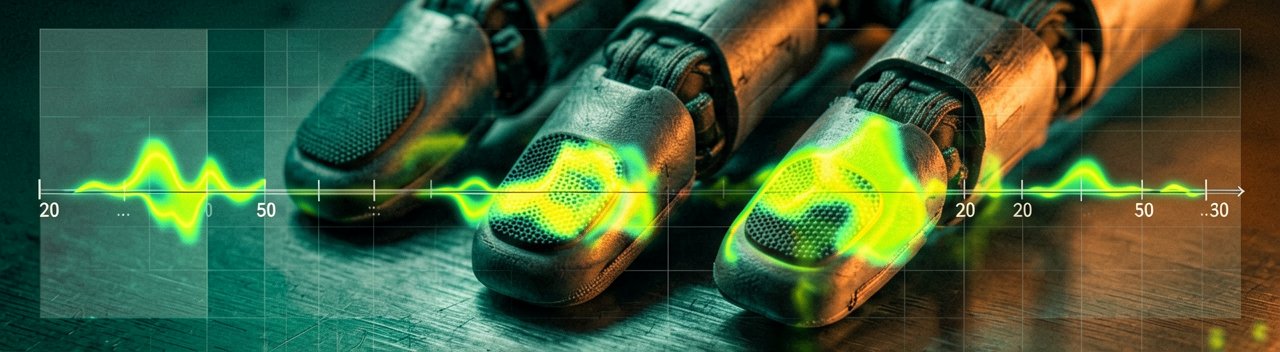
By blending the massive spatial awareness of a generative model with the precise execution loops of physical automation, the framework changes how hardware is partitioned. The model relies heavily on high-bandwidth memory to keep its vast vocabulary of physical weights instantly accessible. This local availability allows the robot to react dynamically to fluid situations, predicting its next physical manipulation while simultaneously evaluating sensory audio and visual feedback from the workspace. It effectively bypasses the rigidity of legacy automation without inheriting the crippling delays of traditional generative media.
Editorial Pros & Cons
| Model Platform | Operational Advantages (Pros) | Operational Disadvantages (Cons) |
|---|---|---|
| FLUX 3 Architecture | Unified spatial logic; adaptive to variable tasks; rapid 30-minute training turnaround. | Stiff local hardware requirements; enterprise-locked early ecosystem access. |
| Cinematic Generators | Stunning visual fidelity; highly polished outputs for passive creative media production. | Complete absence of physical awareness; severe latency; zero interactive feedback capacity. |
| Legacy Robotics Systems | Ultra-low computational overhead; proven long-term reliability in highly static environments. | Extremely fragile; requires dozens of hours of manual training for minor routine changes. |
Navigating the Reality Gap in Automated Systems
Reading Between the Lines: The primary tension in automation is no longer about raw computing power, but about how effectively a system can handle the sheer unpredictability of the real world. Traditional cinematic models create beautiful illusions, but they fail completely when tasked with managing physical consequences. Conversely, the legacy automation systems anchoring our current supply chains are brilliant at repetitive tasks, yet they remain profoundly blind, treating a misplaced bolt not as a problem to solve, but as an existential crisis that halts the entire assembly line.
By forcing these two distinct philosophies into a single architecture, the creators of FLUX 3 are betting heavily on the concept of generalized physical intelligence. The real value here is not found in the generation of synthetic video frames, but in the structural awareness required to build those frames. When a system learns the true properties of momentum, friction, and material resilience through video observation, it gains a massive shortcut toward mastering actual physical manipulation. It changes the role of the AI from a simple pixel-generator into an active, predictive participant on the factory floor.
However, this ambitious unification introduces its own set of practical challenges, particularly regarding data gravity and localized processing. Running a giant foundation model at a sub-110-millisecond reaction speed means the hardware cannot afford to wait for cloud latency. This requirement shifts a massive financial and technical burden onto local edge nodes, restricting early deployment to wealthy automotive giants and well-funded industrial enterprises. The promise of open-weight variations offers hope for democratic access, but managing these intense local processing requirements remains a significant hurdle for smaller developers.
The success of this new automation paradigm will ultimately be measured by its resilience when things go wrong. While a minor rendering glitch in a cinematic video might result in a funny visual error, a minor spatial miscalculation in an industrial warehouse can break expensive machinery or ruin entire product batches. The transition from digital pixels to physical actuation represents a high-stakes environment where there is absolutely no room for the classic hallucination issues common in creative AI models.
"Teaching a neural network to dream up a flawless cinematic sunset turns out to be remarkably easy compared to teaching it how to tighten a loose screw on a vibrating conveyor belt without accidentally tearing off the bracket. We have officially reached the era where the AI can write a brilliant script about automated manufacturing, but it still needs a very expensive edge node just to make sure the physical robot does not confidently crush the inventory."
Artūras Malašauskas is an AI Systems Integrator with 20+ years of production-grade web engineering experience. He has designed, shipped, and scaled enterprise Python/PHP systems for logistics, SaaS, and public-sector clients. For the past year, he has focused exclusively on AI integrations: deploying open-source LLMs, building generative media pipelines (image, audio, video), and engineering multi-agent workflows for real production environments. His standard: reproducibility, security, cost-efficient inference—no vaporware. He documents and evaluates emerging AI tooling, separating verified capabilities from marketing noise. Technical editor at: muza-ai.eu, ai-verslas.lt, ai-naujinos.lt Connect on LinkedIn
Comments