AMD Helios Debuts with Microsoft Backing: A Critical Shift in the AI Infrastructure Monopoly
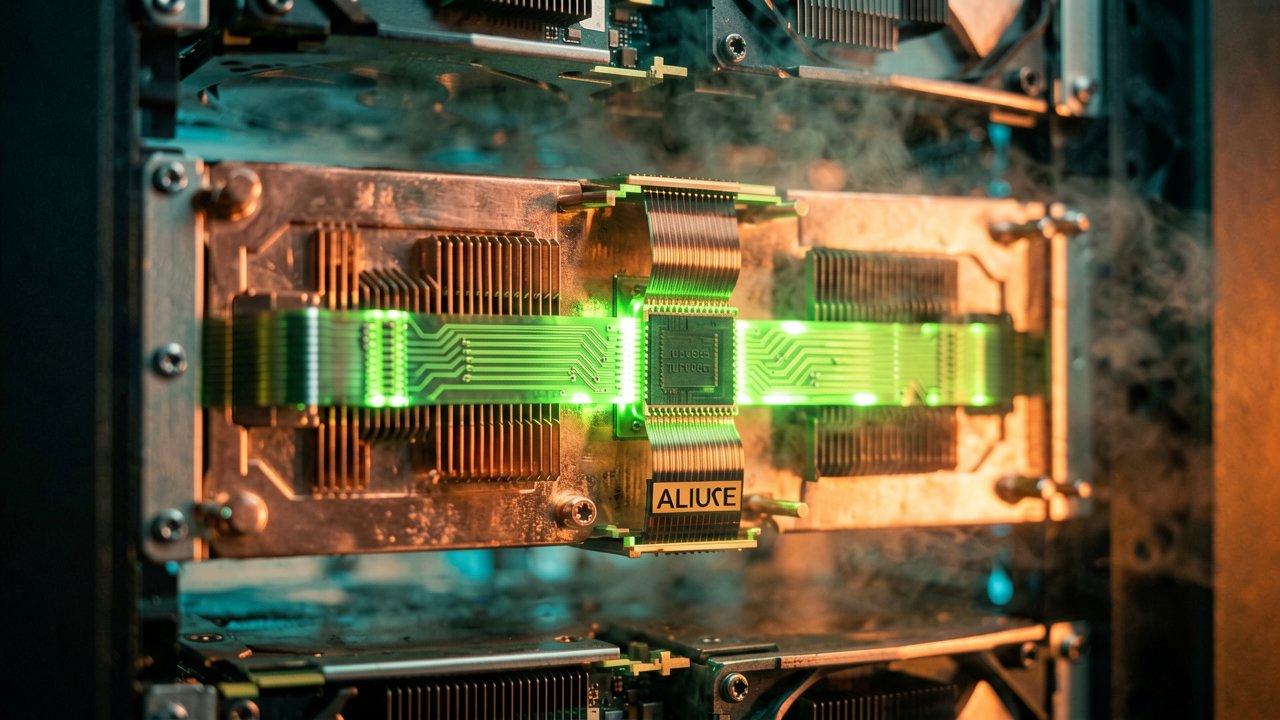
The enterprise artificial intelligence landscape has reached a pivotal inflection point with the official launch of the AMD Helios AI rack system. Featuring an ultra-dense configuration of 72 Instinct MI455X GPUs integrated alongside 18 EPYC Venice processors, this hardware release marks AMD's first complete, unified rack-scale computing platform. By bundling its silicon, liquid cooling, and advanced networking into a turn-key fabric, AMD is moving away from individual component sales to directly challenge the data center dominance enjoyed by its primary rival.
Securing Microsoft as a primary hyperscale customer immediately validates the architecture and signals a broader strategic shift among cloud providers. According to an official statement on the Microsoft Blog, customer choice serves as a core design principle for Azure, prompting this production-scale deployment to power frontier AI inference models. For hyperscalers currently facing high premium pricing and supply constraints, introducing a highly competitive secondary hardware supplier is an operational necessity to manage infrastructure margins and diversify supply chains.
The market implications extend beyond a single vendor agreement. As detailed by CNBC, the launch of Helios positions AMD to actively chip away at NVIDIA's command of the data center GPU sector. While previous chip-level iterations required complex system engineering by the buyers themselves, the fully integrated Helios architecture provides a drop-in option that can scale rapidly across modern data center footprints.
An Open Ecosystem Challenging Proprietary Standards
The architectural philosophy behind the hardware focuses on open, industry-wide standards rather than proprietary ecosystems. The design utilizes Ultra Accelerator Link (UALink) and Ultra Ethernet Consortium (UEC) frameworks for its scale-up and scale-out networking. “It also uses open, industry-standard connections instead of Nvidia's private technology, giving buyers more flexibility,” as highlighted by Network World . This standard-based interconnectivity lowers vendor lock-in barriers, allowing operators to deploy heterogeneous infrastructure configurations without fracturing their software stacks or hardware topologies.

Raw Performance and Memory Bandwidth at Scale
From a hardware perspective, the dense 72-GPU configuration delivers up to 2.9 EFLOPS of FP4 and 1.4 EFLOPS of FP8 compute power. This raw performance is augmented by 31.1TB of aggregate high-bandwidth memory (HBM4) across the rack system. Reports from Tom's Hardware indicate that AMD is targeting 260 TB/s of scale-up bandwidth within the rack, matching the throughput capabilities of competing next-generation scale architectures while doubling scale-out bandwidth using standard Ethernet fabrics. This massive memory capability makes the platform optimized for long-context windows and high-volume agentic AI data pipelines.
Economic Realities and the Hyperscale Runway
Despite the technical milestones, shifting market share will remain a capital-intensive, multi-year process. Data from Dealroom indicates that NVIDIA controls the vast majority of the data center GPU market, while AMD holds a single-digit share. The capital investment required for these systems is massive; third-party analysts estimate the Helios system commands premium enterprise hardware pricing per rack. However, with massive backings from hyperscalers like Microsoft, Meta, and Oracle, AMD has established the necessary commercial runway to comfortably project significant data center AI revenue growth heading into the late 2020s.
Behind the Scenes of the Hyperscale Pivot
The acceleration behind AMD’s Helios architecture is rooted in a quiet but intense frustration brewing within hyperscaler boardrooms over the last three years. While public discourse focused on the sheer raw performance of AI silicon, cloud engineering teams were quietly wrestling with the logistical gridlock of proprietary supply chains and rigid data center design constraints. For Microsoft, anchoring its next-generation Azure clusters to a single vendor represented a multi-billion-dollar vulnerability. The arrival of Helios is less about displacing a rival chip-for-chip and more about re-establishing buyer leverage in an industry where component allocation had begun to dictate corporate roadmaps.
Historically, AMD operated as a component supplier, delivering high-performance silicon while leaving the complex system engineering, cooling topologies, and fabric integration to original equipment manufacturers or the cloud builders themselves. This approach proved too slow to counter the fully integrated vertical systems that defined the first wave of the generative AI boom. By assembling the entire rack-scale system internally—fusing liquid-cooling manifolds, tailored power delivery, and specialized networking fabrics into a unified product—AMD shifted its strategy from selling parts to deploying turnkey compute infrastructure. This architectural pivot removes months of custom validation work for engineering teams at hyperscale levels.
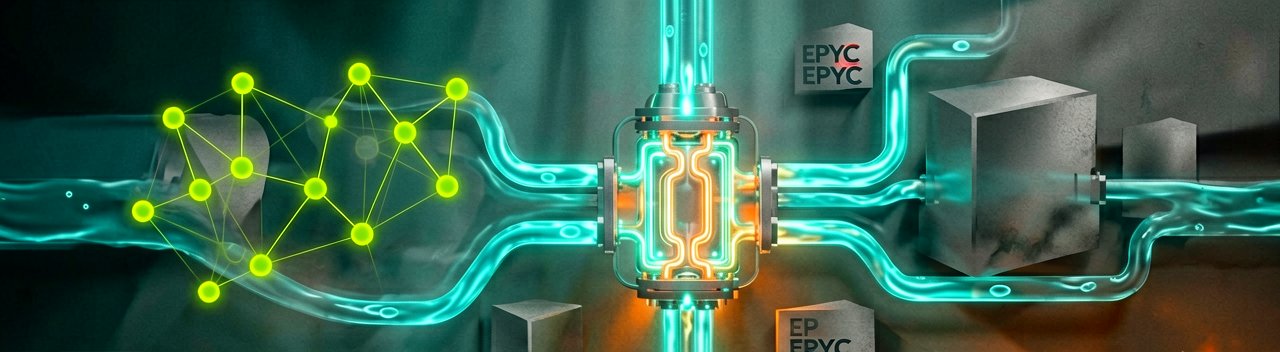
The true battleground for this generation of AI infrastructure has shifted from the compute cores to the underlying networking fabric. The technology sector is witnessing a high-stakes schism between proprietary scale-up links and open-standard consortium architectures. By building Helios entirely around Ultra Accelerator Link and Ultra Ethernet Consortium frameworks, AMD and Microsoft are betting that horizontal ecosystem compatibility will ultimately outscale proprietary alternatives. This strategy allows cloud operators to decouple their physical real estate choices and networking grids from any single vendor's product lifecycle, ensuring long-term flexibility as data centers face severe power and space limitations.
From an operational standpoint, the deployment of these dense 72-GPU racks introduces immediate efficiencies in thermal management and spatial layout. Modern data centers are rapidly approaching the physical limits of traditional air cooling, requiring a fundamental redesign of facility infrastructure. The integrated liquid-cooling design of the Helios system allows for unprecedented compute density, compressing what once required multiple rows of server racks into a highly compact footprint. This spatial consolidation reduces the physical distance signals must travel, minimizing latency while significantly lowering the power overhead required to keep the processors at optimal operating temperatures.
The financial ripple effects of this deployment are already altering capital expenditure modeling across the tech sector. For years, cloud providers accepted lower margins on AI workloads due to the extreme premiums commanded by hardware monopolies. The introduction of a viable, production-grade alternative at scale introduces genuine pricing competition into the supply chain, which will likely drive down the total cost of ownership for downstream enterprise developers renting cloud compute. As more hyperscalers follow Microsoft's lead and integrate these open systems into their infrastructure, the economic balance of power in the AI industry will continue to normalize toward a more sustainable, multi-vendor ecosystem.
Reading Between the Lines: The Friction of Actual Implementation
The enthusiastic narrative surrounding the Helios launch assumes that hardware parity automatically translates to immediate market share disruption, ignoring the immense gravity of legacy software ecosystems. While matching high-bandwidth memory specifications and peak theoretical floating-point operations on paper is a notable engineering achievement, the enterprise artificial intelligence sector remains deeply tethered to proprietary software frameworks. Decades of developer optimization have turned CUDA into an entrenched industry standard, and AMD’s open-source ROCm alternative still faces a steep uphill battle in achieving seamless, out-of-the-box compatibility for mainstream corporate developers. Hyperscalers like Microsoft possess the elite engineering talent required to manually optimize open-source frameworks for their internal workloads, but the broader tier-two and enterprise markets lack the specialized resources to absorb that technical debt.
A glaring contradiction also lies within the hyperscalers' public embrace of open infrastructure standards like UALink and the Ultra Ethernet Consortium. Cloud providers champion these open protocols as a victory for democratization and vendor flexibility, yet their underlying motivation remains intensely self-serving. Hyperscalers are not looking to build a truly decentralized hardware ecosystem; they are leveraging open standards just enough to break their primary vendor's pricing power and gain a stronger negotiating position. Once that leverage is secured, these tech giants typically return to building proprietary software layers on top of the open hardware, effectively replacing a hardware monopoly with a cloud-platform lock-in that keeps enterprise customers captive within their specific cloud ecosystems.
Furthermore, the physical reality of deploying dense, liquid-cooled 72-GPU racks introduces severe operational bottlenecks that cannot be solved by silicon design alone. The modern data center landscape is currently bottlenecked by acute shortages in regional power grid capacity and specialized liquid-cooling utility infrastructure. Deploying a cluster of Helios racks demands megawatts of power and sophisticated fluid-dynamics infrastructure that many older data centers simply cannot support without catastrophic capital expenditures in retrofitting. Consequently, the bottleneck in AI scaling is rapidly shifting away from chip availability to the mundane realities of electrical transformers and municipal water permits, meaning the theoretical deployment velocity of this new hardware will likely lag far behind corporate press release timelines.
Ultimately, this strategic diversification by Microsoft reveals that the AI infrastructure gold rush is entering a secondary, margin-preservation phase. The initial period of indiscriminate spending, where cloud providers purchased any available silicon regardless of cost to claim technological leadership, has concluded. In this mature phase, the chief financial officers of major cloud providers are reclaiming control from the research teams, demanding strict cost-to-performance metrics and supply chain predictability. AMD's primary victory with Helios may not be a sudden, dramatic flip in market share, but rather its role as an economic stabilizer that forces a hyper-inflated infrastructure market back down to earth.
“In the grand theater of artificial intelligence, tech giants love to preach the gospel of open standards and vendor democracy, right up until they realize that a properly diversified supply chain is simply the cheapest way to build their own digital fiefdoms.”
Artūras Malašauskas is an AI Systems Integrator with 20+ years of production-grade web engineering experience. He has designed, shipped, and scaled enterprise Python/PHP systems for logistics, SaaS, and public-sector clients. For the past year, he has focused exclusively on AI integrations: deploying open-source LLMs, building generative media pipelines (image, audio, video), and engineering multi-agent workflows for real production environments. His standard: reproducibility, security, cost-efficient inference—no vaporware. He documents and evaluates emerging AI tooling, separating verified capabilities from marketing noise. Technical editor at: muza-ai.eu, ai-verslas.lt, ai-naujinos.lt Connect on LinkedIn
Comments